

 AHFE Open Access
Human Interaction and Emerging Technologies (IHIET-AI 2026): Artificial Intelligence and Future Applications
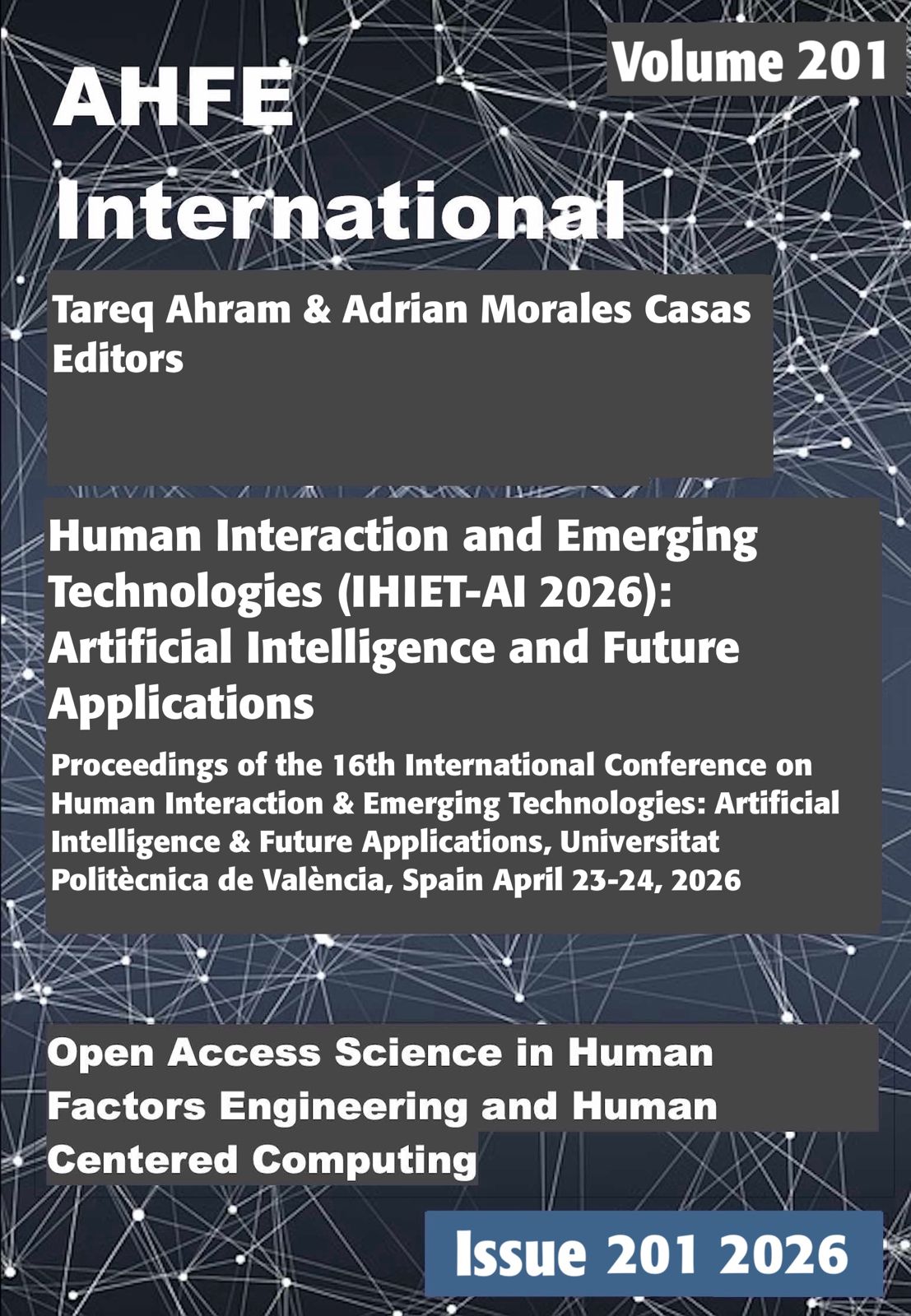
Editors: Tareq Ahram, Adrian Morales Casas
Topics: Artificial Intelligence & Computing, Human Systems Interaction
ISBN: 978-1-964867-77-9
DOI: 10.54941/ahfe1007218
Table of Contents
Teaching Multimodal Interaction in Cars to First-time Users
This study examines three variations of a proactive method for teaching multimodal gaze and gesture interactions to first-time users in the context of an SAE Level 5 automated vehicle. The three variations differed in size, placement on the screen, and whether active user input was required to receive additional information. The results of a user study involving the gesture control prototype in a driving simulator (N=30) show that the greatest variation was more effective in teaching, caused by significant differences in visibility ratings (𝑝<0.001), size (𝑝<0.001) and duration (𝑝=0.001) of the pop-ups. The results show no correlation between the measured effectiveness and the preference for a specific variation. Across all variations, participants are positive toward receiving proactive teaching from their car to learn new features. We conclude that proactively teaching users novel interaction methods has the potential to improve the user experience in future vehicles.
Thomas Marinissen, Jonas Glimmann, Pavlo Bazilinskyy
Open Access
Article
Conference Proceedings
On Immersivity of Transmitted Spatial Sounds for Human-Machine Interaction
Spatial sound perception is a natural way of perceiving sound (not only) by humans and serves for spatial orientation, escape from imminent danger, or shifting attention toward an object of interest. In the modern world, spatial sound, transmitted e.g. via telecommunications networks, is increasingly used to convey an additional dimension of information to the recipient (e.g. an air traffic controller can virtually hear a pilot from the direction where his aircraft is located, etc.). Given the expanding field of AI for generating spatial information, it is necessary to investigate the influence of basic technical parameters on the subjective experience of the recipient, represented, for example, by the immersiveness of communication, the intelligibility of transmitted speech spatial mix, or the spatial resolution of multiple sound stimuli. When using AI to generate spatial sound, the influence of (computational) delay on the quality of the subjective experience is crucial (the recipient's head movement is tracked using head-tracker embedded in the headphones, and the audio channels information is rendered in real time to compensate for any head movements of the subject, so that the sound appears to come from a fixed location regardless of the head's orientation). Any delay in this computational loop can compromise the subjective perception or quality of communication.The paper will present the results of extensive subjective tests that clarify the relationship between (computational) delay and the quality of subjective perception in various tested situations. The results can be directly used to specify the minimum technical requirements for design of AI-based audio-immersive communication and control systems.
Jan Holub, Jakub Turinsky
Open Access
Article
Conference Proceedings
Human-Centered optimization through Digital Twins, and Motion Capture Technologies of a manual activity in the logistics sector
Industry 4.0 has enabled significant technological advances for industrial applications, creating new business opportunities but often neglecting how operators interact with increasingly complex systems. In contrast, Industry 5.0 emphasizes a human-cantered approach, highlighting the role of operators and their interaction with automation in modern industrial environments. Despite technological progress, many industrial sectors, such as logistics, continue to rely on fully manual tasks. These workstations are frequently poorly optimized, ergonomically inadequate, and not inclusive of diverse operators. The repetitive and physically demanding nature of such tasks can lead to fatigue, stress, and increased risk of injury, negatively impacting both operator well-being and productivity.This paper proposes an innovative methodology to optimize manual operations in the logistics sector through advanced technologies and a human-centered design approach. The goal is to enhance inclusivity, reduce physical loads, and minimize injury risks associated with repetitive or hazardous activities. To this end, motion capture systems (MoCap) and digital human simulation software were employed to develop a digital twin of both operators and workstations. This virtual model enabled the analysis of the current situation and the simulation of multiple optimization scenarios. By using this risk-free environment, alternative automation solutions were evaluated, and the most effective configurations were identified based on performance, efficiency, and safety.A comprehensive ergonomic evaluation complemented the analysis, assessing key indicators to define the optimal task distribution between human operators and automated systems. This ensured minimized physical load on operators while maximizing operational efficiency. Virtual reality (VR) technology was integrated into the validation process, allowing operators to interact directly with proposed solutions in a virtual setting. The proposed methodology was applied to a real logistics process to validate its practicality and effectiveness. Preliminary results confirmed its potential in industrial applications, demonstrating improvements in ergonomics, inclusivity, and productivity. These findings are further detailed and discussed in the final version of the paper.Additionally, a dedicated study was conducted on the number of sensors required in MoCap acquisitions. The objective was to determine the minimum number of sensors necessary to accurately reproduce operator motion, while exploiting the posture prediction capabilities of a digital human simulation software IPS IMMA. This analysis is important due to the fact that reducing the number of sensors directly lowers acquisition time, system complexity, and implementation costs, thereby making the methodology more practical and scalable for industrial deployment. By identifying an optimal compromise between sensor quantity and motion fidelity, the study contributes to the efficient and sustainable use of advanced motion capture technologies in industrial contexts.Overall, this work highlights the importance of integrating ergonomic considerations and human factors into industrial automation strategies. By placing the operator at the center of system design, the study demonstrates how logistics operations can be optimized not only for efficiency but also for inclusivity, safety, and operator well-being. These findings provide practical insights for the transition toward Industry 5.0, where human–machine collaboration is essential for sustainable productivity and improved job satisfaction.
Manuela Vargas, Valerio Cibrario, Denise Tumiotto, Annalisa Bertoli, Cesare Fantuzzi
Open Access
Article
Conference Proceedings
Exploring Empathy for Emotion-Aware Vehicles: How Should a Car Respond?
Empathic vehicles aim to enhance driving by addressing both emotional and functional needs. Yet, current systems such as Advanced Driver Assistance Systems (ADAS) often overlook drivers’ dynamic emotional states, which strongly influence behaviour and decision-making. Existing research largely focuses on detecting emotions rather than responding to them in meaningful ways. This study applies a human-centered design approach to explore how multimodal feedback can support drivers through context-sensitive, emotion-aware interactions. Two groups – daily commuters and young drivers (18-24 years) – were investigated using a mixed-methods approach. Semi-structured interviews (n = 23) identified emotional triggers, coping strategies, and expectations, informing a driving simulator prototype featuring visual, auditory, and tactile feedback. 18 participants evaluated these strategies in three emotionally challenging driving scenarios. Results show that adaptive music was perceived as the most effective strategy for influencing emotions, followed by ambient lighting, whereas emojis and seat vibrations were rated less effective. No statistically significant differences were found between groups. Participants stressed the need for empathic systems that are transparent, subtle, and customisable, with strong concerns regarding data privacy. The findings underline the potential of multimodal, context-sensitive feedback and highlight the need for further testing in real-world driving environments.
Timothy Berens, Sandra Kitting, Benedikt Salzbrunn, Andreas Sackl, Niklas Fraissl
Open Access
Article
Conference Proceedings
Enhancing Usability in Crisis Management Training: Evaluation of the Virtual Reality-Based Situational Awareness Table
In a rapidly evolving world with advancing technology and climate change, crisis situations are increasingly unpredictable, requiring effective training for emergency response teams. To address this, we developed a virtual reality (VR) table to provide immersive, unrestricted training, simulating high-pressure scenarios that demand rapid decision-making. A laboratory study with N=15 participants evaluated the table’s usability, focusing on system usability, and user experience. Results demonstrated improved usability, providing valuable insights for designing effective crisis management training programs. The study emphasizes the importance of intuitive controls, quick information access, and minimal distractions in VR environments to enhance user satisfaction and performance. This research establishes a foundation for future VR-based training programs, highlighting their potential to advance crisis management training. Our findings provide valuable insights for emergency response teams and informants for design best practices, with applications extending to other fields, contributing to improved usability in VR training systems.
Jasmin Schwab, Kai Franke, Tobias Koch
Open Access
Article
Conference Proceedings
Formal Verification for Human-Centred Trust in AI: A Critical Examination of Current Paradigms
As artificial intelligence systems increasingly permeate critical societal infrastructures, the gap between technical verification and human-centred trust has become a fundamental challenge. This position paper argues that current formal verification approaches for AI systems are fundamentally inadequate to foster genuine public trust, particularly in settings involving human interaction and socio technical complexity. We advance three critical arguments: (1) the Trust Verification Paradox: static verification approaches fail to capture the dynamic and adaptive nature of trust; (2) the Public Technical Trust Divide: technical correctness without human understanding risks ``certification theater''; and (3) the Distributed Responsibility Crisis: existing verification paradigms struggle to account for collective outcomes and accountability. We propose a shift toward Participatory Verification, in which formal methods are extended to embed stakeholder values, support verification of trust evolution, and enable responsibility attribution. Through a formal and illustrative autonomous vehicle coordination case study, we demonstrate the expressive power of Participatory Verification and outline how trust evolution, stakeholder values, and responsibility attribution can be embedded into verification frameworks.This vision paper calls for a research agenda that bridges formal methods, human-AI interaction, and social science to support AI systems that are not only technically correct, but genuinely trustworthy.
Asieh Salehi Fathabadi
Open Access
Article
Conference Proceedings
Designing Inclusive Mobile Government Services in the Middle East: A User Experience–Centered Framework
Mobile government (m-government) services constitute a central pillar of digital transformation strategies across the Middle East. Governments in the region have invested extensively in mobile platforms to improve public service efficiency, accessibility, and citizen engagement. Despite these efforts, adoption and sustained use of m-government services remain uneven, largely due to user experience (UX) challenges. This paper presents a comprehensive investigation of UX issues affecting mobile government services in the Middle Eastern context. Drawing on an extensive review of academic literature, regional digital government reports, and empirical UX studies, the paper identifies key usability, accessibility, linguistic, cultural, and trust-related barriers. Based on these findings, a contextualized UX framework is proposed to guide the design of inclusive, usable, and culturally responsive m-government services. The study contributes to both theory and practice by extending UX discourse into non-Western public sector contexts and offering actionable guidance for policymakers and designers.
Abdulrahman Khamaj
Open Access
Article
Conference Proceedings
Capturing Food Culture for Adaptive AI: Generative Insights from a Multimodal Profiling Study
Artificial intelligence (AI) is creating new possibilities for digital systems that adapt to users in culturally sensitive ways. This study examines multimodal profiling as an early step for capturing culturally meaningful information in the context of healthy and sustainable eating. The aim is to provide a foundation for future interface adaptations that better support healthier and more sustainable practices. Building on earlier qualitative work involving interviews and cultural probes, we drew on insights that revealed complex personal food frameworks in which health and sustainability intersect with relationships, place, habit, and emotion. Using these insights as a foundation, we explored how different modalities of sharing information help people express these cultural dimensions in ways that are accessible to AI systems. 15 participants across diverse European contexts participated in this study. They described their everyday food practices, motivational drivers, and food heritage through spoken audio reflections, visual tasks, and written text. The results show that each modality elicits distinct types of cultural expression and that organising content into three dimensions gives the AI system a clear interpretive structure. Then, the AI generated summaries based on participants’ multimodal inputs across the three cultural dimensions, reflecting their food culture. These summaries were rated as highly familiar and accurate, indicating strong cultural resonance. Overall, the findings suggest that multimodal profiling supports the capture of culturally grounded aspects of food practice that are difficult to obtain through single input formats and can serve as an early foundation for adaptive interfaces that personalise interactions in culturally meaningful ways.
Zeynep Erol, Emily Groves, Sebastian Baez Lugo, Nicolas Henchoz, Margherita Motta
Open Access
Article
Conference Proceedings
A methodical approach to AI-supported human learning in complex task environments
Hybrid intelligence aims to combine human and AI based on their complementary strengths and weaknesses, with the goal of reaching better results than either could achieve on its own, and to continuously improve (Dellermann et al., 2019). To research hybrid intelligence is the aim of the HORIZON project AI4REALNET (cf. ai4realnet.eu), which develops AI-based solutions addressing critical systems (electricity, railway and air traffic management) that are traditionally operated by humans, and where AI systems complement and augment human abilities. In the project continuous improvement of hybrid intelligence is considered in co-learning scenarios, which aim to enable humans and AI to learn from each other. The paper proposed in this abstract focuses on the human side of co-learning, i.e. on how human learning can be specifically and systematically supported in settings of hybrid intelligence. However, in human-AI collaborations in which the AI provides opaque recommendations for solving complex problems, human learning processes will rather not be systematically supported. Just as students cannot learn to solve complex math problems if the teacher simply reveals the solution to them. Rather the teacher needs to enable the students to understand the problem and to find ways to solve the problem. Essentially, within our framework of hybrid intelligence, AI must explicitly support human cognitive learning processes in relation to the problem and the problem-solving to systematically support human learning. Against this background, In the HORIZON project “AI4REALNET” the “Supportive AI Framework” was developed (Waefler et al., 2025), which aims at an intensified human-AI collaboration (Waefler, 2021). It conceptualizes human learning on the basis of the «Experiential Learning Theory” (Kolb & Kolb, 2009), which considers learning as a cycle of four phases: •Concrete experience: Making new experiences within the relevant domain of knowledge or transcending existing ones.•Reflective observation: Reflecting on experiences and considering what was successful or where there is room for improvement.•Abstract conceptualization: Conceptualizing thoughts, adapting existing ideas or developing new ones in order to abstract understanding enabling the construction of new mental models or conceptual frameworks.•Active experimentation: Testing the cognitive representations acquired in the previous phases and getting feedback from practice, based on active experimentation.The paper describes in detail how these phases of experiential learning can be specifically and systematically supported by AI so that human domain experts continuously improve their explicit and tacit competencies. ReferencesDellermann, D., Calma, A., Lipusch, N., Weber, T., Weigel, S., & Ebel, P.A. (2019). The Future of Human-AI Collaboration: A Taxonomy of Design Knowledge for Hybrid Intelligence Systems. https://doi.org/10.48550/arXiv.2105.03354.Kolb, A.Y. & Kolb, D.A. (2009). The learning way. Meta-cognitive aspects of experiential learning. Simulation & Gaming, 40(3), pp. 297-237.Waefler, T. (2021). Progressive Intensity of Human-Technology Teaming. Proceedings of the 5th International Virtual Conference on Human Interaction and Emerging Technologies, IHIET 2021, August 27–29, 2021, France, pp. 28-36.Waefler, T., Hamouche, S., Eisenegger, A. (2025). The Supportive AI Framework: From Recommending to Supporting. In: Schmorrow, D.D., Fidopiastis, C.M. (eds) Augmented Cognition. HCII 2025. Lecture Notes in Computer Science(), vol 15778. Springer, Cham. https://doi.org/10.1007/978-3-031-93724-8_22
Samira Hamouche, Nerissa Dettling, Julia Usher, Manuel Renold , and Toni Waefler
Open Access
Article
Conference Proceedings
Glossary as a Compass: Domain Knowledge Artifacts in Human-Centered AI Development
The development of Artificial Intelligence systems in complex environments faces a persistent challenge: translating users’ natural language, rich in context, specialized terms, and cultural nuances, into formal structures that inform interface design and algorithmic logic. A promising approach to this challenge is the collaborative construction of knowledge artifacts such as technical glossaries, which serve as semantic mediation tools between multidisciplinary teams and technology. More than simple collections of definitions, these glossaries act as methodological compasses guiding human-centered AI projects and exposing gaps that drive improvement. This paper reports a case in which a collaborative glossary was developed during user immersion and adopted as a guiding artifact for AI design and engineering through participatory sessions involving domain experts, designers, software engineers, and data scientists. The resulting living document defined technical and operational terms while translating everyday practices, metaphors, and user needs; it also mapped synonyms, terminological variations, and contexts of use to align ambiguous expressions with real intentions. The glossary served as a semantic bridge linking natural language to computational representations, as a shared reference that reduced ambiguities and accelerated design decisions, and as support for integration with large language models. By centering the glossary, teams aligned expectations, improved usability, and ensured algorithms reflected business rules and field practices, demonstrating glossaries as strategic artifacts that enhance explainability, trust, and interdisciplinary collaboration in human-centered AI.
Felipe França, Eduardo Oliveira, Emilio Coutinho, Leonardo Neri, Hugo Silva, Luciana Franci, Virgínia Ribeiro
Open Access
Article
Conference Proceedings
Fiscolab: Co-Creation, Artificial Intelligence, and User-Centered Design in the Development of Educational Fiscal Solutions
Fiscolab is an experimental digital platform designed to democratize access to tax-related knowledge in Brazil through an inclusive, interactive, and user-centered learning environment. Developed in collaboration with academia and the public sector, the project emerged from the need to help individuals and organizations navigate a highly complex tax ecosystem — one that often creates barriers to entrepreneurship, economic participation, and social inclusion.Grounded in User-Centered Design (UCD) principles, the project followed iterative cycles of research, prototyping, and usability and accessibility validation. The multidisciplinary team — including designers, developers, accessibility specialists, and tax experts — conducted interviews, contextual inquiries, and co-design sessions with diverse user groups, including early-stage entrepreneurs, micro-business owners, accountants, students, and citizens with different digital and cognitive literacy levels. Four representative personas were generated to ensure that the solution would address multiple motivations, knowledge levels, and accessibility needs.User journeys captured the full learning experience, from onboarding and diagnostic quizzes to challenge-based learning, chatbot assistance, progress tracking, and certification. These journeys guided the creation of a clear and assistive interface that supports autonomy, comprehension, and usability. Accessibility was a foundational requirement, and the MVP followed national and international accessibility guidelines, ensuring compatibility with assistive technologies and keyboard navigation, semantic structure, intelligible content, and media alternatives. This inclusive approach acknowledges accessibility not as a compliance checklist but as a human right and an enabler of digital citizenship.Artificial Intelligence played a central role in two key dimensions:- Learning Experience – AI was integrated as a generative engine to create contextual challenges, validate responses, adapt difficulty levels, and provide real-time guidance. An intelligent chatbot supported users by clarifying tax concepts, explaining system feedback, and recommending personalized learning paths.- Design and Development Support – AI agents enhanced the creative and analytic process by assisting in information architecture refinement, drafting content, and validating interaction flows.The project adopted agile methodologies with weekly sprints, constant feedback sessions with government stakeholders, and real-world testing. This collaborative structure ensured that technological innovation remained aligned with policy objectives, accessibility best practices, and user needs — especially those affected by low digital inclusion or learning barriers.The outcome is a scalable, accessible, and intelligent learning platform that transforms bureaucratic and technically dense content into an empowering, engaging, and socially meaningful experience. Fiscolab demonstrates how the synergy between AI, accessibility, and user-centered design can strengthen civic education, reduce inequality in access to information, and support a more inclusive digital society.
Virgínia Chalegre, Mariana Amora, Mario Sérgio Dias, Fernando Cavalcanti, Luciano Macedo, Yasmin Correia, Giulia Marianna, Gustavo Rodrigues
Open Access
Article
Conference Proceedings
Thinking With AI: Human–AI Interaction and Critical Thinking in Scenario-Based Learning
The rapid adoption of generative artificial intelligence (GenAI) in higher education raises important questions about how human–computer interaction (HCI) shapes students’ reasoning and critical engagement. This study examines how guided classroom interaction with AI, designed to support comparison and reflection, influences undergraduate students’ critical thinking and awareness of artificial intelligence (AI)-related biases. The activity was conducted at the Tecnologico de Monterrey, Mexico, in late 2025 through a face-to-face classroom exercise focused on space exploration and future geopolitical scenarios. Students first developed arguments and scenarios collaboratively without AI; AI tools were then introduced to enable structured comparison and critique of AI-generated content in terms of depth, creativity, stakeholder inclusion, and bias, positioning AI as a comparative artifact rather than a decision-making agent. The intervention was implemented in two undergraduate courses (Global Public Goods and Geopolitics and Technology) using identical interaction design. A mixed-methods pre/post design was applied. Quantitative data from six Likert-scale items aligned with the CAE Critical Thinking framework were analyzed using Wilcoxon signed-rank tests in Minitab (paired samples: n = 15 and n = 18), revealing statistically significant improvements across all dimensions (p < .01). Qualitative findings indicate increased awareness of AI limitations and biases. Students consistently perceived human-generated scenarios as more creative, while AI outputs provided more data but tended toward superficial, mainstream framing. Together, the findings underscore the value of guided, HCI-informed classroom design in leveraging GenAI to enhance—rather than replace—critical thinking.
Krisztina Eva Lengyel-Almos, Joel Angel Bravo-Anduaga
Open Access
Article
Conference Proceedings
Traffic Evacuation Simulation and Development of Contingency Plan for a Flood-Prone Community in Puerto Rico
Puerto Rico faces a constant risk of flooding due to its geographic location and the recurrence of extreme weather events such as tropical waves, cold fronts, and hurricanes. The Lucchetti community, located in the municipality of Yauco, exemplifies this vulnerability as it lies within the main channel of the Yauco River, an area historically affected by overflow and flooding events.This study aimed to analyze the flood dynamics and vehicular evacuation process in the Lucchetti urbanization in order to assess its vulnerability to extreme events and propose strategies to improve community response times and evacuation capacity.An integrated modeling approach was developed, combining hydrologic, hydraulic, and traffic simulation tools. In the first stage, the hydrologic and hydraulic behavior of the watershed was modeled using HEC-HMS and PCSWMM, incorporating the rainfall recorded during Hurricane María (2017). The watershed was delineated using a digital elevation model processed in HEC-HMS, while the average slope and flow path length were computed in ArcGIS Pro. The resulting hydrographs were exported to PCSWMM to simulate river overflow and the two-dimensional propagation of floodwaters across the community, using a 10-meter resolution mesh and natural drainage conditions.The results show that the model realistically reproduces the flooding observed during Hurricane María, reaching maximum water depths of up to 1.8 meters in critical areas of the community. From the moment the river overtops its banks until floodwater reaches 0.3 meters over the evacuation route, the available evacuation time is approximately 1 hour and 17 minutes, indicating a highly constrained response window for residents.In the second phase, a microsimulation of vehicular evacuation was performed using SUMO (Simulation of Urban Mobility) to analyze and optimize traffic flow under emergency conditions. Using real traffic data and the road network obtained from OpenStreetMap, several management strategies were evaluated. The implementation of a secondary evacuation route reduced the total evacuation time (1 h 5 min 57 s) by 53%, while the use of a traffic signal or manual control (traffic guard) achieved a 55% reduction.The findings demonstrate that the integration of hydrologic, hydraulic, and traffic models is an effective tool to strengthen community resilience and flood risk management. This approach supports the development of evidence-based emergency plans, helps optimize evacuation times, and provides technical guidance for municipal and state decision-making. Moreover, the proposed methodology is replicable and adaptable to other vulnerable communities in Puerto Rico and similar tropical regions, offering a transferable framework to enhance community response capacity and promote sustainable climate change adaptation strategies.
Erika Jaramillo, Ivette Cruzado, Walter F. Silva Araya
Open Access
Article
Conference Proceedings
AI-Assisted XR Design and User Testing: Lessons from an Undergraduate Sustainability Project
This paper examines the practical application and challenges of emerging AI-powered UX design tools in prototyping and testing Extended Reality (XR) interactions within an undergraduate Human-Computer Interaction course at Zayed University, UAE. As AI-driven design tools rapidly transform the landscape of user experience design, understanding their capabilities, limitations, and implications for XR development becomes increasingly critical for both educators and practitioners. This study documents a semester-long project where interdisciplinary undergraduate students from multiple colleges collaborated to design XR experiences aimed at promoting sustainability awareness and engaging diverse citizen groups in environmental action.The six students/authors detail their development process across three iterative laboratory sessions, employing AI-powered tools including generative design assistants, automated prototyping platforms, and AI-enhanced testing frameworks. Each iteration involved progressively refining XR worlds that immersed users in scenarios demonstrating the environmental impact of everyday actions and motivating behavioral change toward sustainability. The project challenged students to balance creative vision with the affordances and constraints of AI-assisted design tools while maintaining focus on user-centred design principles.Four significant challenges emerged during the UX-centric development process taught and adopted in this class.First, AI tools had substantial limitations in understanding XR-specific requirements. Traditional WIMP-based interfaces, XR interactions rely on spatial relationships, embodied interactions, presence, and multi-sensory feedback. Many AI-generated solutions were suited for conventional screen-based interfaces, requiring significant manual adjustments to create immersive XR experiences.Second, integrating AI tools into an iterative workflow presented unexpected complexities. While AI promised faster prototyping, maintaining design consistency, managing version control, and transitioning between AI-generated and manually refined elements demanded careful planning. The efficiency gains promised by AI tools were sometimes offset by the learning curve and workflow adjustments necessary for effective implementation.Third, user testing using traditional tools such as SUS, heuristic evaluation, psychometric tests, and thinking aloud protocol raised methodological concerns. Students questioned whether AI-generated prototypes had sufficient fidelity and interaction depth to elicit meaningful feedback, particularly regarding presence, immersion, and emotional engagement. This highlighted the need to reconsider validation methods when using AI in XR design.Fourth, the project’s environmental focus posed unique challenges. AI struggled to translate complex sustainability data into persuasive and actionable XR narratives. While it could process technical data quickly, the resulting visualizations were often too simplified or generic to motivate real behavioural change. Creating immersive XR worlds that were scientifically accurate, emotionally engaging, and visually compelling required substantial manual work, reducing the efficiency benefits promised by AI prototyping tools. The challenge was not just in visualization, but in meaningfully contextualizing complex real-world data within immersive and persuasive environments.Finally, ethical considerations were also central to the project. Professor Seffah addresses critical ethical concerns surrounding AI-powered design and prototyping tools in education and professional contexts. These concerns include questions of intellectual ownership, the possible loss of fundamental design skills, biases in AI training data that shape problematic design patterns, and the risk of diminishing human-centred design principles when algorithmic efficiency replaces empathetic user understanding.
Akram Jemal Mohammed, Esmaeel Mohammed Esmaeel Mohammed Alteneiji, Eleni Mengistu Alemayehu, Hamdah Ali Yousef Ali Alqaydi, Nahom Abreham Hailu, Tsion Hagos Seyoum, Ahmed Seffah
Open Access
Article
Conference Proceedings
Interactive VR-Based Usability and Acceptance Testing for the Future of Age-Friendly Kitchen Design
As populations age globally, designing accessible and functional kitchens to support independent living becomes imperative. Designing user-friendly, safe, and ergonomically optimised kitchens is essential for maintaining autonomy and improving well-being among the ageing population. Contemporary one-size-fits-all design approaches often fail to meet major ageing-specific needs, and conducting rigorous scientific evaluations with full-scale prototypes poses significant financial burdens and logistical hurdles. Therefore, Interactive Virtual Reality (VR) serves as an effective tool for testing smart kitchen designs and identifying usability issues before incurring the costs of large-scale prototyping. This study assesses the effectiveness of immersive virtual reality (IVR) simulation as a tool for informed design decision-making in age-friendly kitchen spaces. In a controlled experimental study with 15 older adults (aged 65-85), we evaluate platform height manoeuvrability in kitchen designs through usability testing. The evaluation parameters include headset usability, safety and comfort, perceived usefulness, spatial accessibility, and technology acceptance. The study reports higher confidence in participants' design decisions, which indicates a better understanding of ergonomic considerations when using the IVR system. Finally, the findings suggest that IVR simulation can enable ageing adults to evaluate designs by actively participating in the creation of spaces that meet their functional needs. Presented ideas contribute to the future of accessible design methodologies and demonstrate the potential of IVR technology in supporting future initiatives for independent and healthy ageing.
Sukesha Shekhar Ghosh, Swati Pal
Open Access
Article
Conference Proceedings
Human-Centered Risk Intelligence: “La Cible SST® Software” for Smarter Occupational Health and Safety Performance Management
Occupational Health and Safety (OHS) remains a central issue in evolving industrial environments, where the increasing integration of digital technologies, automation, and artificial intelligence contributes to greater complexity in sociotechnical systems. In these contexts, evaluating OHS performance requires human-centered approaches capable of considering the interactions between organizational, technical, and behavioral dimensions of real work. Indeed, several recent industrial events have shown that traditional evaluation models do not sufficiently capture the dynamics of risk and situated decision-making processes.This paper presents the development of an occupational health and safety (OHS) decision-support software, called La Cible SST® (available in French only), designed to support the analysis and improvement of management systems in complex environments. The software provides a structured dashboard based on a set of indicators grouped into four interdependent dimensions: organizational, technical, human, and continuous improvement. It also enables the identification of the maturity level of the OHS management system according to the Capability Maturity Model (CMM), thereby helping to guide preventive decisions in a progressive and context-appropriate manner.The development of the software took place in two phases: a conceptual phase, which led to the modeling of the analytical framework, followed by an experimental phase conducted in various industrial and service settings. The results show that this approach enables a better understanding of human interactions within complex systems, strengthens risk anticipation capabilities, and supports a safer, more human-centered digital transformation.
Hajer Jemai, Adel Badri, Nabil Ben Fredj
Open Access
Article
Conference Proceedings
Phantom Terrain: Evoking Community Memory Through Gaussian Point Cloud VR and Immersive Landscape Reimagination
This artistic research examines how immersive virtual reality experiences utilizing Gaussian point cloud technology can evoke and reconstruct community memory through reimagined landscapes. The creative project, Phantom Terrain: Landscapes Reimagined Through Gaussian Point Clouds, explores the intersection of digital capture technologies, artistic intervention, and collective remembrance. Gaussian point cloud technology offers unprecedented fidelity in capturing spatial information while providing malleable data structures for creative transformation. Distinct from traditional photogrammetry, Gaussian splatting preserves environmental authenticity while enabling fluid manipulation. This creates a unique aesthetic space where memory functions as a dynamic, participatory experience rather than a fixed record. Phantom Terrain captures real-world locations through high-density scanning, then subjects these datasets to artistic intervention. By distorting scales, blending temporal layers, and fragmenting spatial continuities, the project generates environments that feel simultaneously familiar and uncanny. These function as "memory palaces of the collective unconscious," where viewers project their personal experiences onto the shared cultural geography they encounter. The VR component transforms passive observation into embodied exploration. When participants enter these environments, they experience landscapes as inhabited spaces, triggering somatic memories through bodily engagement rather than purely visual recognition. Community memory operates on multiple registers: individually, landscapes surface personal histories through environmental recognition; collectively, virtual terrains encode cultural narratives embedded in landmark patterns, architectural remnants, and ecological transformations. The methodology targets locations of communal significance undergoing rapid transformation, employing "speculative archaeology" to construct landscapes hovering between the real and the imagined. Viewers become active agents of meaning-making, enacting embodied historiography through spatial navigation.
Xiaoqiao Li, Ho Yin Ma, Cheuk-kit Chung Chung
Open Access
Article
Conference Proceedings
Empirical Validation of Human-Centered Driving Style Parameterization in Highly Automated Vehicles
Trust and acceptance of highly automated vehicles (HAVs) are strongly influenced by how automated driving behavior aligns with user expectations and perceived driving styles. Prior work has shown that users can meaningfully interact with parameterized driving styles for automated vehicles and converge on stable preferences when supported by intuitive human-machine interfaces (HMIs) (Forster et al., 2019, Bellem et al., 2016). However, it remains unclear whether these preferences correspond to users’ natural manual driving behavior at the level of executed vehicle dynamics. This paper builds on earlier work (Trende et al., 2019) that defined semantic automated driving styles for highway scenarios by presenting a validation study and a behavioral comparison between manual and automated driving. Fourteen participants completed a driving simulator experiment consisting of a combination of manual and automated driving sessions in which they adjusted driving style parameters using a graphical HMI. Objective vehicle performance data were recorded in both conditions and driving style features capturing speed, smoothness, lane positioning and time headway were extracted. Clustering analysis revealed distinct driving style groups for both manual and automated driving. Participant wise similarity analysis, however, showed that preferred automated driving behavior often differed from participants’ manual driving behavior. Automated driving was consistently characterized by lower speeds, smoother acceleration, more centered lane positioning and larger following distances. These findings indicate that while users can converge on stable automated driving style preferences, such preferences do not necessarily reflect imitation of their own driving behavior. Instead, users appear to favor automated behavior that emphasizes comfort and perceived safety. The results highlight the importance of combining predefined driving style presets with flexible personalization mechanisms when designing user-centered automated driving systems.
Karan Shah, Lars Weber, Andreas Luedtke
Open Access
Article
Conference Proceedings
Human Autonomy Teaming and AI Metacognition in Maritime Threat Assessment
Human-autonomy teaming (HAT) is implemented across numerous industries as a means of increasing workload capabilities, without increasing worker cognitive load. However, autonomous systems face a major sociotechnical integration challenge when they must collaborate with human operators, which hinders their effectiveness. Specifically, human-AI agent teamwork comes with new cognitive costs and skill requirements for humans and artificial agents. By improving shared understanding and mutual adaptation it is possible to overcome these gaps, specifically through human-AI co-learning (HACL) of teamwork and taskwork. We hypothesize that to be effective, HAT systems must focus on more than simply human and AI-based counterparts learning how to perform required taskwork. They must implement HACL to learn how to engage together in the teamwork processes, developing mutual understanding and trust for effective mission management and adaptation. Implementing an adaptive command and control process with adjustable HAT, augmented by AI metacognition, has significant potential to instigate HACL. Cognitive Shadow (CS) is an expert policy capturing toolkit that can automatically learn human decision patterns using a combination of supervised machine learning algorithms, classification or regression. Its main goal is to learn from experts and then provide real-time automation support, enhancing HAT effectiveness though judgmental bootstrapping. Moreover, CS provides real-time, dynamic model adjustments based on immediate user feedback, facilitating continuous improvement in decision-making recommendations. New AI metacognition capabilities have expanded CS, using a recursive approach to model its own reliability based on situation attributes. The meta-model supervises the decision support model, learning to predict when it is likely to be correct and when it has a greater risk of being wrong, on a 0-1 scale. This AI metacognition capability provides an empirically grounded reliability metric to help the human collaborator decide whether or not to rely on the AI. For HAT systems, this metacognitive capability allows for the setting of a self-confidence threshold. This threshold permits autonomous decisions for high-certainty model predictions and reduces AI-autonomy for low-certainty cases. HAT systems have been successfully integrated into various industries, including aspects of national defence. In the Canadian Arctic waterways, climate change continues to increase available routes and therefore increase maritime traffic. This increase necessitates more enhanced and efficient surveillance strategies, such as HACL. Our framework was tested in simulated maritime surveillance scenarios, in the Canadian Arctic waterways, where entities were assessed and assigned threat levels by human operators. Concurrently, CS was implemented to capture decision-making patterns, aligning AI threat assessments with those of human operators. Using a workload perception and situational awareness questionnaire, and trust and self-confidence scales, we are able to quantify the human factors associated with implementing HACL. Additionally, performance outcomes in surveillance scenarios can be quantitatively assessed through key metrics, including classification accuracy, critical change detection, time to classify, and omission rates. This ongoing work contributes to the acquisition of knowledge for the design of effective HACL systems, offers new applied cognitive science perspectives on human and AI-agent collaboration and provides a new testbed with benchmark data for iteratively testing successive versions of this new HACL capability.
Kathryn Schulze, Adele Gallant, Tanya S Paul, Cindy Chamberland, Daniel Lafond, Sebastien Tremblay, Heather Neyedli
Open Access
Article
Conference Proceedings
Validating Stress Induction for Spaceflight Scenarios: A Manipulation Check Across Acute Stressor Types in Simulated Task Environments
Stress is a multifaceted phenomenon impacting multiple cognitive functions, including decision-making, memory, and attention. In high-risk environments, these effects have significant safety implications. Therefore, it is essential to continuously and non-invasively assess stress levels of human operators, to eventually allow for real-time interventions that can lower the risk of errors or accidents. Ambulatory wearable monitoring technologies, including smart shirts and smartwatches, enable continuous tracking of physiological markers associated with stress, such as heart rate (HR) and respiration rate (RR). These technologies are increasingly integrated within Human-Autonomy Teaming (HAT) systems that can interpret human signals in real time, support decision making and prevent stress overload in demanding settings. Advances in artificial intelligence (AI), particularly machine learning (ML), make it possible to assess stress levels through detection models capable of estimating stress based on physiological markers. However, evidence shows that different types of stressors, such as cognitive, social and environmental stressors, elicit distinct physiological and psychological responses. Developing context-specific detection models requires a better understanding of how different stressors uniquely influence stress responses. This study addresses this need through an experimental validation within a simulation, paving the way to delineate the impact of different stressors on physiological stress signatures. The aim of this study was to compare the effect of three different stress-inducing methods on a set of physiological and subjective stress responses. The three stress manipulations included: a) time pressure alone; b) time pressure combined with a disturbing noise; and c) time pressure with social evaluation inspired by the Trier Social Stress Test. To this end, 120 participants were randomly assigned to one of three stress conditions within a five-scenario OpenMATB (Open Multi-Attribute Task Battery) protocol. Each participant completed a baseline, a tutorial, and two low-stress scenarios interleaved with a stressful scenario. Subjective measures included a Visual Analog Scale for Stress (VAS-Stress) and the NASA-TLX for workload, while HR and RR were continuously monitored using a Bioharness and a Fossil smartwatch. All subjective and physiological measures (VAS-Stress, NASA-TLX, HR, and RR) were compared across conditions and scenarios using 3 (Condition) × 5 (Scenario) mixed ANOVAs. Analyses tested whether physiological and subjective responses during stress induction differed from baseline and control trials. The results show that stress was effectively induced in the participants. Indeed, VAS, NASA-TLX, and RR scores varied significantly across scenarios, with stressful trials producing higher scores. A significant interaction between condition and scenario was observed for HR, revealing that the stressful scenario differed significantly from the two easy scenarios, but only within the social stress condition. These findings show that HR may be particularly sensitive to social stress, whereas subjective measures and RR appear to reflect overall stress levels. By highlighting different sensitivities across measures, the present study offers a more detailed view of stress responses. These results provide a basis for training AI agents to detect and respond to human stress states in real time, advancing the development of intelligent systems for high-risk operational contexts such as space missions, aviation, or emergency response.
Jeanne Nicole, Raphaëlle Giguère, Danielle Benesch, Cindy Chamberland, Tanya S Paul, Denis Ouellet, Alexandre Marois, Sebastien Tremblay
Open Access
Article
Conference Proceedings
Adaptive Autonomy in the Air Force: Testbed for Human-AI Collaboration
Autonomous and Agentic AI enabled systems are fundamentally reshaping aerial operations—spanning intelligence, surveillance, reconnaissance, targeting, and weapons employment. Such rapid transformation raises a pivotal question: how can we preserve meaningful human control while ensuring that autonomy augments mission effectiveness? Past work has shown that important factors to consider for human-AI collaboration include reliability, dependability, predictability, and transparency as well as relational qualities like responsiveness and its effects on operator engagement in complex and uncertain task environments. In this paper, we introduce a new testbed called STAR-SKY (Sharing Task with Autonomous Resources) enabling investigations on how to dynamically adjust autonomy levels or task allocations between humans and machines can be done across multi-domain (SKY, LAND, SEA etc..). Its goal is to support gathering empirical evidence on how to calibrate and optimize that process based on complex factors such as human workload, fatigue, trust, situational awareness, doctrine, task complexity, authority, interdependence, and differences in mental models. We present initial benchmark data from a pilot study and show how the experiment design and metrics guide integration of meaningful human control within Human-Autonomy Teaming (HAT) systems in the Air Force. We conclude with a discussion on requirements and recommendations for human-in-the-loop experiments with the STAR-SKY simulation.
Tanya S Paul, Colin Durrmeyer, James P Bliss, Vincent Ferrari, Daniel Lafond
Open Access
Article
Conference Proceedings
When Time Disappears: Uncovering Stress in an Analog Underground Mission
Stress is a central component of human adaptation, particularly in isolated confined extreme (ICE) environments. In such settings, stressors may impair cognitive performance, emotional regulation, decision-making processes, and overall psychological and physical well-being. ICE environments also provide unique opportunities to investigate the boundaries of human adaptability, particularly when they involve temporal and social isolation. This study examined whether heart rate variability (HRV)-derived features could predict perceived stress in a controlled laboratory setting, as well as whether these models could be applied to an analogue ICE experiment without access to self-reported stress assessment. Supervised classification models were trained on the SPACE dataset using HRV features and ratings from the Visual Analogue Scale for Stress (VAS-S). The best-performing models were then applied, without retraining, to physiological data collected during the 15-day DeepTime II cave isolation mission. In the absence of subjective labels, the validity was examined using Baevsky’s Stress Index (BSI) as an autonomic reference marker. There was substantial variation in HRV-based models between individuals in the SPACE dataset, and models performed only marginally better than chance at differentiating stress from no-stress conditions. Despite substantial class overlap, predicted stress proxies exhibited descriptive differences in BSI across predicted categories, with higher predicted classes tending to show higher autonomic strain. In the absence of subjective assessments, cardiac autonomic indicators alone provide limited inference of perceived stress, particularly when models are applied to fundamentally different contexts. These findings highlight the constraints of generalized HRV-based stress modelling and support the need for individualized and multimodal approaches in ICE environments.
Raphaëlle Giguère, Caroline Rhéaume, Christian Clot, Marion Trousselard, Victor Niaussat, Marie-pierre Gagnon, Maxime Sasseville, Alexandre Marois
Open Access
Article
Conference Proceedings
Taste Matters: Machine Learning Models for Context-Aware Recipe Prediction
Taste has always been a decisive factor in food and beverage preparation. Yet, in times of increasing ecological awareness, optimizing recipes requires balancing subjective user satisfaction with measurable sustainability goals. Coffee, one of the most widely consumed beverages, provides a particularly relevant case: small changes in the Coffee-to-Water Ratio (C2WR) not only influence taste perception but also have a measurable impact on the environmental footprint. Building on previous work that established a universal architecture for context-aware food and beverage preparation systems (CONFES) and developed a large-scale data acquisition framework for a context-aware coffee machine, this paper extends the research toward machine learning modelling approaches capable for prediction of recipe parameters like C2WR. Tree-based ensemble models, such as Random Forest, Gradient Boosting and AdaBoost explained a higher proportion of variance (R² = 61.5%) compared to Neural Networks, k-Nearest Neighbour, and Support Vector Machines.
Michael Müller, David Kraus, Moritz Zink, Eric Sax
Open Access
Article
Conference Proceedings
CybORGView: An Interactive Interface for Visualizing Reinforcement Learning Agent Performance in Autonomous Cyber Operations
Autonomous Cyber Operations (ACO) increasingly leverage Reinforcement Learning (RL) to train agents capable of making effective decisions, where success is measured through a scalar reward signal. However, reliance on rewards alone obscure agent behavior, which directly hinders development efficiency and reduces confidence in operational deployment. In this paper, we present CybORGView, the first visualization tool for ACO to our knowledge that provides full visibility to an agent's performance beyond abstract reward signals. CybORGView allows ACO practitioners to analyze action distributions, red activity, and policy convergence across entire training iterations in a concise, graphical format. Through our intuitive interface, developers can easily tune ACO agents, lowering the barrier of technical expertise required. This visibility facilitates more reliable agent development and evaluation, advancing the path toward practical ACO deployment.
Konur Tholl, Mariam El Mezouar, Ranwa Al Mallah
Open Access
Article
Conference Proceedings
Intelligent Lift System for Automotive Servicing: Enhancing Alignment, Safety, and Efficiency through Sensor-Based Automation
The automotive servicing industry is undergoing a significant transformation with the development of an autonomous adaptive lift system that enhances safety, precision, and efficiency. While traditional vehicle lifts demand manual adjustments, risking misalignment and workplace hazards, our enhanced system integrates advanced sensing and control mechanisms to fully automate both vehicle positioning and lifting. In addition to existing IR sensors for lifting-point detection, the new system incorporates side-distance sensors to monitor the spacing between the car and lift posts. A driver facing display provides real-time guidance during parking, ensuring optimal alignment before lifting. Once aligned, an intelligent controller manages lift movement with precise up-and-down adjustments, aided by limit switches that prevent over-extension and ensure stable positioning. An emergency stop button is also integrated to allow instant power cutoff in case of malfunction, reinforcing operational safety. These innovations sensor-based parking assistance, visual feedback for drivers, automated lift control, and enhanced failsafe features create a comprehensive system that not only improves accuracy in vehicle alignment and lifting but also raises workplace safety standards. By combining intelligent automation with user-friendly safeguards, this research demonstrates a forward-looking solution to reshape automotive servicing practices, reduce human error, and increase overall efficiency in garage operations.
Omar Mohammad, Haissam El-aawar
Open Access
Article
Conference Proceedings
Designing for human-AI teaming in power system control room decision support
The integration of renewable energy sources fundamentally alters the operating environment of transmission system operators (TSOs). While essential for achieving a sustainable and low-carbon energy system, their volatility leads to more frequent congestion events, narrower safety margins, and rising information demands for grid operators across multiple distributed systems. In this context, timely and effective decision-making becomes increasingly challenging. AI-based decision support tools (DSTs) have been deployed in TSO control rooms, for example, the GridOptions tool at TenneT TSO. However, these DSTs still offer only one-way assistance, providing context and recommendations without true human-AI collaboration. In contrast, adaptive decision-making and human cognitive needs require human-AI teaming, that is, bi-directional communication through synergetic interactions with ongoing refinements. This study takes a first step towards human-AI teaming for decision support in power-system control rooms. Following a Scenario-Based Design approach, utilizing the Joint Control Framework, we (i) perform a requirements analysis to identify how human-AI teaming requirements shift across different timeframes, (ii) design cognitive human-AI collaboration patterns specific for each timeframe, and (iii) formulate corresponding design guidelines for user interfaces for grid operators. Ultimately, this research seeks to contribute to the design of adaptive DSTs that enhance the resilience of grid control strategies via effective human–AI collaboration.
Jan Viebahn, Evangelos Niforatos, Stef Koster
Open Access
Article
Conference Proceedings
AI-Powered Chatbots as Emotion-Aware Virtual Assistants: Enhancing Student Support and Engagement in Higher Education
The increasing complexities in higher education in addition to the increase in class sizes have motivated the need for scalable, responsive, and human like solutions for students' support. Chatbots empowered by AI have recently emerged as promising supplements to the current learning systems. This study focuses on the design, development, and pedagogical outcomes of emotion-aware chatbot used as a Virtual Teaching Assistant (VTA). The proposed VTA goes beyond providing instant answers for frequently asked questions to utilizing natural language processing to be able to ascertain cues related to students' emotional status. Based on the ascertained emotions, the proposed agent will adjust its responses with explanations and descriptions that provide encouragement and reinsurance. The agent also can escalate and involve the instructor when needed. To that extent, we utilize a mixed methodology that involves analysing data from student feedback surveys combined with agent interaction logs to assess related aspects such as engagement, usefulness, emotional support, and learning experience. Preliminary analysis suggests that interacting with the agent positively influences student satisfaction, reduces frustration, and enhances perceived accessibility to academic support.
Yazan Alnsour
Open Access
Article
Conference Proceedings
Can Machine Learning Replace Expert Evaluation? An AI-Powered Platform for XR, Tangible, and Haptic User Interfaces Automated Testing
The rapid proliferation of novel interaction paradigms—including Extended Reality (XR), tangible and natural user interfaces, and haptic systems—together with evolving user experience attributes such as emotional, social, and collaborative interactions, has fundamentally transformed human–computer interaction. These interaction modalities, increasingly integrated with artificial intelligence, expose the limitations of traditional usability and UX evaluation methods developed for conventional graphical user interfaces. Human–AI interaction introduces distinct design challenges related to transparency, explainability, user trust, and shared control, requiring evaluation approaches that shift from technology-centered assessment toward genuinely human-centered analysis.This research proposes a metric-based, AI-powered evaluation platform designed to systematically test and benchmark contemporary user interfaces and interaction modalities. The platform employs enhanced event logging and behavioral coding mechanisms to capture comprehensive multimodal interaction data, including task performance metrics, behavioral patterns, temporal action sequences, gaze trajectories, gesture dynamics, and physiological responses. Machine learning models analyze this multidimensional data to predict standard usability attributes—efficiency, effectiveness, and satisfaction as defined by ISO 9241-11—alongside emerging UX dimensions such as cognitive load, emotional engagement, and social presence.The platform architecture integrates high-performance XR-capable computing hardware with professional-grade graphics processing, multi-monitor visualization, eye-tracking sensors, haptic feedback devices, motion-capture systems, and biometric sensing infrastructure. Data collection is supported by curated training datasets derived from prior usability studies, expert heuristic evaluations, standardized task baselines, and cross-cultural UX assessment data. A custom-engineered, shock-resistant, transportable case with integrated power management and modular connectivity enables rapid deployment across laboratory, field, and organizational contexts, addressing ecological validity limitations inherent in traditional lab-based usability testing.Automated usability evaluation is driven by a hybrid AI framework combining three complementary models. Random Forest ensemble classifiers provide robust prediction across heterogeneous interaction data while offering interpretable feature importance measures to identify key usability determinants. Long Short-Term Memory (LSTM) networks model temporally ordered interaction sequences, enabling detection of behavioral signatures associated with confusion, flow states, hesitation, and error recovery. Support Vector Machines with radial basis function kernels capture complex non-linear relationships in high-dimensional usability data and perform effectively under limited expert-labeled training conditions.The central hypothesis posits that AI-driven automated usability evaluation can achieve accuracy and reliability comparable to expert-conducted heuristic evaluations and cognitive walkthroughs, validated through controlled A/B experiments comparing automated predictions with expert assessments across diverse interface types and user populations.By democratizing access to rigorous UX evaluation through automation, multimodal sensing, and portable deployment, the proposed platform aims to accelerate iterative design cycles for emerging interactive and human–AI systems while maintaining methodological rigor comparable to expert evaluation.
Mohammad Mustafa, Ahmed Seffah
Open Access
Article
Conference Proceedings
Augmented cognition requires a psychologically sound human role: a methodical approach
The capabilities of AI and the quality of AI-generated output are increasing at an unprecedented rate. At the same time, the challenges of human-AI collaboration are also growing. This is because the better an AI performs, the more difficult it becomes for humans to recognize AI malfunctions. For example, while hallucinations from a poor LLM are quite obvious and therefore easy to identify, hallucinations from a powerful LLM are sophisticated and opaque, making them increasingly difficult for humans to detect. Challenges in human-AI collaboration described e.g. by Endsley (2023) are therefore not symptoms of a new technology’s teething problems, but rather inherent in AI itself. Essentially, the challenge lies in the fact that humans are expected to act as a firewall for AI deficiencies. However, to supervise an AI that processes much more data humans are capable of by a model humans do not understand, is a task that exceeds human capabilities. As a consequence, humans are not suited to take on the task of monitoring AI or evaluating AI-generated recommendations and bearing responsibility for them. Against this background the HORIZON project AI4REALNET (cf. ai4realnet.eu) aims to research AI-based solutions addressing critical systems (electricity, railway and air traffic management) that are traditionally operated by humans, and where AI systems complement and augment human abilities. As a part of the project the “Supportive AI Framework” (Waefler et al., 2025) was developed and presented at HCII 2025 in Gothenburg, Sweden. This framework aims at an intensified human-AI collaboration (Waefler, 2021), in which humans are active participants rather than passive observers of AI or recipients of AI-generated information. Rather humans and AI are considered a joint cognitive system (Hollnagel & Woods, 2005) based on their qualitatively different but complementary strengths and weaknesses. With the aim to augment human cognitive abilities, the framework conceptualizes ways for AI to explicitly support human cognitive processes such as decision-making or learning. The paper proposed in this abstract covers the methodological part of the “Supportive AI Framework”. A procedure is presented, together with suitable tools, that supports the analysis and design of human-AI collaboration based on cognitive task analysis. Special attention is paid to the creation of a psychologically coherent human role in human-AI collaboration. This is to avoid the negative consequences of AI integration as described e.g. by Endsely (2023) or Bucinca et al. (2024) (e.g. deskilling, demotivation or cognitive overstraining). The method provides guidance on creating detailed descriptions of the roles of humans and AI in specific scenarios, as well as how they collaborate. It also includes a detailed analysis of the (tacit) knowledge and skills that humans need to fulfill their assigned roles, as well as how these are acquired. Both is critical to avoid deskilling. The paper describes the method in detail and illustrates its application using examples from projects where augmented human cognition in knowledge intensive tasks is envisioned. The aim in this projects is to combine humans and AI in the tradition of sociotechnical system design and complementary function allocation.
Patrick Zinsli, Stephanie Kalt, Nerissa Dettling, Samira Hamouche, Toni Waefler
Open Access
Article
Conference Proceedings
The Simplicity Paradox: Designing Transparency in the Age of AI
In recent years, design has come to treat simplicity almost as a moral value. Yet, in the context of Artificial Intelligence (AI), this ideal grows more difficult to define. The following paper reflects on the delicate tension between making AI systems approachable and the risk of reducing them to something opaque or misleading. Maeda’s Laws of Simplicity (2006) outline key principles—Reduce, Organize, Learn, and Trust—that help structure human–technology interaction. However, when simplicity becomes a goal pursued without critical thought, it can mask the very mechanisms users should understand. Rams saw simplicity as the outcome of careful refinement; Munari described it as clarity achieved after wrestling with complexity; Norman linked it to cognitive empathy; and Simon reminded us that what seems simple depends on what the observer already knows. These views converge in suggesting that simplicity and ethics in AI design cannot be separated.To simplify does not mean to erase complexity, but rather to interpret it. Google Design (2024) suggests that simplicity in AI involves giving people agency over the “magic” of automation, creating what they call cognitive transparency. Interfaces that achieve this reveal just enough to build comprehension without overloading the user. Popular tools such as ChatGPT, Google Translate, and Spotify demonstrate this principle in practice, each turning intricate algorithms into something fluid and familiar. Studies by Karran et al. (2022) emphasize the role of visual clarity and feedback in building trust, while NNGroup (2025) identifies “perceptive simplicity” as a strategy to reduce cognitive effort. Likewise, Brdnik (2023) notes that clarity of hierarchy and modularity are central to making data-heavy AI dashboards usable.This study offers a comparative look at these three applications—ChatGPT, Google Translate, and Spotify—examining how Maeda’s laws appear in their visual and interaction design. Each platform presents a particular interpretation of simplicity, balancing usability, transparency, and control in different ways. Through this lens, it becomes possible to see how design choices shape not only engagement but also the user’s trust in AI-driven decisions.Simplicity, then, is never neutral. ChatGPT’s conversational design invites learning but hides its sources. Google Translate reduces linguistic barriers while glossing over cultural nuance. Spotify curates personal playlists yet conceals its algorithmic logic. All three show how simplicity can either illuminate meaning or quietly manipulate it.Recent thinking around Generative AI expands this debate. New design principles—such as “exploration and control,” “acceptance of imperfection,” and “model comprehensibility”—suggest that uncertainty should be shown, not erased. The notion of Seamful Design reinforces this: revealing flaws can make systems more honest. As Liao et al. (2023) argue, designers must first understand the machinery behind AI to make it truly simple. Without that insight, what appears simple may only be beautifully opaque.In essence, simplicity in AI is a moral negotiation between clarity, capability, and honesty. To design simply is not to hide complexity, but to guide others through it with care.
Clara Rocha Kyrillos, Marina Moreira Marinho, Eduardo Oliveira
Open Access
Article
Conference Proceedings
Generative AI as a Catalyst for Innovative Collaboration: Enhancing Group Projects Among Saudi Students in Digital Learning Environments
In recent years, generative artificial intelligence (AI) has emerged as a transformative technology with the potential to revolutionize collaborative learning experiences. This study investigates the role of generative AI in facilitating innovative collaboration among Saudi university students engaged in group projects within digital learning environments. As higher education institutions increasingly adopt digital tools and platforms, understanding how generative AI can enhance creativity, teamwork, and overall learning outcomes becomes paramount.Utilizing a mixed-methods approach, this research employs a comprehensive questionnaire distributed to a diverse sample of Saudi university students. The questionnaire is designed to assess participants’ experiences with generative AI tools, their perceptions of these tools' effectiveness in enhancing collaboration, and the impact on their creativity and problem-solving abilities during group projects. The survey includes both closed-ended questions for quantitative analysis and open-ended questions for qualitative insights, allowing for a nuanced exploration of the role of generative AI in educational settings.The findings reveal that a significant majority of participants (approximately 78%) reported that generative AI tools, such as AI-driven brainstorming applications and collaborative writing platforms, have had a positive influence on their group project experiences. Students highlighted that these tools fostered a more inclusive environment, enabling team members to contribute ideas more freely and creatively. Moreover, 65% of respondents noted improved communication and coordination among team members, attributing this enhancement to the real-time collaborative features provided by generative AI tools.Additionally, qualitative feedback from open-ended questions indicated that students appreciated the ability of generative AI to generate diverse perspectives and ideas, which enriched the brainstorming process and led to more innovative project outcomes. Participants expressed that the use of AI tools reduced the cognitive load associated with project management, allowing them to focus more on creative problem-solving and critical thinking. However, some concerns were raised regarding the potential for over-reliance on AI-generated content, emphasizing the need for a balanced approach that combines human creativity with AI assistance.This study contributes to the growing body of literature on the integration of artificial intelligence in education, particularly in the context of collaborative learning. The implications of these findings suggest that incorporating generative AI tools into the curriculum can significantly enhance the collaborative capabilities of Saudi university students, fostering a culture of innovation and creativity in digital learning environments. As educational institutions continue to navigate the complexities of digital transformation, understanding the potential of generative AI as a catalyst for collaboration will be essential for fostering effective and engaging learning experiences.In conclusion, this research highlights the transformative potential of generative AI in enhancing group projects among Saudi students, offering valuable insights for educators and policymakers aiming to leverage technology for improved collaborative learning outcomes.
Mirna Khalife, Olga Burukina, Mohammad Ashraf
Open Access
Article
Conference Proceedings
Identifying AI Features That Foster Responsible Sustainability Awareness in Children
This paper summarizes a literature review-based investigation that combines Systematic Literature Review (SLR) and Grounded Theory (GT) to identify and assess AI features that can help children become more aware of sustainability challenges and act responsibly in ways that promote a greener and more sustainable planet. Given the rapidly expanding integration of artificial intelligence in education, human–technology interaction, cyber-physical environments, and smart home ecosystems, this research questions which and how AI is most effective for encouraging responsible behavior, cultivating curiosity about environmental challenges, and strengthening children's understanding of wider societal issues such as sustainability and climate action. This research aligns with contemporary perspectives in Kids-AI Interaction and ongoing discussions on the fact that AI should not merely automate educational tasks but rather scaffold reflective decision-making, personal responsibility, and civic participation.We conducted systematic analysis of academic publications between 2015–2025 o various AI tools and features including machine learning and LLM/Gen AI, as well the transformative role of these AI in our fields of interest like human–computer interaction, cyber-physical systems, user experience design, and educational technology. Selected articles were analyzed using SLR and then Grounded Theory coding procedures, allowing the identification of recurring patterns, pedagogical strategies, and technological elements that influence children's cognitive, emotional, and ethical development. Research Rabbit, Elicit and Atlas, three emerging AI-powered research platforms were used. Research Rabbit, which is an AI-driven citation network visualization tool enabled discovery of interconnected research clusters and identification of seminal works through interactive mapping of scholarly relationships, accelerating snowballing and citation tracking processes beyond traditional database searches. Elicit is an AI research assistant leveraging large language models was usefull to automatically extract key findings, methodologies, and outcomes from academic papers, enabling rapid synthesis of relevant information across hundreds of studies and intelligent semantic search beyond keyword matching. Finaly, ATLAS.ti which is a a comprehensive qualitative data analysis software was used to automate the time-consuming qualatitative data analytics underlying. systematic Grounded Theory. Atlas was used coding to proposing hierarchical code organization, memo management, network visualization of emergent themes, and collaborative analysis workflows, enabling rigorous theory development from interview transcripts and document collections.Findings indicate that adaptive personalization, context-aware feedback, ethical reasoning modules, and interactive simulations play a central role in encouraging critical thinking, empathy, and responsible decision-making. Cyber-physical interaction models link environmental learning with real-world actions (e.g., smart home energy use or recycling reminders), reinforcing environmentally responsible behaviors. Moreover, data visualization techniques enable children to observe the environmental consequences of their choices in an engaging and meaningful manner, supporting deeper awareness of sustainability. In addition, the research highlights how innovative approaches to services design and interactive systems can create meaningful opportunities for children to learn through exploration and guided autonomy.A major practical outcome of the research is the development of a highly visual, interactive, and game-based Terms and Conditions (T&Cs) interface. Rather than presenting long, text-based consent forms, the prototype transforms T&Cs into a playful digital journey where children actively navigate safety settings, privacy options, and data-sharing explanations. This design draws on principles of novel interaction technologies, user research, and human-centered service innovation, demonstrating how playful, gamified, and multimodal interfaces can enhance transparency, comprehension, and early digital self-regulation.Adopting an expressivist and ethically guided approach, in this research we argue that AI systems designed for children must prioritize transparency, inclusivity, ethical awareness, and responsible participation in digital ecosystems. The goal is not only to support cognitive learning but also to empower young users with the attitudes and behaviors necessary to act responsibly in a technology-rich world. Therefore, the next stage is to embed the best identified AI features into a gamified XR learning to enhance children-AI interaction while making kid more active participants rather than passive consumers of non-sustainable products and services, promoting their ethical usage of AI and its development, environmentally responsibility digital citizenship.
Sheikha Al Maqahami, Moza Alhammadi, Ahmed Seffah
Open Access
Article
Conference Proceedings
Comparison of human and AI-driven interview data analysis in industrial work context
The rapid development of artificial intelligence (AI), especially in the form of large language models (LLMs), has opened new possibilities for the analysis of qualitative data. This has traditionally relied on the expertise, contextual understanding and interpretation of human analysts. There is growing interest in the field of human-centred design on whether analytical processes can be accelerated and systematized with the help of AI. However, this must be done without compromising the quality and reliability of the results. Empirical evidence on the differences between human and AI-based analyses in real industrial environments is still limited.The aim of the study was to assess the suitability of AI for the analysis of interview data. The interview material had been collected in a study examining the use of emerging technologies in industrial work. The objective was to determine whether AI analysis produces results comparable to those obtained through human analysis. Data to be analyzed was collected in a user study, in which five workers performed a lifting task using a crane. The analysis of the interviews was first done by two human factors researchers with over 20 years of experience in user studies. AI analysis was performed according to the same specifications as the human analysis. As for background information, AI was given a description of the two technologies being tested. ChatGPT 5 pro was used for the analysis. The AI was provided with transcripts of the interviews.The results show that both the human analysis and large language models (ChatGPT 5 Pro) analysis find largely the same key findings. However, some of the findings differed, mostly at the level of perspective and abstraction. For example, AI emphasized safety and security issues more than human analysis. The data also revealed a clear AI interpretation error related to linking a participant’s comment to the wrong technology. This highlights the importance of both expert validation and careful prompt design. In conclusion, the study suggests that human and AI analysis do not replace but complement each other. The most promising solutions are found in a hybrid model, where the speed and systematicity of AI are combined with the human analyst ethical judgment and knowledge on the interview data. The findings show that AI can be used to enhance and diversify analysis. The results of the study can also be utilized in an industrial context.
Antti Tammela, Susanna Aromaa, Hanna Lammi
Open Access
Article
Conference Proceedings
Autonomous Aerial Surveillance AI System for Illegal E-Waste Detection and Environmental Forensics
Electronic waste (e-waste) is one of the fastest-growing hazardous waste streams globally, with 62 million tonnes generated in 2022 and only 22.3% formally collected and recycled, leaving approximately USD 62 billion in recoverable resources unaccounted for (Global E-waste Monitor 2024). Illegal dumping, driven by high compliance costs and enforcement limitations, remains difficult to monitor due to its distributed nature across remote and inaccessible areas, particularly in regions with high import flows such as Europe.This paper presents GreenPolice, a human-centric, AI-driven aerial forensics system designed to autonomously detect, classify, and document illegal e-waste dumping using drone-based imagery. Built on the DJI Phantom 4 Pro V2.0 platform, GreenPolice integrates a custom deep-learning pipeline for multi-class e-waste detection (e.g., monitors, laptops, batteries, cables, PCBs). The system prioritizes human-AI collaboration through an operator dashboard for real-time review, validation, and annotation of detections, ensuring accountability and reducing false positives in diverse conditions.Each detection generates timestamped, geo-referenced metadata packages supporting chain-of-custody for regulatory enforcement.Preliminary experiments on an initial real-world dataset of ~168 annotated images, using the latest YOLO26 model trained on Roboflow, achieve [email protected] of 0.446, precision of 0.667, and recall of 0.509, validating feasibility with strong qualitative performance on cluttered scenes.This work represents phase 1 of the platform. Future phases will scale the dataset with synthetics (BlenderProc) and public benchmarks (e.g., AerialWaste [13]), add edge deployment, multi-spectral sensors, semi-autonomous planning, field testing, and blockchain logging for global operationalization.
Abdullah Shabbir Ali, Ahmed Seffah
Open Access
Article
Conference Proceedings
Iterative Vision-Based Model to Measure the Contact-Tip-Working-Distance for WAAM Interlayer Control
Dimensional accuracy in Wire Arc Additive Manufacturing is frequently compromised by stochastic geometric variations, primarily layer height undulations and humping, which cause uncontrollable fluctuations between the build-up component and the welding wire, commonly referred to as Contact Tip-to-Work Distance (CTWD). This missdistance leads to arc instability and insufficient melt pool shielding, degrading final component quality. Therefore, this paper aims to develop an iterative vision-based model to detect and measure the CTWD losses by monitoring the model decay that triggers a continuous learning loop with a High-Performance Computing system, enabling the model to be retrained and updated to adapt to environmental changes, such as reflections, spatter, or new robot trajectories. This model has been quantized to run on an industrial PC for low-latency inference, while challenging frames from the welding camera are forwarded to an edge device for operator data annotation. This vision-based approach significantly improves control system efficacy by providing a proactive, measurable feedback signal for inter-layer adjustment decisions (repeat, skip, or proceed), thereby maintaining layer geometry and ensuring the long-term reliability of the WAAM process in dynamic manufacturing environments. As a result, a single-shot detector is selected as the object detection model, which weighs 8MB and runs at 60 frames per second.
Paul Rosero, Felix Vidal, Roi Mendez, Martín Martínez
Open Access
Article
Conference Proceedings
A Field Study on Data Protection and IT Security in AI-supported Cashierless Stores
The retail sector is undergoing profound structural change. This is being driven largely by digital technologies. Applications such as online ordering, click & collect, self-checkout, and mobile payment methods have become firmly established as part of the modern shopping experience in recent years and are now taken for granted by many consumers. They are changing not only operational processes, but also expectations in terms of convenience, speed, and flexibility.One example of a new technological development in retail is the so-called cashierless store, which is introduced in many countries, primarily in large cities. Cashierless stores allow customers to take products from the shelf and then leave the store without going through the checkout process. Billing is automated in the background. Technically, this concept is based on the interaction of cameras, sensors, and AI-supported evaluation, which allows customers' movements and product removals to be recorded and assigned.In addition to efficiency gains, retail enterprises expect to gain insights from the data collected: movement patterns, purchasing behavior, and product range interests can be precisely analyzed and targeted for marketing. Digitalization thus serves not only to improve the shopping experience of customers, but also a better control of the retail economic processes on the basis of collected data.Consumer studies show that digital solutions are becoming increasingly accepted. A survey cites the elimination of queues as the most important advantage of cashierless systems. Of the approximately 1,000 respondents, 84% saw this as a decisive added value. Another study also emphasizes the desire of many consumers to combine the speed and convenience of online shopping with the immediate availability of brick-and-mortar stores, i.e., to combine digital ease and convenience with physical presence.Regardless of the advantages that cashierless stores offer to customers and retail companies, key questions about data protection and IT security remain unanswered in many cases. In particular data generated by skeleton-based tracking which is afterwards stored for biometric movement profiles can be considered highly sensitive. European data protection experts warn that current cashierless shopping concepts are not always compatible with applicable data protection regulations, as customers have little insight into what data is collected and how long recorded images, for example, are stored or evaluated. In addition, the system’s dependence on complex IT systems poses a considerable security risk. Processing large amounts of data always carries with it potential risks of misuse, for example through system errors, inadequate protective measures, or cyberattacks.This paper presents an analysis of the technical fundamentals and data protection challenges of cashierless store systems, taking German supermarkets as an example. The focus is particularly on the investigation of skeleton-based tracking and sensor fusion, which are used to identify and track customers. It has been found that the systems – despite the assurance of privacy by design – collect and store potentially sensitive movement profiles. Customers are often unaware of this. Field observations, customer surveys and an expert interview are used to analyze both technical and legal issues. The results show that data protection is often inadequately implemented in these systems and that users are hardly informed about data collection. Based on the results, potential areas of action for providers and supervisory authorities are identified.
Kai Lückhoff, Marko Schuba, Tim Höner, Sacha Hack, Georg Neugebauer
Open Access
Article
Conference Proceedings
Privacy Preserving Human Mobility Clustering with Self-Organizing Trees
The rapid growth of mobility data from phones, sensors, and connected systems has made it easier than ever to track and analyze how people move in the real world. This data can drive smarter decisions in urban planning, public health, and commercial services. At the same time, it raises tough privacy trade-offs. Individuals can be identified from even sparse data, especially with recent Trajectory User Linking (TUL) methods. In this paper, we implement a user segmentation algorithm for human mobility data designed to cluster individuals based on geospatial pattern-of-life data while censoring all personally identifiable information. Our algorithm addresses known privacy issues motivated by TUL approaches by extending a recent self-organizing tree model to represent a population of user trajectories rather than individual trees per user. This provides a hierarchical structure of user patterns of life across different geographical locations without exposing sensitive location details. Our findings indicate this method provides accurate clustering representations while balancing user privacy.
Kade Shoemaker, Theo Tourneux, Priya Naphade, Corey Ducharme, Brandon Kelly, Steve Hardy
Open Access
Article
Conference Proceedings
The Potential of AI Extension Agents to Support Women Home Gardeners in Ghana: An HCI4D-Grounded Assessment
Home gardening is a vital livelihood and food security strategy for low-income households in Ghana, with women serving as the primary managers of these spaces. However, gender disparities in extension services, limited digital access, and an overstretched public agricultural system restrict women’s ability to obtain timely agronomic advice. Artificial Intelligence–enabled advisory systems, or AI Extension Agents, offer new possibilities for providing personalized, real-time support at scale. Yet their deployment in low-resource settings raises key concerns related to digital equity, algorithmic fairness, cultural relevance, and user empowerment. This paper applies the Human–Computer Interaction for Development (HCI4D) framework to assess the potential, risks, and design requirements of AI advisory tools for Ghanaian women home gardeners. Through synthesis of empirical literature, gender-and-technology studies, and emerging AI-in-agriculture initiatives, the analysis highlights how AI Extension Agents can help close knowledge gaps and complement human extension systems. However, these benefits depend on participatory design processes that center women’s needs, support multiple literacy levels, integrate local agricultural knowledge, and incorporate strong human-in-the-loop validation. We propose a four-pillar, community-grounded AI extension ecosystem that aligns technological innovation with equity and social justice.
Frank Adusei, Yaw Akowuah, Frank Ackah, Loy Crowder, Florence Acquah, Michael Aryee
Open Access
Article
Conference Proceedings
Archetypes of Products in the Domestic Desktop 3D-Printing Products Market
Additive manufacturing, and particularly domestic desktop 3D printing (D3DP), has evolved from a prototyping-oriented technology into a practical means of producing functional products at the individual level. This study analyzes the domestic 3D-printed products market through a systematic review of file-sharing platforms, focusing on product categories, design sources, customization options, and dependency on non-3D-printed components. Five platform categories are identified: general-orientation, hobbyist-oriented, professional, traditional e-commerce, and AI-based services. Based on this analysis, six archetypes of domestic 3D-printed products are defined by design status (fixed, customizable, generative) and their dependence on complementary parts. In addition, the study proposes a product complexity evaluation framework tailored to domestic production, based on the number and characteristics of parts, required post-manufacturing treatments, and integration of complementary components. The framework enables comparative assessment of product readiness for use and supports design decision-making in the context of domestic desktop 3D printing.
Zuk Turbovich
Open Access
Article
Conference Proceedings
Rapid personalized doppelgänger avatar generation: Dyadic evaluation of the TAC-Twin virtual human pipeline.
TAC-Twin (Hartholt et al., 2013; Hartholt et al., 2025) is a rapid, modular framework for generating personalized doppelgänger avatars from a single photograph using commercially available software integrated within the Virtual Human Toolkit (VHToolkit) (Hartholt et al., 2022). Developed at the USC Institute for Creative Technologies (ICT), TAC-Twin extends prior work on virtual human system architectures that support sensing, automated speech recognition, natural language processing, nonverbal behavior generation, and text-to-speech synthesis. The framework uses Reallusion Character Creator and Headshot to produce high-fidelity 3D avatars and deploys them via Unity and the RIDE platform, which provides scalable simulation and interoperability with multiple AI services (Hartholt et al., 202; Mozgai et al.,2023; Mozgai et al., 2024). In its present configuration, TAC-Twin generates a fully rigged, testbed-ready avatar in roughly 20 minutes, enabling rapid iteration without specialized 3D modeling expertise.We conducted an exploratory mixed-methods evaluation to characterize early perceptions of usability, realism, and workflow effectiveness. Twenty participants (ten dyads), all affiliated with the USC ICT, completed the study. The convenience sample was intentionally composed of domain-relevant experts, researchers, engineers, and technical staff working with virtual human pipelines, Unity, and Unreal Engine. Eighteen participants reported moderate-to-high fluency with real-time 3D tools, making this group well-positioned to identify workflow bottlenecks and subtle perceptual artifacts that novice users might miss. Dyadic participation reflected typical workplace relationships and enabled naturalistic comparison of self- and partner-based avatars.Each dyad completed a five-phase protocol: standardized photo capture; automated avatar generation; live pipeline demonstration; repeated viewing of a controlled Unity-based combat scenari; and post-interaction questionnaires with open-ended items. The scenario was designed to hold narrative, timing, and camera structure constant while embedding three avatar identities, Self, Partner, and Generic, so that observed differences could be attributed primarily to avatar identity. Avatar order was randomized within a within-subjects design.Participants rated TAC-Twin as efficient and intuitive: 80% agreed that avatar creation required little effort, and 85% reported that manual refinement improved facial resemblance. Realism and engagement followed a consistent gradient, with self avatars rated highest, followed by partner and generic avatars. Qualitative analysis indicated that likeness was generally satisfactory, but behavioral expressivity, including micro-expressions, gaze timing, and post-impact reactions, remained a key limitation. Participants also reported habituation across repeated exposures to the identical scenario, underscoring the need for narrative and emotional variation when evaluating avatar-based systems.Workflow-focused feedback highlighted TAC-Twin’s strengths as a modular, repeatable pipeline, while noting reliance on expert intervention for facial refinement and engine integration. Methodological takeaways include the importance of balancing fidelity and scalability, anticipating affective flattening in repeated-exposure designs, and using principled APIs to manage trade-offs across sensing, language, and speech technologies.In summary, TAC-Twin offers a practical open-source pathway for rapidly generating personalized virtual humans using production-ready tools and extensible system architecture. The exploratory dyadic evaluation provides early evidence of feasibility and yields methodological guidance for researchers deploying doppelgänger avatars in health, training, and human–AI interaction contexts.
Sharon Mozgai, Ed Fast, Andrew Leeds, Edwin Sookiassian, Kevin Kim, Arno Hartholt
Open Access
Article
Conference Proceedings
Effectiveness Analysis of Intellitrac GPS Application for Heavy Equipment Monitoring and Management in Coal Fired Power Plant Environment
Coal-fired power plants (PLTUs) naturally feature highly demanding environments that require heavy equipment to be managed with utmost efficiency, hence the deployment of GPS-based telematics such as Intellitrac to provide more visibility and improve the performance. Though there has been some validation of such systems through quantitative methods in terms of metrics like optimizing fuel consumption, the aspect that has been neglected is the understanding of the experience, human perspective and day-to-day use of the technology involved. In response, this research qualitatively explores how Intellitrac works by examining into the users' subjective lived experience to understand the role of human-factor in technological outcomes. An Interpretative Phenomenological Analysis (IPA) approach was used to conduct semi-structured interviews with five key personnel (Operations Manager, Field Supervisor, Maintenance Technician, and two Heavy Equipment Operators) at the Rembang PLTU, whose data was triangulated with direct observation and document review. Four major, interconnected themes emerged from the analysis: (1) a paradigm shift to more proactive vigilance but still largely constrained due to lack of integration with maintenance systems; (2) the paradox of visibility effect, which on one hand facilitates coordination but on the other hand corrodes trust due to perceived surveillance; (3) the inadequacy of raw metrics out of context, where data was seen to miss the operational details leading to defensive reactions; and (4) systemic problems such as fragmented IT systems and poor training that blocked efficiency. The findings suggest that the effectiveness is a phenomenon that is socially and technically constructed through a series of complex interactions between human and non-human agents which encompass and extend beyond technical dimensions. This research makes a theoretical contribution by opening the technology adoption literature with a qualitative-phenomenological lens that gives weight to subjective experience, organizational culture, and system integration as key factors. On the other hand, it yields important insights for developers and management, highlighting the fact that in order to maximize ROI, it is not only about technological advances per se but also rationalization, user empowerment, and context-sensitive analytical features that collectively facilitate a data-driven and flexible way of working.
Fatihah Aisy, Erikco Hadides, Kukuh Lukiyanto, Christian .
Open Access
Article
Conference Proceedings
Integrating SKM and STPA for Human-Centred Optimization of Sustainable AI-Driven Enterprise Systems
Integrating artificial intelligence (AI) into companies is transforming practices : decision-making and strategic management, innovation and research, design and methodology, supply chain and production. While these technologies offer the promise of performance gains, they also introduce challenges in terms of knowledge governance, the reliability of automated decisions, security, and coordination between human actors and algorithmic devices. The human factor remains insufficiently formalized, even though operators, engineers, and decision-makers remain central to the supervision and adjustment of systems.This contribution proposes a conceptual and methodological framework combining Systemic Knowledge Management (SKM), System-Theoretic Process Analysis (STPA), and a human-centered approach to sustainably support AI-assisted systems. The objective is to move beyond a technology-centric approach by placing AI in a systemic perspective where human, organizational, and technological dimensions are jointly modeled, analyzed, and managed. SKM is thus used to structure the acquisition, formalization, organization, and exploitation of knowledge relating to the overall functioning of the company. It aims to achieve a shared representation (human/AI) of the processes, constraints, performance objectives, and behaviors of the technical and human components. Applied to systems incorporating AI, SKM makes explicit the model assumptions, decision rules, dependencies between subsystems, and feedback from operation. The human factor is integrated as a component of the system: a source of tacit knowledge, situational judgment, adaptive regulation, and decision-making in contexts of uncertainty. This approach promotes consistency of representations, traceability of decisions, and ownership of AI tools by field actors.In addition, STPA, which stems from complex systems engineering, is used to analyze interactions between humans, machines, software, and algorithms within control loops. Unlike risk management methods that focus on isolated technical failures, STPA identifies dangerous situations resulting from inappropriate decisions, coordination failures, organizational constraints, or loss of control. Applied to AI-driven decision-making and operational systems, STPA highlights the effects of cognitive biases, mental load, overconfidence in automation, interface ambiguities, or discrepancies between algorithmic prescriptions and actual practices on performance and safety.Our proposal integrates three levels: (1) systemic modeling of business processes involving AI, performance objectives, and human roles using SKM; (2) analysis of interactions, control constraints, and human factors via STPA; and (3) a continuous improvement loop, in which the results of STPA analyses and feedback from stakeholders are integrated into the system's knowledge bases and AI models. This integration creates a synergy where SKM supports the capitalization and structuring of critical knowledge, while STPA provides a rigorous framework for analyzing risks and performance deviations related to socio-technical interactions involving AI.The application of our method offers a path to improving operational performance and better integrating the human factor into corporate organizational processes. This contribution is based on an approach focused on human-system interactions and uses.
Théodore Letouzé, Jean-Marc Andre, Jaime Diaz Pineda, Coralie Vennin
Open Access
Article
Conference Proceedings
Awards and Certifications as Trust Signal Infrastructure -Quantifying Reputation and Prestige Effects for international SMEs and the Leveraging Role of Public Funding-
Small and medium-sized enterprises (SMEs) routinely lose economically rational B2B transactions not because of insufficient capability, but because prospective—especially international—customers cannot reliably infer whether a provider is trustworthy and fit for purpose. This unresolved uncertainty generates a persistent trust gap driven by information asymmetry, leading to stalled negotiations, proposal ghosting, and default selection of institutionally familiar but economically inferior alternatives. The effect is substantially amplified in cross-border contexts, particularly when providers operate under international legal forms such as LLCs or Ltds while serving German or European markets.This paper conceptualizes awards and certificates as well as proofs of granted public fundings as additional Trust Infrastructure: a structured ensemble of externally conferred signals—including awards, certifications, ministerial recognitions, institutionally conferred roles, and public funding eligibility—that systematically reduce perceived risk and accelerate human decision-making in B2B procurement. Grounded in signalling theory and institutional legitimacy research, award signals are modelled as costly-to-fake indicators that transfer credibility through third-party scrutiny and comparative evaluation. Beyond belief formation, they support internal decision justification, thereby lowering action thresholds in high-uncertainty purchasing situations.To quantify their economic contribution, the paper introduces the Award Reputation Return Framework (ARRF), a measurement-oriented model specifying three primary impact pathways: (A) a Wins Pathway, (B) a Velocity Pathway, and (C) a Price Pathway. The framework further integrates public funding eligibility as an institutional legitimacy multiplier and payment infrastructure alignment as an independent trust dimension. A single-case study demonstrates substantial improvements across conversion rates, decision speed, pricing power, and especially proposal ghosting following trust infrastructure deployment.
Dennis Bakir, Robin Bakir, Maximilian Müller, Patrick Starkmann
Open Access
Article
Conference Proceedings
Closing the Last Meter: A Markerless AR Framework for Precise Indoor Navigation
Indoor navigation remains challenging due to the degradation of Global Positioning System (GPS) signals in enclosed environments, leading to the last-meter problem—the difficulty of guiding users from a building entrance to a precise indoor destination. This challenge is particularly significant for individuals with visual impairments or reduced spatial orientation capabilities navigating complex multi-floor buildings. This paper presents a markerless augmented reality (AR) indoor navigation framework based on visual–inertial SLAM for infrastructure-free localization. The system performs real-time pose estimation on commodity mobile devices, constructs persistent spatial anchors, and computes vector-based navigation paths rendered as dynamically aligned AR overlays. Operating solely on onboard sensing, the framework enables scalable deployment without environmental instrumentation. Experimental evaluation in a two-floor academic building demonstrates centimeter-level localization accuracy for short-range navigation and stable performance across extended trajectories, including staircase transitions. The results support the feasibility of markerless AR navigation as a foundation for precise and accessible last-meter indoor guidance.
Francisco Javier Rafful Garfias
Open Access
Article
Conference Proceedings
Leveraging Emerging Technologies for Sustainable Growth and Competitive Advantage in The UK Events Sector
This study examines how emerging technologies such as artificial intelligence and the metaverse foster sustainable growth and competitive advantage in the UK events sector. Using the Technology–Organization–Environment (TOE) framework, the Dynamic Capability View (DCV), and Porter’s theory of competitive advantage, a systematic review of 42 peer-reviewed studies (2015–2025) was conducted. Findings show that AI enhances efficiency through data-driven options and carbon tracking, while the metaverse platforms expand inclusivity and experiential engagement. However, barriers including cost, governance, and digital inequality limit widespread adoption. The study concludes that sustainable digital transformation depends on organizational adaptability, ethical innovation, and collaborative policy frameworks. By integrating technology and sustainability, the UK events sector strengthens its global competitiveness while advancing responsible and inclusive industry practices.
Hope Iyobosa Izevbigie
Open Access
Article
Conference Proceedings
Students as Partners in Addressing the Needs of the School Community: A Case Study From Post-Pandemic Physical Education and Sports Science in Singapore
This paper describes the processes of conceptualization, design, and iteration of a project-in-progress, in which a team of high school students in Singapore applied themselves to the development of a mobile application in response to expressions of need from Physical Education and Sports Science teachers. We used the Neutral Ordinary Differential Equation (NeuralODE) technique, operated on a Heading Agnostic Coordinate Frame and applied back-propagation on velocity loss to improve the effectiveness of our model. We then predicted motion trajectories from raw Inertial Measurement Unit (IMU) data. Benchmarking against other State-Of-The-Art shows a reduction of parameter count by seven times while achieving an average trajectory error of four meters. The application has teacher-administrator and student modes, and is designed to assist teachers during the preparation for – and conduct of – an annual mandatory physical fitness test for students, namely running a distance of 2.4 kilometres. As Singapore is a city-state with a territorial area of only 735 square kilometres and a population of six million, the very high population density of 7800 persons per square kilometre means that the land area of each school campus across the island is necessarily limited. Schools are built as multi-storey structures and few school campuses have the luxury of their own running track. Further, Singapore’s position just one degree north of the equator means that annual precipitation is high (2100 millimetres per year) and relatively uniform across each month. Taken together, these factors mean that students practising for the 2.4 kilometre run are not able to run a geometrically symmetric route, and are sometimes out of sight from teachers within or around buildings and other sheltered spaces. Traditionally, this has meant that there is margin for error in the estimation of distance run by each student. Accurate indoor positioning remains a significant challenge due to poor permeability of Global Navigation Satellite System (GNSS) signals within buildings, rendering traditional methods ineffective. In April 2024, teachers from a secondary school approached the authorial team to discuss the preceding problem and to understand the affordances and disaffordances of potential mediatory approaches. The paper documents the process of consultation, conceptualization, design, development and iteration primarily from the students’ perspective, with a view to exploring the extent to which the student bodies of other schools might potentially be engaged as partners in developing solutions to problems faced by schools in general.
Kenneth Y T Lim, Vincent X Z Kwok, Zerui Wang, Bryan Z W Kuok, Malcolm H S Koh
Open Access
Article
Conference Proceedings
Hybrid Intelligence in the Innovation Process: Benchmark- and Utility-Based Selection of Proprietary Generative AI Models for Design Thinking in SMEs
Small and medium-sized enterprises (SMEs) increasingly rely on generative AI to strengthen innovation processes while operating under tight resource and compliance constraints. Building on recent work on Hybrid Intelligence, this study presents a benchmark- and utility-based method to select enterprise-ready proprietary large language models (LLMs) for Design Thinking in EU-based SMEs. Using publicly available data from the Artificial Analysis Intelligence Index v3.0, the Hugging Face LMarena Leaderboard, and GDPR-aligned compliance criteria, we shortlist GPT-5.1, Gemini 3 Pro, Claude 4.5 Sonnet, and Magistral Medium 1.2. A two-stage utility analysis (unweighted and weighted) shows that Gemini 3 Pro consistently achieves the highest overall utility, particularly when reasoning quality, reliability, and speed are prioritised, followed by GPT-5.1. The analysis provides a transparent, replicable selection framework to support SMEs in adopting AI-assisted Design Thinking and outlines a practical foundation for orchestrating multiple models across innovation phases.
Patrick Rupprecht, Isabel Rodenas
Open Access
Article
Conference Proceedings
Human-Technology Interactions in Vocational Training: Insights from Italian Craft and Industrial Education
Although “Made in Italy” craftsmanship remains economically and symbolically central, vocational careers are undervalued and poorly understood by adolescents. This paper reports an observational study in a vocational–technical institute in Italy’s footwear district, at the intersection of vocational education, human–technology interaction, and the future of work. A 31-item questionnaire was administered to third- and fourth-year students in technical and vocational tracks to examine how they perceive craft professions, the local footwear industry, and their own career futures, with subgroup comparisons by gender, track, and year. Results show strong enthusiasm for craftsmanship and innovation but patchy knowledge of local firms, persistent stereotypes, and unequal access to internships and company visits. Perceived barriers, including low wages, unclear job roles, and limited family dialogue, contribute to uncertainty about craft-related pathways. The paper offers (i) an empirical characterization of students’ perceptions in a key manufacturing district, (ii) a workflow that combines conventional statistics with large language model–assisted survey analysis, and (iii) design implications for technology-mediated vocational guidance, highlighting how virtual reality experiences and AI-driven recommendation systems can make vocational opportunities more visible, equitable, and better aligned with regional industry needs.
Barry Bassi, Kelvin Olaiya, Giovanni Delnevo, Silvia Mirri
Open Access
Article
Conference Proceedings
Human-Centric Impacts of Cyberattacks on Autonomous Vehicle User Interactions: A Simulation-Based Study
Connected and Autonomous Vehicles (CAVs) are rapidly advancing toward SAE Levels 4 and 5, fundamentally reshaping human–vehicle interaction. As these systems become increasingly automated and connected, cybersecurity incidents introduce risks that extend beyond technical failure, affecting user trust, perceived safety, and acceptance. This study investigates how passengers respond when cyberattacks occur during an autonomous ride-hailing service. A driving simulator study was conducted with 50 participants, replicating a robo-taxi experience along a 5-mile urban route. Participants experienced three scenarios: a control scenario, a passive attack scenario and an active attack scenario. Following each scenario, participants evaluated their trust in the system, perceived safety, perception of risk, privacy assurance, and service intention (intention to use). The results demonstrated statistically significant differences across the three scenarios. Passive attacks were associated with reduced trust and increased uncertainty, whereas active attacks produced stronger negative responses, including higher perception of risk and lower perceived safety. Participants also expressed concern about the reliability of the automated vehicle and their personal safety when abnormal behaviour occurred. Overall, the findings underscore that cyberattacks meaningfully influence how passengers evaluate the safety, reliability, and future adoption of autonomous mobility services. These results highlight the importance of integrating human-centric impact evaluation within cybersecurity risk assessment framework and the design of secure and trustworthy autonomous transport systems.
Shahzad Alam, Jeremy Bryans, Hesamaldin Jadidbonab, Giedre Sabaliauskaite
Open Access
Article
Conference Proceedings
A bilingual study of Multi-Word Expressions in Journalistic Texts: Fine-tune BERT with Head-Based Masking Technique
Machine Translation systems combine the advantages of both Artificial Intelligence and Human Intelligence, yet achieving "human parity" requires overcoming persistent challenges in modeling complex linguistic structures. This study investigates the representation of financial Multi-Word Expressions (MWEs) for the German-Greek language pair, with the primary goal of improving modeling accuracy for Neural Machine Translation (NMT) systems. The presented errors in the translation of finance terminology serve as the background for different steps in the process of numerical representation (vectorization). Furthermore, special emphasis will be put on the computational modeling of special and general language in order to deal, inter alia, with financial language issues and terms. The study focuses on optimizing the numerical vectorization of Multiword Terms to solve the "Distributed Semantic Problem" often found in German separable verbs. By introducing a novel Head-Based Masking technique, we demonstrate a 56% improvement in semantic clustering compared to standard baselines. These results confirm that enhanced vector handling of MWEs provides a superior linguistic foundation, directly addressing a significant challenge for the next generation of precision-oriented Artificial Intelligence applications. The Head-Based Masking Technique and a 4-Component Embedding Architecture (E_token+P_intra+E_phrase+P_inter) improve the numerical representation of Multi-Word Expressions (MWEs) in German financial and journalistic texts while also enhance overall language representation. The main goal is to resolve the challenges associated with distributed semantic representation (e.g., Separable Verbs like brach... ein) by forcing the model to treat distant components as a single semantic unit, creating tighter vector clusters for domain-specific terminology. The evaluation script tests the model on a curated test set (defined in evaluation.py) containing 14 MWE pairs across four categories: Financial Causality, Functional Verbs, Separable Verbs, and Journalistic Phrasing.
Christina Valavani, Stavros Giannakis
Open Access
Article
Conference Proceedings
Assessing EU Consumer Protection Risks in AI-Driven Blockchain Tokenized Finance through Smart Contract Design
In the era of new technologies, financial services are offered mainly in digital systems. This means that consumers interact with interfaces, prompts, and automated processes on artificial intelligence-driven blockchains. These actions collectively form the terms of the contract. Smart contracts are immutable self-executing contracts whose terms are written directly into the blockchain code. In turn, algorithms created by artificial intelligence influence how risks, prices, and opportunities are presented to the consumer. From the consumer’s perspective, a contract is no longer something read and negotiated, but something discovered through design. This reality raises challenging questions for EU consumer law, which is based on the assumptions of textual transparency, informed consent, and effective ex post control.The aim of the study is to investigate the legal risks of smart contract design as an important contractual component in the context of consumer law, with a focus on three key areas of EU consumer law: clear contract terms, fairness, and access to legal remedies. The main research question is: Does smart contract design in AI driven blockchain tokenised finance comply with EU consumer law standards on transparency, fairness, and effective remedies as interpreted by the ECJ? Previous studies have focused on the substantive analysis of smart contracts, revealing their partial non-compliance with EU consumer protection standards. This study also analyses the design of smart contracts as an important contractual component that can pose significant risks to consumer protection.This research uses a doctrinal legal method based on EU law and CJEU case law, and the comparative method to uncover differences between EU Member States. The comparative method is also used because the EU must guarantee a uniform high standard of protection for consumers.The study analyses how the CJEU has interpreted important consumer protection concepts, such as the comprehensibility of the rules, the imbalance of the parties, and how well the legal protection works. This analysis is used to conclude the compliance of the design of artificial intelligence-driven smart contracts in blockchain tokenised financial services with the consumer protection standard. From a legal perspective, the author analyses how design choices affect what consumers understand and how they act.The author conclude that automation poses certain risks to consumer protection. Automated processes reduce consumer decision-making to a few moments. Disclosure of information through interfaces can make it difficult for consumers to process information and make them rely more on system signals than on their own understanding. Since technical actions cannot be undone, traditional dispute resolution methods are less effective in such situations. These factors make it difficult to apply current EU consumer law standards in practice.
Marta Urbane
Open Access
Article
Conference Proceedings
A Color-Contrast-Based XR Interface Design Study: Focusing on AI-Driven Hazard Detection Scenarios
This study analyzes how a warning system UI centered on color contrast in XR interfaces can efficiently convey situational information to users, based on AI-driven hazard detection scenarios. With recent technological advancements, XR systems have become capable of detecting potentially threatening hazards through the use of real-time object recognition models such as YOLO. However, even when AI achieves high levels of accuracy, if such predictive information is not clearly presented to users, information awareness may be reduced when these systems are later commercialized as safety systems. To address this issue, this study proposes a color-contrast-based interface framework structured according to different levels of urgency within XR environments. A hypothetical XR system, ORION VISION, was developed, and extreme-environment hazard detection scenarios were established by integrating a HoloLens-based interface with YOLO technology.To verify the effectiveness of the proposed design framework, a user experiment was conducted with 20 participants in a HoloLens 2–based environment. Both quantitative data—including user reaction time and visibility evaluations—and qualitative data collected through interviews were gathered and analyzed. The experimental results indicate that higher levels of color contrast significantly reduced reaction time. In particular, red warning UIs that maintained high contrast in dark environments enabled users to clearly distinguish levels of risk and enhanced situational communication, thereby effectively forming a hierarchical structure of hazards. In contrast, repetitive warning alerts raised concerns regarding user fatigue, highlighting the importance of controlling alert frequency and intensity. This study demonstrates that color contrast in UI design is a key factor in enhancing situational awareness and the accuracy of information delivery in hazard prediction environments, and it presents practical guidelines for designing reliable and commercially viable UIs for XR safety systems.
Juhee Lee, Sunghee Ahn, Sungnam Kim, Jong-Il Park
Open Access
Article
Conference Proceedings
AI Narrative Co-creation in Interaction Design Education: A Thing-Perspective Pedagogical Framework with MacGuffin Creative Cards
The rapid integration of generative AI into interaction design education presents both opportunities and challenges for cultivating creativity, narrative competence, and speculative imagination. Traditional human-centered design pedagogies often limit students’ ability to critically reimagine emerging technologies from nonhuman perspectives. Grounded in Object-Oriented Ontology and Thing-Centered Design, this study explores how AI can function as a pedagogical collaborator in interaction design education through narrative co-creation from a Thing-Perspective. A MacGuffin Interactive Imagination Workshop was developed, integrating MacGuffin Creative Cards with ChatGPT across five stages: Recalling Evocative Objects, Card-Based Association, Co-Speculation and Narrative Construction, AI-Assisted Narrative Generation, and Thing-Perspective Writing. Qualitative data from design students and practitioners reveal five pedagogical strategies: Divergent–Convergent Creative Cycles, Effective Perspective-Shifting, MacGuffin-Driven Thing-Oriented Narrative Enrichment, Narrative Prototyping Concretization, and Structured Scaffolding for AI Co-Creation. The findings suggest that a Card-AI Integrated Framework can support Thing-Perspective learning and expand speculative interaction design practices, offering a practical pedagogical model for AI-enhanced design education in HCI contexts.
Wan-Chen Lee
Open Access
Article
Conference Proceedings
Embedding Psychological Distance Awareness into LLM-Based Dialogue Systems
Psychological distance plays a fundamental role in human conversational dynamics, influencing linguistic style, perceived intimacy, and interaction quality. Despite recent advances in dialogue generation, most existing systems primarily focus on response fluency and coherence, while adaptive modeling of interpersonal distance remains largely underexplored. This paper presents a text-based dialogue framework that estimates the psychological distance between a user and the system solely from user utterances and adaptively adjusts response styles accordingly. The proposed method consists of three stages: (1) estimation of psychological distance from textual input, (2) conditioning of response generation on the estimated distance, and (3) stylistic adjustment of responses to align with the inferred interpersonal relationship. Psychological distance is modeled as a binary category (“close” vs. “distant”) based on politeness-theory-inspired linguistic criteria. To evaluate the approach, we conducted a user study in which participants engaged in dialogues under three interaction conditions: close, distant, and neutral. Both dialogue log analysis and subjective questionnaire evaluations were performed. Linguistic adaptation effects were analyzed using politeness, lexical, and response-length metrics, while subjective assessments measured conversational ease, perceived human-likeness, perceived distance, and willingness for further interaction. Results indicate that interactions under the close condition achieved higher ratings in conversational ease, perceived human-likeness, and engagement, and that stylistic linguistic adaptations observed in dialogue logs were associated with these subjective improvements.
Kazuyuki Matsumoto, Yumeha Tamura, Manabu Sasayama, Minoru Yoshida
Open Access
Article
Conference Proceedings
Eastern Wisdom Extraction: AI-Driven Synthesis of Traditional Chinese Landscape Art and Shifting Perspective Principles through Immersive Technologies
This paper introduces an innovative approach for studying and reimagining traditional Chinese landscape painting (Shan Shui) and its underlying perspective principles by leveraging cutting-edge artificial intelligence (AI) and immersive technologies. The research demonstrates how contemporary technological tools can extract, interpret, and regenerate ancient Eastern wisdom, contributing to the expansion of humanity’s collective knowledge sphere (Noosphere). The research employs a multi-layered technological framework combining AI-machine learning, Gaussian splatting, and VR immersive systems. It demonstrates how AI can serve as a knowledge extraction tool, identifying patterns and correlations in artistic databases that might be beyond human perception. The technological approach employed in this research not only preserves traditional artistic expression but also creates new possibilities for experiencing and understanding Eastern wisdom in contemporary contexts, contributing to the expansion of the Noosphere through the digital preservation and evolution of cultural knowledge, which opens new pathways for cultural transformation, artistic innovation, and the integration of traditional wisdom with modern technological capabilities.
Lai Man Tin
Open Access
Article
Conference Proceedings
Autimo: Designing A Gamified Product to Enhance Fundamental Motor Skills of Children with Autism Spectrum Disorder
Autism spectrum disorder (ASD) significantly affects fundamental motor skills (FMS) development in children. Despite numerous occupational therapy strategies to address FMS, there is a significant gap in qualitative research exploring the design of gamified products for the development of FMS. Conducting 38 interviews with parents and seven observations of children with ASD, we developed Autimo for children aged 5 to 9, engaging them with a product to do FMS in homes or clinics. Autimo incorporates gamification techniques from the Octalysis framework and physical activities from the Sports, Play, and Active Recreation for Kids (SPARK) program. The results of our study reveal insights into the design and delivery of early gamified FMS interventions. Furthermore, it suggests positive feedback from children and occupational therapists (OTs), reassuring the potential acceptance of Autimo. Although future longitudinal or controlled studies is needed to evaluate the effectiveness of gamified FMS interventions.
Arezou Niknam, Maryam Khalili, Mehran Fateminia
Open Access
Article
Conference Proceedings
Digital Twin–Enabled Smart Health Monitoring for Reproductive Medicine: Integrating Hormone Biosensing and Physiological Data
Female infertility remains a major clinical and societal challenge, while the results of assisted reproductive technologies remain limited, and one reason is episodic hormone monitoring. Currently available methods for monitoring fertility or the menstrual cycle rely on periodic blood tests or indirect physiological indicators obtained from wearable devices, which provide only partial or delayed insight of rapidly changing hormonal fluctuations.In this work, we present a Digital Twin–enabled Smart Hormone Monitoring System (SHMS) under development, designed to integrate continuous hormone biosensing with physiological data within a unified digital twin (DT) architecture to support personalized infertility treatment. The proposed SHMS combines: (i) a minimally invasive wearable biosensor for real-time measurement of 17β-estradiol in interstitial fluid, (ii) patient and clinician applications for remote visualization and monitoring, and (iii) a patient-specific digital twin, designed to combine models trained at the population level datasets with individual hormone measurements.As a first step toward this integration, we validate the hormone-sensing and sensor-level DT components under controlled laboratory conditions. The biosensor response was evaluated across physiologically relevant estradiol concentrations ranging from 0 to 1000 pg/mL. After signal preprocessing and feature extraction, multiple regression models were trained to estimate hormone concentration from electrical biosensor signals. Linear Regression achieved the lowest cross-validated error (CV-RMSE = 178.27 pg/mL), indicating superior generalization compared to ensemble-based approaches. When predictions were discretized into clinically relevant concentration classes, an overall classification accuracy of approximately 87% was obtained.Ongoing work focuses on integrating longitudinal physiological data from wearable devices into the patient DT, enabling multimodal modelling of menstrual-cycle dynamics and prospective personalization of fertility treatment. Together, these results establish the proposed SHMS as a scalable foundation for DT–driven reproductive health monitoring.
Anastasiia Gorelova, Alexandra Parichenko, Santiago Meli, Shirong Huang, Gianaurelio Cuniberti
Open Access
Article
Conference Proceedings
Ethical Implications of Artificial Intelligence (AI) In Healthcare Cybersecurity: A United Arab Emirates (UAE) Perspective
Artificial Intelligence (AI) is rapidly transforming healthcare systems in the United Arab Emirates (UAE), offering substantial advancements in cybersecurity, fraud detection, patient monitoring, and overall healthcare management. AI-driven tools enable early identification of cyber threats, automate fraud prevention mechanisms, and support real-time patient monitoring, thereby improving operational efficiency and reducing human errors. While these developments bring significant benefits to the healthcare sector, they also introduce complex ethical, legal, and governance challenges. Issues such as algorithmic bias, limited transparency in AI decision-making, inadequate mechanisms for human oversight, and unclear regulatory boundaries can compromise patient trust, threaten data integrity, and exacerbate inequalities in access to healthcare services. These challenges are particularly significant in the UAE context, where rapid technological adoption intersects with unique cultural, legal, and ethical considerations.This study explores the ethical implications of AI-driven cybersecurity in UAE healthcare, focusing on three primary dimensions: algorithmic fairness, data privacy, and the adequacy of existing national regulatory frameworks. The research pursues three main objectives: (1) to identify and map key ethical risks associated with AI-based cybersecurity in healthcare; (2) to evaluate the sufficiency of UAE laws and institutional policies in mitigating these risks; and (3) to propose a governance framework that aligns local cultural and ethical values with international standards for responsible, transparent, and accountable AI implementation. A qualitative methodology was employed, combining a comprehensive literature review, systematic policy and regulatory document analysis, and structured interviews with healthcare professionals, cybersecurity experts, and policymakers. This approach enabled a detailed assessment of awareness, consent mechanisms, and transparency practices surrounding AI adoption, while highlighting gaps between ethical principles and operational practices.The study’s findings reveal a substantial gap between AI’s technical capabilities and its ethical preparedness within the UAE healthcare sector. Healthcare professionals reported limited knowledge of data protection regulations, inadequate training on AI ethics, and inconsistent application of informed consent and algorithmic explainability. Existing UAE cybersecurity regulations, although robust in technical aspects, lack explicit guidance addressing AI-specific ethical issues, including algorithmic fairness, human accountability, and transparency. These gaps underline the need for a tailored ethical governance model that integrates both the UAE’s national priorities and universal principles of fairness, accountability, and transparency.In response, this study proposes a UAE Healthcare AI Ethics Governance Framework built around five pillars: (1) Cultural and Ethical Integration, embedding Emirati cultural, religious, and ethical values into AI policy design; (2) Regulatory Alignment, harmonizing national frameworks with leading international AI ethics standards; (3) Technical Safeguards, including bias audits, explainability metrics, and transparency certification; (4) Stakeholder Engagement, establishing an independent Healthcare AI Ethics Council to oversee multidisciplinary collaboration; and (5) Ethical Accountability, incorporating measurable indicators such as bias disparity ratios and transparency indices into regulatory evaluation and compliance mechanisms. Collectively, these pillars provide a context-sensitive governance model that supports continuous ethical evaluation, stakeholder engagement, and adaptive oversight of AI systems in healthcare.In conclusion, the study demonstrates that the sustainable success of AI in UAE healthcare depends not only on technical innovation but equally on robust ethical governance, transparency, and human-centered oversight. By bridging the gap between AI advancement and ethical preparedness, the proposed framework offers actionable guidance for policymakers, healthcare institutions, and AI developers, promoting responsible, fair, and culturally aligned implementation of AI-driven cybersecurity within the UAE healthcare ecosystem.
Khulood Alhashmi, Abdallah Tubaishat
Open Access
Article
Conference Proceedings
Elastography of the Shoulder – A Game Changer for Diagnosis, Prognosis and Monitoring
The supraspinatus tendon is a key component of the rotator cuff and plays a critical role in overhead function of the shoulder. Overuse tendinopathy and tears of the supraspinatus are is a common cause of shoulder pain and functional limitation. The aim of this paper is to summarise the body of work undertaken by our group evaluating supraspinatus tendon shear wave elastography (SWE) in shoulder pathology, with a focus on diagnosis, prognosis, and monitoring. In adhesive capsulitis, a condition characterised by painful restriction of both active and passive glenohumeral motion, supraspinatus tendon stiffness increased by approximately 50–100%. In supraspinatus tendinopathy, stiffness was reduced by approximately 25–35%. In rotator cuff tear cohorts, increasing age was associated with a 10–15% reduction in stiffness per decade, and larger tears demonstrated stiffness values approximately 20–40% lower than smaller tears. Following rotator cuff repair, supraspinatus tendon stiffness increased progressively by approximately 20–25% over 12 months. Increased elastographic stiffness in adhesive capsulitis explains the decreased re-tear rate in patients with rotator cuff repairs and stiffness going into surgery or coming out of surgery
George Murrell, Antonette Bilog, Yash Agrawal, Mina Shenouda, Lisa Hackett
Open Access
Article
Conference Proceedings
External Confirmation, Trust Badges and Public Funding as Organizational Stressors: A Concierge Buffer Framework for Non-Linear Scaling in SMEs
Public funding and external confirmations are key-factors to catalyze non-linear growth in small and medium-sized enterprises (SMEs), particularly in scaling phases around €2 million revenue where managerial capacity is limited and founders remain primary decision bottlenecks. At the same time, these mechanisms introduce a persistent multi-stressor environment characterized by administrative documentation, complex rules-of-use, audit exposure, clawback risk, publication obligations, cashflow timing uncertainty, and reputational liability. Empirically, such constellations are associated with behavioral patterns analogous to sustained high-load responses described in stress research, including hypervigilance, avoidance of triggering tasks, impaired delegation, and increased decision latency (McEwen, 1998; Adler et al., 2009). We use the term “entrepreneurial PTSD-like” strictly as a bounded functional analogy to describe organizational stress reactions that may act as burnout precursors under insufficient recovery (Hobfoll, 1989; Southwick & Charney, 2012).To preserve the growth leverage of funding while reducing overload, we introduce the Concierge Buffer Framework (CBF), which conceptualizes funding as a resilience engineering problem rather than a paperwork task. CBF buffers stressors through a combined human–system–automation design comprising:(i)a dedicated concierge governance function, (ii)standardized controls and evidence architecture, (iii)document-operations automation and cadence tracking, and (iv)deep rule expertise across funding and prestige regimes. Its core artefact, the Concierge Buffer Matrix, maps stressor dimensions across the funding lifecycle and specifies buffering mechanisms that translate destabilizing demands into stable operating routines.The framework is demonstrated using three pseudonymized SME cases without prior public funding experience. Additionally, a buffer-withdrawal episode reveals rapid rebound effects—reactivation of hypervigilance, avoidance, and decision latency—consistent with trigger-like dynamics described in stress research (McEwen, 1998). While causal inference is limited, the contribution lies in a stressor taxonomy, an actionable buffering artefact, and a measurement plan for future controlled studies.
Dennis Bakir, Robin Bakir, Florian Domin, Hermann Fürstenau
Open Access
Article
Conference Proceedings
Internet Bandwidth Allocation for university with distributed and centralized protection scheme
Networking the servers in the universities are developed with a standard configuration. Over the time, patches, updates, new software, versions, and mistakes or malicious activity, all lead to deviations across the university servers from this standard based. Malicious or unknown software, un managed switches in the networking can cause unexpected behavior. To rectify these problems well managed enterprises plan for quality of protecting the servers and nodes as well as sharing the bandwidth of internet connectivity throughout the university campus is needed. This involves eliminating and implementation of certain actions in the main server and university campus networking. The level of protection is dependent upon the day of usage of internet band width in the university campus. Certain rules, security and assurance in the campus networking will be exercised based upon the cyber environment. This may exercise in different ways when communication is needed across various departments and buildings in the university campus. To minimize and to protect the server and nodes from viruses, scanner and disabling of devices or interfaces a proposed method will be implemented. The proposed method also involves identifying and fixing issues in the university campus networking. This requires a central rule for the server and university campus networking to quickly identify potential issues and a method of remotely taking action to either fix the affected system or freeze it until further actions can be taken. This paper discusses the current approach to centralize the monitoring of communications in distributed approach and relies on a well-formed security in the university campus.
Senthilrajan Agniraj
Open Access
Article
Conference Proceedings
Exploring the Underlying Barriers to the Adoption of Intelligent Highway Transportation Systems: A Study from Ghana
Adoption of intelligent highway transportation systems (ITS) is increasingly gaining wide acceptance among many countries due to their contribution to decongesting cities, combating climate change, and promoting quality of life, among others. However, the level of ITS adoption cannot be said to be the same in Ghana, and there is a dearth of studies that empirically investigated the barriers to ITS adoption in Ghana. This current study aimed to establish the critical barriers to the adoption of intelligent highway transportation systems (ITS) in Ghana. Structured questionnaire aided data collection from 182 respondents. Thirty-nine (39) barriers were identified and principal component analysis further organized the barriers into five (5): economic and institutional capacity barriers (0.8006); energy and system reliability barriers (0.8001); resource barriers (0.7813); facilitation condition barriers (0.7783); and social barriers (0.7194), with economic and institutional capacity barriers and energy and system reliability barriers being unique to the study in Ghana. Empirically, the study unravelled five main coherent barriers to ITS adoption in Ghana, which hither to was largely absent in existing literature. This will guide transport authorities, academics, policymakers, and industry stakeholders in eliminating the barriers to ITS adoption in Ghana from multi-stakeholders’ approach. Effectively eliminating the identified barriers can lead to the successful adoption of ITS in Ghana, which has potentials to reduce traffic congestion and reduce fuel consumption, contributing to attaining Sustainable Development Goal (SDG)11: sustainable cities and communities, and combating climate change, SDG 13: Climate Action.
Matthew Somiah, Matthew Kwaw Somiah, Clinton Aigbavboa, Wellington Didibuku Thwala, Jeriscot Henry Quayson, Isaac Yaw Manu, Micheal Kofi Biney, Benjamin Aidoo, Frederick Owusu Danso
Open Access
Article
Conference Proceedings
Quantifying CTGAN Training Dynamics: A Convergence-Aware Self-Adaptive Framework
Training Generative Adversarial Networks (GANs) for tabular data remains challenging due to unstable convergence between generator and discriminator. Conditional Tabular GANs (CTGANs) are particularly sensitive to hyperparameter configurations, where inadequate tuning often leads to mode collapse or degraded data fidelity. Despite existing optimization strategies, convergence is typically assessed qualitatively rather than through explicit quantitative criteria. This work introduces a convergence metric that formally characterizes adversarial training dynamics in CTGANs. The metric evaluates curve validity, stability, and decrement behavior to detect balanced generator–discriminator dynamics. It is integrated into a self-adaptive Bayesian hyperparameter optimization framework, where convergence quality and statistical data fidelity are jointly maximized through a composite objective function. The approach is validated on benchmark datasets and on a high- dimensional industrial dataset from the aluminum sector representing its potential in material science applications. Results show improved training stability and synthetic data robustness, while adaptive search space refinement reduces computational cost. The proposed methodology enables systematic, convergence- aware CTGAN training in complex real-world scenarios.
Andrea Gregores Coto, Andrea Fernández Martínez, Ramon Angosto Artigues, Santiago Muiños Landín, Jonathan Josue Torrez Herrera
Open Access
Article
Conference Proceedings
Toward Better Machine Understanding of Rhythm: Rhythmicness as a Regression Problem
The concept of musicality refers to the ambiguously defined qualities of melodiousness, harmoniousness, and rhythmicity. Prior computational research has investigated musicality solely as a classification task discriminating music from speech or other environmental sounds, however, research in psychoacoustics indicates that people perceive musicality as a continuous rather than discrete feature audio. To address this, we propose a novel task of assessing musicality, and the absence thereof, as a continuous feature of sound. We present novel datasets and a regressive approach for assessing the extent to which a given piece of audio contains a structured rhythm. We test a variety of convolutional models, including a state-of-the-art model from the related task of beat-tracking, to try and predict the extent to which a given audio sample differs from a metrically regular pattern of note onsets. We make contributions toward determining which models are suited for this task, and establish model performance baselines for future research on this task.
Ian Tassin, Patrick J. Donnelly
Open Access
Article
Conference Proceedings