

 AHFE Open Access
Safety Management and Human Factors
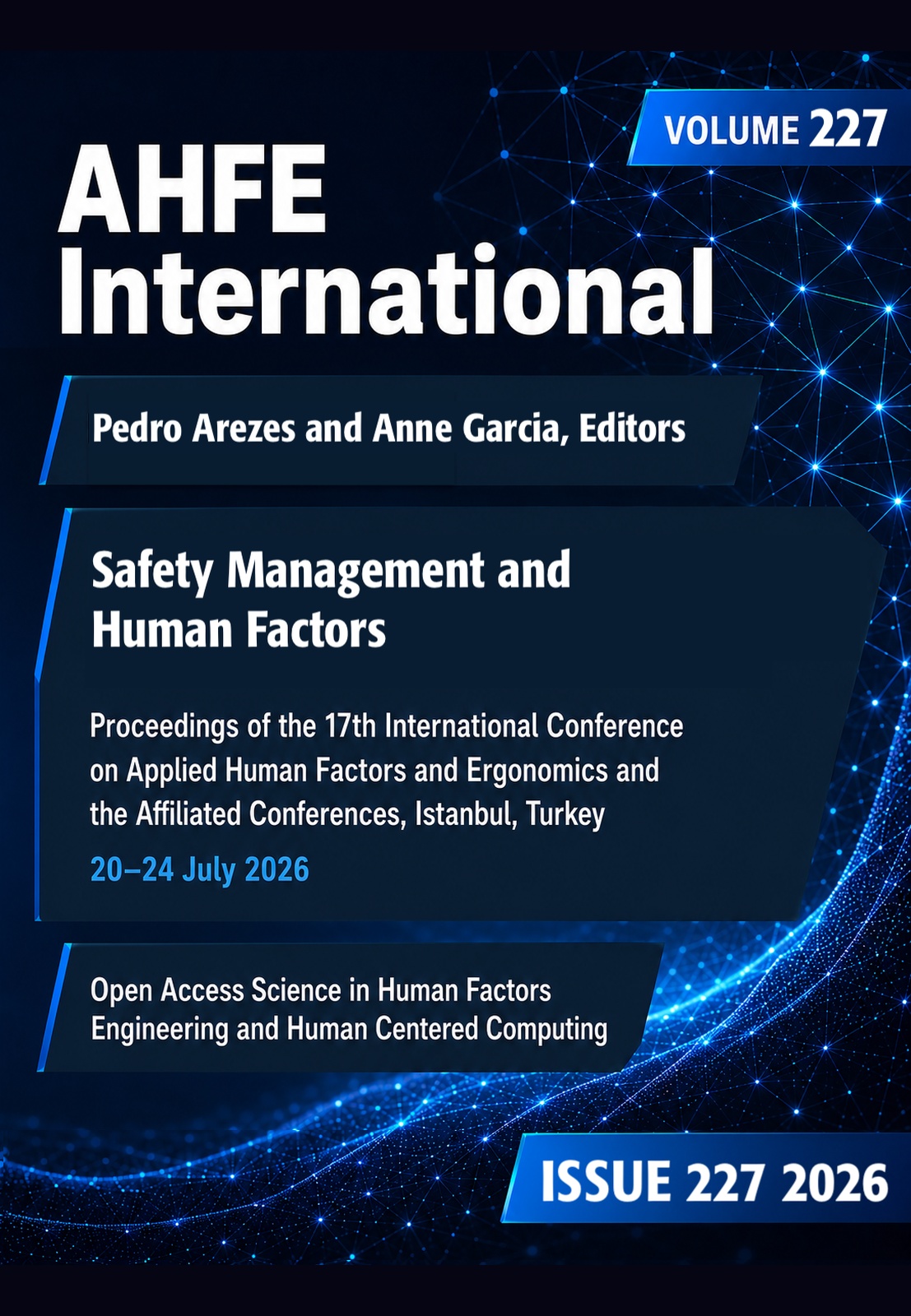
Editors: Pedro Arezes, Anne Garcia
Topics: Safety Management and Human Factors
ISBN: 979-8-950676-03-1
DOI: 10.54941/ahfe1007246
Table of Contents
Risk Assessment in a Biotechnology Laboratory Using the EMKG Method: Guide to Best Practices and Procedures
Information on the production of biomaterials through electrospinning has been reported; however, it is necessary to ensure the safety of students, teachers, and researchers who may be inadvertently exposed to biomaterials during laboratory tasks such as weighing, solution preparation, polymer solution loading, and cleaning. Aim: The aim is to contribute to increasing knowledge in this area by assessing the hygiene risks of activities involving hazardous substances in the biomaterials laboratory where scaffolds with potential biomedical applications are produced. Method and materials: The occupational risk assessment was performed according to EMKG Tools Workplace & Chemicals due to its ease of use, speed, and clarity compared to COSHH and INRS methods. Accessible parameters are used to estimate hazards and associate them with control strategies, which are implemented using the control guide (operating procedures and solution preparation protocol). Of the thirty-five chemicals used in the biomaterials laboratory, the following nine were assessed using the EMKG method: dimethylformamide, acetic acid, acetonitrile, methanol, hexane, lithium chloride, acetone, and ethanol, considering their respective Safety Data Sheets (SDS). Exposure estimates were based on parameters such as effective area, contact duration, quantity group, release group, and control strategy. Results: Of the nine chemicals identified, dimethylformamide and chloroform were classified as risk level 3, representing a significant hazard. Acetic acid, acetonitrile, methanol, hexane, and lithium chloride were classified as risk level 2, indicating the need for technical and organizational measures. Finally, acetone and ethanol were assigned a risk level 1, in line with good laboratory practices. Conclusions: Hygienic risks for teachers, students, and researchers were identified during laboratory activities, even when substances were used at low concentrations. Therefore, it is essential to implement measures that standardize procedures and minimize the possibility of unwanted incidents.
Rodrigo Dominguez, Javiera Ayala, Sebastian Amaro, Alex Rojas, Cristian Acevedo
Open Access
Article
Conference Proceedings
Development of the Fear of Work-Related Accident Scale: Pilot Study and Content Validity Findings
Workplace accidents represent a significant occupational health and safety issue, resulting in not only physical injuries but also lasting psychological consequences. The fear and anxiety surronding potential injury or re-injury can influence employees’ safety behaviors, well-being, and organizational outcomes. However, current research and systematic reviews on occupational safety primarily focus on risk perception, safety climate, or hazard awareness, while overlooking the fear of work-related accidents as a distinct emotional construct. Additionaly, there is no validated instrument specifically designed to measure this phenomenon. This study aimed to develop and preliminarily evaluate the Fear of Work-Related Accident Scale (FWRAS) to fill this measurement gap and provide a reliable tool for future empirical and systematic investigations. Following a literature-informed framework, an item pool was created through a literature review and feedback from employees. Content validity was established through expert evaluation. The pilot study was conducted online with employees from various sectors (n = 47). Internal consistency was assessed using Cronbach’s Alpha coefficients, and corrected item–total correlations were calculated to evaluate item discrimination and scale reliability. The results showed high internal consistency across subdimensions and adequate item discrimination, indicating satisfactory preliminary reliability. The multidimensional structure of the FWRAS captured emotional, cognitive, and behavioral aspects of accident-related fear. The FWRAS offers a promising framework for measuring fear of work-related accidents and could support future large-scale studies, systematic reviews, and evidence-based interventions exploring its connections to safety behavior, burnout, and job satisfaction. Developing a reliable measure is crucial for integrating emotional risk factors into occupational safety research and practice.
Gökçe Özkılıçcı, Hüsre Gizem Akalp, Nuran Bayram Arli, Serpil Aytac
Open Access
Article
Conference Proceedings
Risk Factors Contributing to Slips, Trips, and Falls Among Truck Drivers: Evidence from Canada
Slips, trips, and falls (ST&F) represent a major source of occupational injury among truck drivers; however, limited research has systematically examined the full range of contributing factors across work activities. This study investigates patterns and contextual risk factors associated with ST&F incidents among truck drivers in Canada using secondary accident report data obtained from Employment and Social Development Canada (ESDC). A descriptive analysis was conducted on 146 ST&F incident records to examine environmental conditions, work activities, incident contexts, and injury outcomes. The results indicate that ST&F incidents most frequently occurred during routine access and handling activities, particularly walking and stepping up or down. Incidents were more common during winter and spring and under cold or adverse weather conditions, reflecting the influence of surface hazards. Most incidents occurred at customer sites and in ground-level or vehicle-adjacent areas. Slips and trips were identified as the dominant hazardous event mechanism. Lower extremities were the most frequently affected body region, and although most injuries were classified as minor, a substantial proportion resulted in major injuries. The findings highlight the multifactorial nature of ST&F risk among truck drivers and emphasize the interaction between environmental, organizational, and task-related factors. Practical implications include the need for improved winter surface maintenance, safer vehicle access design, enhanced safety coordination at external sites, and targeted training for high-risk activities.
Aida Haghighi, Hossein Zolfagharinia, Elaheh Mizbani
Open Access
Article
Conference Proceedings
Effects of Visual Display Terminal Refresh Rate on Game Performance and Visual Fatigue of Casual Players
Previous studies have shown that high-level gamers benefit from high refresh rates, but prolonged monitor use induces visual fatigue. However, research gaps remain regarding casual players. This study investigates the impact of screen refresh rates (60Hz, 144Hz, 240Hz, 360Hz) on the performance and visual fatigue of 32 casual players. Participants completed three typical FPS game tasks (shooting, tracking, CSGO) under different conditions, with both objective and subjective indicators collected. The results indicate that increased refresh rates improved performance to a certain extent, with 240Hz yielding the best results. For visual fatigue, significant differences were observed in the objective blink rate across conditions, although subjective fatigue scores remained unchanged. In summary, higher refresh rates enhance performance for casual gamers, while lower rates pose higher fatigue risks. Notably, 240Hz balances optimal performance with visual comfort, making it the optimal choice. These findings not only optimize the performance and visual experience for casual gamers, but also provide empirical support for mitigating visual fatigue and health risks associated with prolonged screen use. Based on these results, this study can be further translated into targeted safety management guidelines for diverse usage scenarios (e.g., home entertainment, casual gaming, remote work), aiming to promote a healthy human-device interaction experience.
Zhongting Wang, Yue He, Xiqiang Liu, Zhao Chaoyi, Lei Jiang, Hongzhan Chen, Linghua Ran
Open Access
Article
Conference Proceedings
Evaluation of working posture using the Xsens inertial system in production in accordance with Czech legislation
Musculoskeletal disorders represent a significant health and economic problem in the workplace, especially in industrial production involving a high proportion of repetitive upper limb movements. However, existing assessments of working postures based on observation and manual recording are often subjective and time-consuming. The aim of this study was to verify the usability of the Xsens inertial measurement system for the objective assessment of upper body working positions in real production line conditions and to assess its compatibility with the requirements of Czech legislation, specifically Government Regulation No. 361/2007 Coll. The data obtained on the joint angles of the arms, spine, and head were subsequently processed in MATLAB and converted to time exposures per shift. The results showed that the hygienic limits for working positions were not exceeded in most of the segments evaluated. For the upper limbs, a significant predominance of time spent in an acceptable arm position (<40°) was recorded, specifically 136 minutes for the right upper limb and 128 minutes for the left upper limb during a work shift. At the same time, it was found that evaluating the head based solely on flexion does not provide a sufficiently comprehensive picture of the actual load on the cervical spine, as lateral tilts, rotations, and extensions also occur during work activities. The study confirms that inertial measurement systems are a suitable tool for refining ergonomic assessment and can serve as an effective supplement to existing legislative and observational methods.
Karolína Šablaturová, Pavla Nikelová, Lucie Kocůrková, Denisa Charvátová
Open Access
Article
Conference Proceedings
Failure of roller coaster safety management at amusement parks
Background. Amusement park guests and employees have been killed by walking underneath inverted roller coasters. Best safety management practices require investigation and mitigation of hazardous conditions that have resulted in fatal incidents. While some amusement parks have taken actions to prevent such incidents, their efforts have been inadequate. This presentation describes the human factors (HF) method used to analyze these fatal incidents and the results of those analyses. Methods. We used online databases to identify fatal incidents in amusement parks that resulted from persons entering the space below inverted coasters, and obtained detailed records from government agencies, news accounts and legal proceedings describing these incidents. We used the Human Factors Analysis and Classification System (HFACS) to analyze these incidents. Results. We identified 41 different incidents world-wide. From descriptions of the behavior of people killed while underneath an inverted roller coaster, it was apparent that they had not understood the hazards of walking underneath the coaster. Results of the HFACS revealed multiple causal factors of the fatal incidents. Discussion. Adopting a systematic HF analytic approach to investigate fatal incidents is needed to lead park management and investigators away from focusing only on unsafe behavior of guests and employees, and instead lead them to evaluating systemic causal factors such as failures of safety policies and procedures, warning systems, and training. HFACS also can benefit HF and safety professionals not only in conducting incident investigations, but also in proactively improving design of amusement parks and other complex systems to support safe and effective use.
Kenneth Nemire
Open Access
Article
Conference Proceedings
How are the Nov. 1, 1966 Loop Fire Fatalities Tied Into the Overall Fire Shelter Movement Concealing the Truths About Other Fatal and Near-Fatal Fires?
This paper examines a controversial issue regarding wildland firefighting fire shelter technology progress, studying institutional responses to [FF] fatalities, or equipment support over careful safety reform. The 1966 to 2013 seven major incidents include Nov. 1, 1966, Loop Fire claiming twelve El Cariso Hot Shots. The main thesis explores if the fire shelter, first introduced in the 1960s, became rooted in a general pattern where post-incident investigations diminished causal factors beyond shelter deployment failures. Chronologically studying the Loop Fire (1966, CA), Battlement Creek Fire (1976, CO), Lake Mountain Fire and Butte Fire (1985, ID), Dude Fire (1990, AZ), South Canyon Fire (1994, CO), and Yarnell Hill Fire (2013, AZ), research identifies chronic official investigative reports and institutional policy responses. Using human factors analysis to assess each incident through decision-making routes, situational awareness, communication breakdowns, training (in)adequacy, equipment limits, and organizational culture. Specific notice is given to case-by-case fire shelter performance depicted in official findings versus independent analyses, whether shelter development emphasis dwarfed general issues including lacking Escape Route planning and fire behavior prediction failures. Whether focusing investigative fire shelter deployment conclusions protected institutional decision-making from deeper examination. The case study examines the prescribed safety protocols gap and actual field conditions, analyzing post-incident recommendations root causes versus verifying existing equipment-focused standards. The Yarnell Hill Fire is an up-to-date anchor point, forty-seven years after the Loop Fire, allowing whether previous tragedies examinations lessons were amply added into training, policy, and operational procedures. Exploring if the fire shelter safety protocols may have created a risk compensation phenomenon, potentially influencing tactical decisions providing perceived protection potentially unreliable under extreme conditions. Evaluates if equipment design, including shelter deployment requirements adequately accounts for physiological and psychological stress, reduced motor function under duress, and cognitive load during life-threatening situations. This human factors investigation avoids rejecting fire shelter technology's legitimate protective capabilities questioning whether institutional equipment adequacy emphasis barred more thorough preventable causal factors examination. It is impossible to prevent fatalities in all work groups; all we can do is reduce them based on honest investigations and causal human factors. Proposing a framework for more all-inclusive incident analysis weighing equipment evaluation with organizational culture review, training efficacy, and systemic risk management advances. Knowing potential institutional wildland firefighter safety investigations biases remains critical for reducing future tragedies and honoring those who perished.
Fred J Schoeffler
Open Access
Article
Conference Proceedings
From incident narratives to actionable controls: insights on the iron & steel industry using LLM assisted learning from incident databases
Learning from incidents is a cornerstone of occupational safety risk management, especially in high-risk industrial sectors. Incident databases support this process by collecting records that describe the causes, dynamics, and consequences of adverse events. However, these databases largely rely on unstructured textual narratives, which limits systematic analysis and the translation of learned lessons into effective preventive actions. This paper focuses on the iron and steel industry and presents an analysis pipeline supported by Large Language Models (LLMs) for extracting, synthesising, and structuring information from two major incident databases: the U.S. OSHA database and the French ARIA database. Relevant records were selected using industry classification codes and pre-processed to harmonise terminology, normalise information fields, remove duplicates, and manage multilingual content. Within a human-in-the-loop framework, LLMs were used to identify critical occupational risk scenarios, characterise them in terms of frequency and severity, and derive prevention and risk mitigation measures structured according to the ISO 45001 hierarchy of controls. Eight critical scenarios were identified and subsequently validated and refined by safety experts from the steel industry. Quantitative analysis identified point-of-operation machinery and load handling as the most frequent scenarios, while confined spaces and high-energy events exhibited disproportionate severity and lethality. The results demonstrated how LLM-supported approaches can enhance learning from incidents by transforming large volumes of heterogeneous narrative data into a traceable, expert-validated knowledge base that supports hazard identification, risk assessment and management, and continuous improvement in high-risk industrial environments.
Giuseppe Tomasoni, Filippo Marciano, Paola Cocca, Martina Zorzi, Elena Stefana, Massimo Guarascio, Francesco Sergio Pisani, Bernardo Valente
Open Access
Article
Conference Proceedings
Misinformation Risk: Epidemiological and Social Models
Understanding the mathematical dynamics of information propagation is critical for cognitive safety and crisis management. This study applies biological and sociolinguistic models to the diffusion of fake news in social media using the disinformation outbreak following the terrorist attack on Charlie Hebdo as case study. Biological models such as Susceptible-Infected-Recovered, Susceptible-Exposed-Infected-Recovered and sociolinguistic frameworks like Daley-Kendall and Maki-Thompson are fitted to real-world data using the nonlinear least squares method. The numerical results demonstrate that the Daley-Kendall model provides the most accurate fit to the observed data, outperforming the classical biological models. The findings indicate that the end of an explosive rumour is not governed by passive temporal recovery or incubation periods (as assumed in biological models) but by the mutual stifling. This suggests that in high-frequency social networks, information redundancy serves as the primary stabilizing mechanism. These insights propose that effective safety interventions should focus on accelerating network saturation to mitigate the spread of cognitive hazards.
Daniel Botelho, Maria Teresa Monteiro, Senhorinha Teixeira
Open Access
Article
Conference Proceedings
Engineering Safe Human-Autonomy Teaming in Swarm Drone Simulator Applications Using System-Theoretic Process Analysis extended for Coordination
This paper presents a structured safety engineering approach to swarm drone simulator applications using System-Theoretic Process Analysis extended for Coordination (STPA-Coordination). The method is applied to the Valkyrie UAS certification program conducted by the Norwegian Defence Research Establishment, which involved multi-drone missions under dynamic environmental conditions. Observational data revealed coordination challenges such as degraded communication, role ambiguity, and misaligned intent between human operators and autonomous agents. STPA-Coordination was used to model control structures, identify unsafe control actions (UCAs), and generate coordination-related loss scenarios across nine essential elements. To better visualize results, we have included STPA-Coordination analysis and extended on modelling work functions as a network. Design constraints and training interventions were derived to mitigate risks. The integration of STPA-Coordination into simulator-based training enhanced cognitive comprehension and team coordination, supporting safer deployment of autonomous systems in reconnaissance and ISR missions. This work contributes to the Safety Engineering track by demonstrating how system-theoretical safety analysis can be embedded into certification and training workflows to proactively address coordination hazards.
Rune Stensrud, Sigmund Valaker, Aleksander Simonsen, Ina Berby
Open Access
Article
Conference Proceedings
Training and Assessing Hazard Perception in High-Risk Occupations: Toward an AI-Driven Adaptive and Immersive Simulation
Work-related accidents in high-risk occupations remain a recurring and costly challenge. Emergency vehicle driving (EVD) is ranked among the most hazardous occupations, with a large proportion of accidents attributed to poor risk perception and inadequate situation awareness (SA). The capacity to identify hazards is a multidimensional cognitive process that may benefit from training and cannot be assumed to develop through experience alone. Yet most occupational safety programs focus on technical skills. The objective of this research is to present the conceptual framework behind a simulation-based cognitive training approach and to discuss the ongoing development and validation of a proof-of-concept: an AI-powered adaptive simulation for hazard perception (HP) training in which eye-tracking is the enabling technology for real-time performance assessment and feedback. The conceptual framework is grounded in the NSEEV model (Noticing, Salience, Effort, Expectancy, Value) and the concept of SA. In the case of EVD, the platform presents drivers with short video clips recorded from the perspective of an emergency vehicle, with hazardous events time-stamped by experienced field instructors. Eye-tracking provides an objective measure of attentional allocation and can reveal which hazards drivers fail to detect and whether specific scan patterns are associated with anticipated hazard detection. These oculometric and behavioural data feed a Bayesian knowledge-tracing algorithm that adjusts training content. Preliminary results from early versions of the platform provide support for the feasibility of the approach and for its potential as a low-cost, portable complement to high-fidelity simulation training.
Sébastien Tremblay, Cindy Chamberland, Isabelle Turcotte, François Vachon
Open Access
Article
Conference Proceedings
Development of a Comparative Framework for identifying the Optimal Process Safety Management (PSM) System using a Hybrid AHP-PROMETHEE Model.
Process safety (PS) is a disciplined framework for managing hazards in high-stakes industrial sectors, such as oil and gas, chemicals, and manufacturing, where it serves to prevent catastrophic fires, explosions, and toxic releases. While a robust Process Safety Management (PSM) system is essential for protecting human life, the environment, and corporate assets, the modern landscape offers multiple frameworks with varying components and scopes. This study addresses the challenge of system selection by developing a comparative framework grounded in Multiple Criteria Decision Making (MCDM) models. A hybrid approach integrating the Analytic Hierarchy Process (AHP) and the Preference Ranking Organization Method for Enrichment Evaluations (PROMETHEE-II) was developed to facilitate these comparisons. In this model, AHP is employed to quantify the relative importance of safety criteria, while PROMETHEE-II provides a rigorous outranking of the PSM systems. To ensure practical validity, five process safety experts were recruited to determine the weighting factors and perform the evaluations across four contemporary PSM systems. The results indicate that the Integrated Process Safety Management System (IPSMS) is the most reliable framework among those studied, as it offers the most comprehensive coverage of critical safety elements. This hybrid model provides a structured, data-driven decision tool for industries seeking to optimize their safety protocols.
Mohammed Alamoudi
Open Access
Article
Conference Proceedings
Collaborative Robotics and Worker Safety: An Ergonomic Perspective on Benefits and Risks
Collaborative robotics represents one of the main pillars of the latest industrial revolutions. With the goal of innovation and primarily to address the need for improved efficiency and productivity, cooperation between human workers and robots has emerged as a simple, effective, and relatively low-cost solution that does not require significant adaptation—whether in the work environment or in workers’ level of expertise. Indeed, collaborative robots are financially accessible and quite user-friendly, easy to install and program, which facilitates their integration into the workplace.From a health and safety perspective, particularly in ergonomics, collaborative robots offer many advantages in preventing musculoskeletal disorders (MSDs). A robot is useful for performing difficult tasks such as handling heavy loads, repetitive tasks, or tasks requiring high precision. The robot helps prevent human workers from being exposed to high physical strain and significant injury risk or from being forced into awkward postures that increase the risk of MSDs.On the other hand, sharing the same work environment between robots and humans also presents risks. The balance of power between humans and robots is not equivalent, and an unexpected movement, poor coordination, or programming or design issues can have a significant impact on a person’s safety—either instantly or over the long term due to repeated exposure to the same conditions. Therefore, integrating collaborative robots into workplaces must be done cautiously, considering ergonomic aspects during the design, installation, and programming phases to maximize benefits and minimize risks. This requires focusing on the human worker who will collaborate with the robot, considering their capabilities and limitations.
Mohamed Naceur Ben Aziza, Adel Badri
Open Access
Article
Conference Proceedings
Health hazards associated with self-protective behavior of farmers field crops in Suanphueng District, Ratchaburi Province, Thailand
This cross-sectional descriptive study aimed to examine the level of self-protective behaviors and to investigate their associations with personal factors, knowledge, and constructs of the Health Belief Model among field crop farmers in Suan Phueng District, Ratchaburi Province, Thailand. A total of 96 farmers aged 18 years and older were recruited using purposive sampling. Data were collected using a structured questionnaire and analyzed using descriptive statistics, including frequency, percentage, mean, and standard deviation. Associations between variables were examined using the chi-square test. The results indicated that the overall level of self-protective behaviors was high (mean = 3.93, SD = 0.46). Significant factors associated with self-protective behaviors included marital status (χ² = 11.04, p = 0.011), perceived susceptibility to health hazards (χ² = 22.07, p = 0.005), perceived benefits of self-protective behaviors (χ² = 58.48, p < 0.001), and perceived barriers to self-protective behaviors (χ² = 40.14, p < 0.001). These findings provide evidence to support the development of occupational health interventions and educational programs to enhance appropriate work practices and reduce exposure to health hazards among field crop farmers.
Amonrada Rongthong
Open Access
Article
Conference Proceedings
Implementation and adoption of AI-based camera systems for pedestrian detection on construction sites: field insights on barriers and enablers
Collisions between mobile industrial equipment and pedestrian workers remain a major source of serious injuries and fatalities on construction sites, accounting for 8% of reported fatal accidents in Quebec, Canada. In response, proximity detection systems, including artificial intelligence (AI)-based camera systems providing automated pedestrian detection, have been introduced to support collision avoidance. Adoption of AI-based camera systems is increasing due to their logistical simplicity compared with RFID-based solutions, but their use on construction sites remains limited and exploratory. Consequently, field-based evidence on how these systems interact with real construction activities and provide added value remains limited. This study examines barriers and enablers to the implementation and adoption of AI-based camera systems for pedestrian detection on construction sites.The study is based on a multi-case qualitative field investigation conducted across six construction sites involving four companies and twelve types of mobile equipment. Data collection included on-site field observations supported by video recordings and semi-structured interviews with mobile equipment operators, pedestrian workers, managers, and technology vendors. An inductive thematic analysis identified interrelated barriers and enablers shaping implementation and adoption, including detection reliability, installation and configuration practices, interface design, worksite organization, and worker involvement. These findings provide field-based insights into real-world use and show that adoption depends on alignment across technical, operational, organizational, and user-related factors.
Karine Ung, Damien Burlet-Vienney, Firdaous Sekkay, Aida Haghighi, Chantal Gauvin, Anouk Aubert-Simard, Caroline Jolly, Francois Gauthier
Open Access
Article
Conference Proceedings
Human Error and Artificial Intelligence Interaction in Occupational Safety
The study begins with a brief overview of the concept of artificial intelligence, which is now closely affecting individuals, social life, and all sectors. It then examines the development process of artificial intelligence, its areas of application, and the impact of the Internet of Things technology—which is increasingly being integrated into new applications—on the new generation of humans. It also emphasizes the importance of adopting a hybrid approach that combines machines' automation power with humans' ethical, intuitive, and contextual competencies for a sustainable and reliable future. Artificial intelligence, which has been rapidly accepted in professional work life and personal life, has created risks and problems both in specific sectors and in individuals' private lives, alongside its effects of simplifying life and increasing quality in every area. Despite concerns that human behaviour inherently carries greater risk than machine behaviour, analyses of errors made by artificial intelligence and errors made by humans reveal that, despite commonalities, the types, probabilities, effects, and consequences of these two types of errors differ significantly. For example, it is believed that the current capabilities of artificial intelligence technologies are insufficient to meet certain critical human competencies. It is seen that human-specific qualities such as ethical evaluation, contextual analysis, creative problem solving, and strategic reasoning cannot be fully performed by artificial intelligence. The biggest challenge facing artificial intelligence stems from the fact that a significant percentage of the data on which AI systems rely comes from humans. Such data is largely the result of the irrationality and subjectivity of people acting in their own self-interest. Human errors can be skill-based, rule-based, or knowledge-based. Skill-based errors are application errors, while the other two are planning-based. Studies show that most human errors are skill-based, such as carelessness and inattention, and are more likely to be detected. As a result, artificial intelligence should continue to be a complement in areas where the human factor is critically important and should maintain its indispensability. The proportion of human error is much greater than the proportion of artificial intelligence errors. And fundamentally, the source of artificial intelligence errors is human error. To mitigate their effects, investments are needed to improve error detection for both types of errors. As both humans and machines evolve, the likelihood of new errors emerging increases, while the likelihood of old errors persisting decreases, necessitating adequate risk management efforts.
Akide Cerci, Ismail ekmekci
Open Access
Article
Conference Proceedings
Economic Reforms and Their Impact on Sustainable Health and Safety Practices in Nigeria Construction Industry
In order to stabilize the economy, draw in foreign investment, and boost industrial productivity, Nigeria has recently enacted a number of economic reforms, such as the elimination of fuel subsidies, the liberalization of the foreign exchange market, modifications to the Finance Act, the restructuring of the petroleum sector, and the tightening of monetary policy. Although these reforms have accelerated the development of infrastructure, little is known about how they will affect sustainable health and safety (H&S) practices in the building industry. In order to evaluate the impact of these reforms on H&S sustainability, this study polled 202 construction industry professionals. Descriptive and inferential statistical analysis of the data showed high internal reliability (Cronbach's Alpha = 0.942) and strong relationships between the reforms and cost-related issues, such as higher accident rates (M = 4.00), lower funding for safety training (M = 4.02), and higher operational costs (M = 4.03). Better access to green incentives and chances for regional safety innovations were two beneficial but less noticeable effects. The findings show that although reforms have boosted growth, they have also increased workplace risks by straining safety budgets and weakening regulatory oversight. To ensure that economic advancement does not jeopardize worker welfare or long-term safety performance in Nigeria's construction industry, the study concludes that it is imperative to integrate macroeconomic policies with targeted safety funding, robust enforcement mechanisms, and sustainability incentives.
Olatoyese Oni, Clinton Aigbavboa
Open Access
Article
Conference Proceedings