

 AHFE Open Access
Human-Computer Interaction & Emerging Technologies
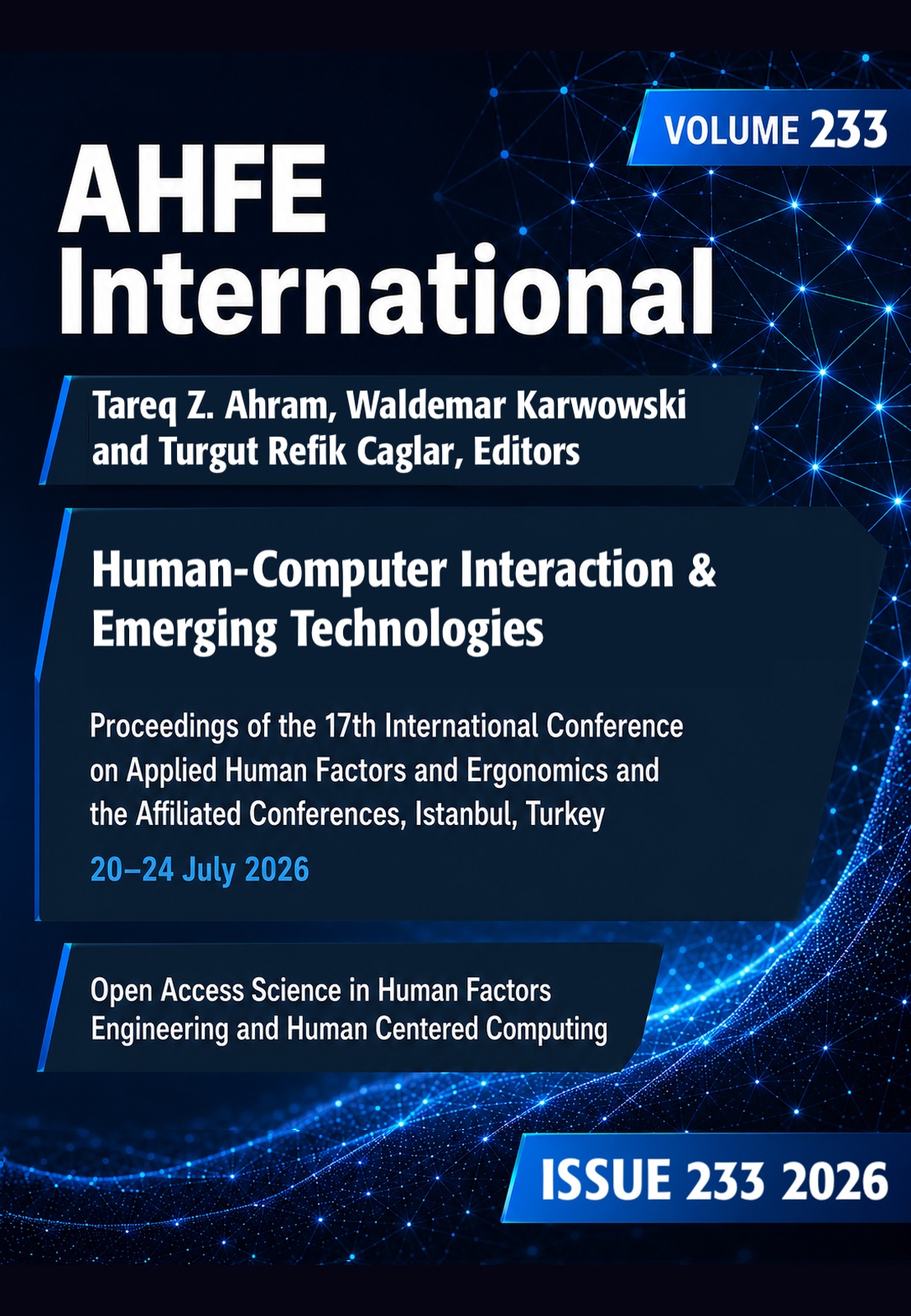
Editors: Tareq Z. Ahram, Waldemar Karwowski, Turgut Refik Caglar
Topics: Human Systems Interaction
ISBN: 979-8-950676-09-3
DOI: 10.54941/ahfe1007252
Table of Contents
Brain-Computer Interface versus Brain-Computer Interaction
The terms “brain-computer interface” and “brain-computer interaction” are closely related, but they emphasize different aspects of brain-computer systems. The ongoing misinterpretation of these terms has impeded the accurate classification of applications and research studies, making this clarification essential for advancing the field. The primary aim of this study is to clarify the confusion in the literature by highlighting the distinctions between “brain-computer interface” and “brain-computer interaction”, as well as to explore the relationship between these two concepts. Clarifying these definitions will help establish a more consistent theoretical framework and improve the comparability of research findings. Moreover, it will support the development of user-centered systems that integrate both technical performance and experiential dimensions. In doing so, this study seeks to contribute to a more coherent understanding of how humans and computers can communicate through neural activity. Through a conceptual analysis supported by a structured review of recent literature, the findings demonstrate that while the two terms are frequently used interchangeably, they reflect distinct emphases in both system design and research orientation. Brain-computer interface traditionally denotes the technical mechanism enabling neural signal translation and device control, whereas brain-computer interaction encompasses a broader, bidirectional, and user-centered perspective that integrates feedback, adaptability, and experiential dimensions. In conclusion, establishing clear and consistent use of these terms will contribute to a more coherent scientific discourse and facilitate progress toward intelligent, responsive, and ethically grounded brain-computer systems.
Erman Çakıt, Waldemar Karwowski
Open Access
Article
Conference Proceedings
Human–AI Interaction as a Catalyst for Interdisciplinary Co-Creation: Exploring Prompt-Driven Visualization in Design Education
This study investigates the role of generative artificial intelligence as a mediating tool in interdisciplinary design education, focusing on its impact on design communication and collaborative participation. The research was conducted within a university-level interdisciplinary design course involving both design and non-design students working on product design tasks. Text-based AI tools were introduced for prompt refinement, while image-generation tools were used to support early-stage visual ideation.A qualitative research approach was adopted, including classroom observation, analysis of student design artifacts, and semi-structured interviews. The results indicate that generative AI is most effective during the conceptual ideation phase, where AI-generated images function as shared visual references that facilitate discussion, negotiation, and collective decision-making. In particular, AI-supported visualization lowered participation barriers for non-design students by enabling visual articulation of ideas without reliance on traditional drawing skills. Design students assumed integrative roles, focusing on interpretation, refinement, and the translation of AI-generated concepts into feasible design outcomes.The study further identifies prompt authoring as a critical human–AI interaction layer, emphasizing its role in design reasoning and communication. While limitations remain in later-stage design refinement, generative AI demonstrates clear pedagogical value in supporting interdisciplinary collaboration.
Zun-hwa Chiang, Hung Lee, Cheng-yun Wu
Open Access
Article
Conference Proceedings
Context-aware LLMs for healthcare requirements engineering
Requirements engineering (RE) is a collaborative, context-dependent, and resource-intensive process, particularly in highly regulated domains such as healthcare. Recent advances in large language models (LLMs) have raised questions about their potential in supporting early-stage requirements elicitation. However, integrating LLMs introduces an additional mediation layer between contextual knowledge and articulated system requirements. Drawing on Norman’s concepts of the gulf of execution and the gulf of evaluation, this study examines under what contextual conditions LLMs approximate human expert–elicited requirements. We conducted a 3 × 3 × 3 simulation study comparing three LLMs (GPT-5.2, Claude 4.5 Sonnet, and Gemini 3 Pro), three knowledge conditions (none, proposal-based, and literature-based), and three expert-role prompts (none, pediatrician, and geneticist). Each combination was repeated 50 times, producing a total of 1,350 outputs. Results show significant variation in requirement quantity across models and knowledge conditions, but consistently low semantic alignment with human expert requirements. Retrieval-augmented knowledge reduced output volume without improving the alignment with human-expert requirements. Role prompting produced marginal effects. All models demonstrated high within-condition reliability, indicating stable but moderately aligned outputs. These findings suggest that LLMs could function more as tools to generate requirements for scaffolding than as expert emulators. While LLMs do not operationalize contextual knowledge into expert-level requirements, they may support early RE processes.
Valeria Resendez, Andrew Hornback, Harinishree Sathu, J. Ben Tamo, Yining Yuan, May Wang, Nese Baz, Funda Yildirim, Russell Chan, Maria Fernanda Cabrera, Simone Borsci
Open Access
Article
Conference Proceedings
Understanding the Needs and Challenges of Developing Robot Teleoperation Applications using Mixed Reality Headsets
Robot teleoperation enables humans to control robots to perform tasks and collect data to train robot intelligence. Compared to traditional interfaces, extended reality (XR)-based robot teleoperation offers more natural, efficient, and scalable interactions with reduced cognitive load. However, developing such applications involves interdisciplinary challenges across hardware, integration, interface design, and manipulation. To understand current practices and challenges, we conducted semi-structured interviews with 15 developers, ranging from novice prototypers to industry experts. While prior work focuses on end-user usability, this study explores the developer experience (DX) bottlenecks from the perspective of developers at varying levels of expertise, including undergraduate prototypers, graduate researchers, and industry practitioners. We identify a "Middleware Gap" where network instability and protocol mismatches hinder reproducibility, and a "Data Utility Crisis" where current XR tracking lacks the fidelity required for robust imitation learning. We contribute a refined taxonomy of XR teleoperation and a set of prioritized design implications, moving beyond generic wish lists to specific architectural requirements for interoperability, sensory substitution, and human-in-the-loop safety.
Liuchuan Yu, Ke Jing, Zhigen Zhao, Ning Yang, Zhicong Lu
Open Access
Article
Conference Proceedings
Daughter-Led Intergenerational Collaboration: Human-Computer Interaction in APP-Based IUD Removal Support for Midlife Women
Middle-aged women in China face health risks from prolonged IUD use, often beyond recommended durations, with postmenopausal women at higher risk. Current healthcare services lack proactive support, particularly for removal. Daughters, motivated to help, face barriers like trust gaps and limited knowledge. To address this, we developed the Daughter-led IUD Care app, which raises awareness, reduces surgical fears, and offers professional guidance. The app features four modules: Community Sharing, Workshop Reservations, Knowledge Learning, and Hospital Reservations. Evaluation shows the app improved mothers' willingness to remove IUDs and enhanced daughters' support. By leveraging family bonds, it fills gaps in healthcare programs and offers a model for integrating familial support into public health strategies.
Feiyang Chen
Open Access
Article
Conference Proceedings
The Effect of the Degree of Multimodal Information Explanation by AI Streamers on Consumers’ Purchase Intention: The Moderating Role of Product Type
With the increasing adoption of AI virtual streamers in livestream commerce, product presentations are undergoing a fundamental transformation—from linear, host-led explanations toward interactive, AI-driven formats in which intelligent agents integrate multimodal information and actively scaffold user understanding. While prior research on multimodal communication in livestreaming has largely emphasized presentation formats or the number of modalities employed, it has paid limited attention to the extent to which AI virtual streamers intervene in organizing and explaining information within multimodal environments, and how such explanatory intervention shapes consumer decision-making. Addressing this gap, the present study conceptualizes and examines the degree of multimodal information explanation provided by AI virtual streamers. Drawing on a 2 (product type: utilitarian vs. hedonic) × 3 (degree of multimodal information explanation: low, medium, high) within-subject experimental design, we systematically investigate its effects on consumers’ purchase intention and technology acceptance, as well as the moderating role of product type. The results reveal that higher levels of multimodal information explanation significantly enhance technology acceptance, while their effects on purchase intention are contingent upon product type. Specifically, product type moderates the relationship between explanatory depth and purchase intention, whereas no significant moderating effect is observed along the technology acceptance pathway. By shifting the analytical focus from modality configuration to AI-driven explanatory intervention, this study extends the theoretical framework of multimodal communication in livestream commerce and advances understanding of how explanation depth functions as a critical mechanism in facilitating user cognition and shaping consumption responses. These findings provide actionable implications for optimizing explanation strategies of AI virtual streamers and designing more effective multimodal content in livestreaming contexts.
Jing Zhang, Mier Zhu
Open Access
Article
Conference Proceedings
Refining Research Questions for AI-Assisted Knowledge Retrieval in Interior Design: An Exploratory Study of Expert Judgment
AI-assisted knowledge retrieval is increasingly used to support interior designers during early-stage exploration; however, current “single-shot” and keyword-driven paradigms fail to align with the iterative, interpretive, and responsibility-laden nature of expert design reasoning, requiring designers to articulate ill-defined needs precisely and offering limited support for multi-criteria comparison and accountable decision-making. This exploratory qualitative study investigates how senior interior designers structure judgment across three phases of material selection—searching, comparing, and deciding—and where AI-assisted tools support or fail to support expert reasoning. Semi-structured interviews were conducted with three senior professionals who each have 15–20 years of experience. Verbatim transcripts were analyzed using inductive thematic coding using open, axial, and thematic clustering, yielding ten codes organized into three higher-level themes: comparison-stage difficulties, expert judgment logic, and perceived roles of AI. Findings show that experts value AI for accelerating visual exploration and broadening references, but experience breakdowns during comparison due to nomenclature confusion, persistent gaps between online information and local supply-chain realities, and the lack of structured failure-based evidence. Expert judgment is anchored in constructability reasoning, tactile and physical verification, psychological matching with client intent, and reliance on trusted human networks. Based on these structures, we derive interface design implications that emphasize uncertainty awareness through time-stamped availability and risk flags, evaluation transparency through inspectable criteria and trade-offs, responsibility boundary clarification, and professional agency preservation through adjustable comparison frameworks. This human-centered framing positions AI-assisted knowledge retrieval as a collaborative decision-support system that augments—rather than replaces—expert judgment in high-stakes material decision-making.
Tzuno Tseng, Tung-Ming Lee
Open Access
Article
Conference Proceedings
Performance Trust in AI Reduces Cognitive Workload: Evidence from Structural Equation Modeling and Item-Level Analysis
Generative AI is increasingly used in work settings, where users often iteratively refine prompts to obtain outputs that match their intentions, potentially increasing cognitive workload. Although trust in AI is considered important for effective human--AI collaboration, how trust relates to cognitive workload---and which trust components matter most---remains unclear. This study experimentally examined trust--workload relationships in prompt-based interaction with an image-generation system. Twenty-three employees performed task-oriented image-generation tasks under two interaction conditions (Automatic vs. Prompt) designed to induce workload differences. Trust was measured using eight MDMT Performance Trust items, and cognitive workload was assessed using the Gas Tank Questionnaire. Analyses proceeded in three steps: (1) item-level correlations, (2) structural equation modeling (SEM) of Performance Trust predicting cognitive workload while controlling for Condition and Theme, and (3) a trust-items-only regression reporting standardized coefficients (\(\beta\)) with 95\% confidence intervals. SEM showed that higher Performance Trust was associated with lower cognitive workload (\(\beta=-0.385, p<.001\)), explaining 35.0\% of the variance (\(R^2=0.350\)). Item-level regression further indicated unequal contributions among trust components. These findings suggest that strengthening Performance Trust and prioritizing workload-relevant trust components can support low-burden human--AI collaboration.
Mari Saito, Seiji Yamada
Open Access
Article
Conference Proceedings
The Impact of Direct and Third-Party Control: A Comparison of the Usage of AI Advice in Hiring Decisions
For the trustworthiness of AI-based systems and their usage, control plays an important role from both regulatory and end-user perspectives. In general, two control approaches can be distinguished: direct control, giving the end user greater influence over the AI system, or a more indirect approach, by involving third parties to exercise control over the system. In this between-subjects experiment with 181 participants, four conditions with direct and indirect (third-party) control measures were compared in their usage of the AI systems' recommendations. During this study, participants evaluated the fit of fictional applications for a job opening. To assess system usage, we used the weight of advice (WOA), measuring the extent to which recommendations were considered in participants' assessments. A one-way ANOVA found a significant difference in the WOA between the levels of control: F(3, 183) = 2.81, p = .041. Group comparisons via contrasts showed a significant difference between the comparator and the third-party verification group (0.27; SE = 0.10; p = .011). Descriptively, all three experimental groups showed a higher usage (WOA) than the comparator group. This study shows the potential for control measures to deliver more trustworthy AI systems that see a higher usage of their recommendations. Thus, it provides practical implications for future design of AI-based decision support systems.
Johannes Zysk, Antonia Markus, Esther Borowski, Ingrid Isenhardt
Open Access
Article
Conference Proceedings
User Perceptions of Response Inconsistency and Trust in AI-Assisted Learning
Generative AI chatbots are increasingly deployed in educational settings, yet their inherent response variability may undermine user trust and long-term adoption. This study examined how perceived response inconsistency and response structure influence user trust, perceived learning, and task performance in AI-assisted learning. Thirty-one graduate students completed GRE-style verbal reasoning tasks with AI assistance delivered via a Wizard-of-Oz chatbot that systematically varied response style (Standard, Lengthy, Unstructured, Ambiguous) across trials, creating response inconsistency by design. Post-task surveys assessed perceived inconsistency, trust impact, and learning experience, while task accuracy served as the objective performance measure. Spearman correlations were employed given the ordinal nature of the survey data. Results revealed that participants who noticed greater response inconsistency reported significantly higher trust damage (ρ = .617, p < .001) and more negative perceived learning impact (ρ = .499, p < .01). Critically, however, neither trust nor perceived learning impact correlated with actual task accuracy. This perception-performance disconnect indicates that users felt their learning was impaired when they noticed inconsistency and lost trust, yet their objective performance remained unaffected. Additionally, 86% of participants identified unstructured responses as detrimental to comprehension, while emoji use was rated highly effective for understanding (M = 4.61/5). These findings suggest that response inconsistency poses greater risks for user trust and long-term engagement than for immediate task performance. Users may abandon effective AI tools they do not trust, highlighting the importance of evaluating subjective user experience alongside objective performance metrics in educational AI systems. Design implications include prioritizing structural consistency in AI responses and incorporating visual cues to aid comprehension.
Ashwini Srinivasaprasad, Omer Bugra Kanbur, Vincent Duffy
Open Access
Article
Conference Proceedings
Designing a Rhythmic AR Interaction for Auditory-Oriented Heritage: A Preliminary Case Study at Guqintai
As digital cultural tourism increasingly shifts from one-way presentation to participatory interaction, augmented reality (AR) technology has been progressively applied in cultural heritage contexts. However, most existing AR cultural tourism applications remain limited to overlays of text, images, or animations, leaving users largely in a passive viewing role. Systematic research on how embodied interaction influences users’ comprehensive engagement and psychological perception, as well as on perceptual differences across various types of heritage sites, remains scarce. This study takes the 'Zhi Yin' culture carried by Wuhan’s Guqintai as a case study. We developed a rhythm-driven AR interaction prototype that transforms the classical narrative of Bo Ya and Zhong Ziqi into actionable interactive experiences, guiding visitors to perceive narrative continuity and develop a sense of situated engagement during their on-site visit. A small-scale field user test was conducted, collecting observational notes and interview data to evaluate system usability, immersion, and cultural understanding. Results indicate that rhythm-driven interaction can markedly improve engagement in auditory-oriented heritage settings: most participants quickly learned the rhythm-trigger logic, and the sound-motion synchronization mechanism effectively increased attention and emotional involvement. Furthermore, gesture amplitude was positively correlated with immersion across different rhythm stages, with large gestures (e.g., in punching interaction) eliciting higher engagement and enjoyment than smaller gestures (e.g., in conducting interaction). In summary, this study provides preliminary practical and theoretical insights for AR interaction design in auditory-oriented heritage contexts. It demonstrates the potential of rhythm-driven interaction to enhance engagement, facilitate cultural understanding, and evoke emotional resonance, laying the foundation for future large-sample studies and adaptive, data-driven optimization research.
Chen Yitong, Miaoxin Zhang
Open Access
Article
Conference Proceedings
Feedback-Driven Adaptive AR Assistance for Intralogistics: Design and Initial Evaluation
Manual order picking remains a central intralogistics activity, but performance is constrained by non-value-added travel and by search and verification effort at the shelf. Augmented-Reality pick-by-vision systems promise context-sensitive guidance directly in the field of view of the workers, yet practical deployment must cope with deviations such as empty compartments without breaking task flow. This paper presents the design and prototype implementation of a feedback-driven adaptive assistance concept for picking. Following a Design Science Research process, requirements were derived from a scenario analysis and an expert interview, then realized in a Unity-based simulation prototype that combines egocentric route guidance with bin-level highlighting and a deterministic correction mode. When a stock shortage is reported at the target shelf, the system switches to a predefined reserve location and recalculates guidance accordingly. The prototype was assessed in an exploratory qualitative think-aloud study (N = 5). Participants reported high confidence in task completion (mean 8.8/10) and highlighted the route line and shelf framing as helpful cues. They also noted usability issues with the visibility and affordance of the stockout reporting control. This highlights an AR trade-off, as prominent overlays can increase guidance visibility but may obstruct the environment.
Leon Herz, Marian Sorin Nistor, Stefan Pickl
Open Access
Article
Conference Proceedings
Inclusive Navigation Design: Exploring How Tactile Cues Shape Trust and Exploration Intention for Visual Impaired User
Visually impaired individuals often encounter uncertainty and limited autonomy when navigating complex indoor environments, such as museums,sports centers. While tactile cues have been proposed as compensatory aids, few studies examine how tactile guidance influences psychological security and actively motivates exploration behaviors in such contexts. This research investigates the mechanism by which tactile interaction supports trust, emotional security, and spatial agency. Study 1 employed formative interviews with ten visually impaired participants and two accessibility designers to extract design needs and key tactile guidance elements.Study 2 implemented a lightweight tactile-guidance prototype within a simulated museum environment and collected 227 survey responses to examine how tactile design influences users’ sense of security, exploration intention, and spatial dominance. Results show that tactile guidance increases users’ exploration intention and spatial dominance primarily through sense of security as a key mediating mechanism. This highlights how emotional reassurance enables tactile cues to support more confident and self-directed navigation behaviors, offering actionable implications for inclusive museum wayfinding systems.
Xun Zhang, Zhiwei Yao, Fang Xing, Yuxuan Li
Open Access
Article
Conference Proceedings
An Adversarial Dual-Agent Critical Framework for Intelligent Evaluation and Optimization of Human–Computer Interaction Design
Critical thinking is a core practice in the field of human-computer interaction and design, aiming to enhance the quality of interaction solutions in multiple dimensions such as experience, technology, and ethics through systematic review. Existing research lacks collaborative deduction and in-depth demonstration of HCI schemes at the behavioral logic, engineering implementation and comprehensive risk levels. This leads to the difficulty in improving love, with feedback remaining superficial and fragmented, making it hard to support high-quality innovation and decision-making in a complex and dynamic interactive context. This paper proposes an adversarial design critical framework based on dual agents. This framework consists of two adversarial agents: (1) Experience Optimization Agent: This agent takes user experience as the core evaluation dimension and quantitatively analyzes the intuitiveness, operational efficiency, and user emotional feedback of the design plan based on interaction design principles, cognitive psychology models, and input user expectations. (2) Constraint Verification Agent: This agent takes technical feasibility and actual conditions as the evaluation dimensions, and based on implementation cost, performance indicators, multi-terminal adaptation requirements and basic design specifications, identifies technical implementation risks, performance defects and compliance issues existing in the design scheme. The results of user experiments show that, compared with traditional schemes, the framework constructed in this paper demonstrates outstanding performance in human-computer interaction tasks, significantly enhancing the comprehensive adoption rate of the generated suggestions, and showing efficient early warning capabilities for key design issues such as logical contradictions and imbalance of resource benefits. The collaborative evaluation mechanism effectively reduces the cognitive load generated when dealing with multi-dimensional feedback, enabling designers to focus more on core design decisions. In complex design contexts such as internationalization and cross-cultural, this framework also demonstrates superior adaptability and strategy generation potential, which is conducive to promoting the evolution of design assistance tools towards an intelligent collaboration paradigm with higher-level cognitive support capabilities.
Jiaqi Han, Peiyan Zhong
Open Access
Article
Conference Proceedings
Connecting with the Future Ecological Self through LLM Agents
This study explores the potential of large language model (LLM) agents to bridge the psychological distance between individuals and their future ecological selves. We employed a pre- and post-test experimental design, supplemented by a pilot study (N=6) incorporating semi-structured interviews and topical analysis. Key findings from the pilot study revealed several key themes: textualized sensory memory, algorithmic alienation, place attachment, and moral reactance. Furthermore, future research on PEBI should shift from self-reported intentions to long-term behavioral assessments. This study provides feasible evidence for different possible self AI prototypes that promote pro-environment behavior, while highlighting design implications for associating authentic ecological identity with sensory-rich narratives and familiar place connections.
Jie Hao, Yi Xu
Open Access
Article
Conference Proceedings
A Hybrid Continuum: Scaffolding Design Logic from Manual Making to Digital Fabrication
Contemporary design pedagogy faces a tension between analog-making traditions and digital technologies, often resulting in fragmented skill development. This paper examines a scaffolded pedagogical model that connects precedent analysis, hand drawing, material prototyping, digital modeling, and fabrication within a continuous learning sequence. The study is framed as a design-based qualitative workshop study conducted with 11 multidisciplinary participants. It analyses process observations, intermediate artifacts, and final outcomes across four workshop phases inspired by Giò Ponti's tile designs. Rather than claiming statistically measured improvement, the paper identifies how students' engagement with design process logic became visible through rule extraction, iterative translation, peer explanation, material testing, and digital reconstruction. The findings clarify three pedagogical thresholds: moving from visual appreciation to compositional rule recognition; from two-dimensional pattern to material relief; and from tactile form-making to digitally explicit geometry for fabrication. The paper concludes by proposing a carefully staged extension toward AI-assisted generative tools, arguing that analog and material foundations remain necessary for critically evaluating AI outputs in terms of geometric coherence, material feasibility, and fabrication readiness.
Silvia Albano, GianMarco Longo, Emanuela Corti, Ivan Parati
Open Access
Article
Conference Proceedings
The Group Synergy Metric: Quantifying Teamwork in Triads via Wearable EEG and Total Correlation
Effective teamwork monitoring is critical in operational environments, yet current EEG hyperscanning is often limited to dyads and strict synchronization. This study introduces the Group Synergy Metric (GSM), an Information Theoretic framework based on Total Correlation, designed to quantify cooperation in triads using wearable EEG. Unlike traditional coherence, GSM captures non-linear dependencies in mental states (Workload, Approach-Withdrawal) without requiring strict temporal alignment. Triads performed a modified cooperative game ("Keep Talking and Nobody Explodes") across Training, Solo, and Teamwork conditions of varying difficulty. Results demonstrated the GSM’s sensitivity to group dynamics (ANOVA, p < 0.001). Post-hoc analyses revealed that the Training phase elicited the highest synergy, while the Solo condition showed significantly reduced values compared to cooperative scenarios. An analysis of teamwork density over time showed sensitivity to task difficulty highlighting higher density in the training phase. Despite limitations regarding entropy estimation on short windows, these finding benchmark the discriminative power of the proposed index, despite theoretical limitations, verifying if it maintains the robustness necessary to distinguish not only between Cooperative and Solo conditions but also among different degrees of task difficulty.
Rossella Capotorto, Pietro Aricò, Andrea Giorgi, Gianluca Di Flumeri, Gianluca Borghini, Simone Ercoli, Alessia Ricci, Marianna Cecchetti, Francesca Dello Iacono, Daniele Germano, Fabio Babiloni, Vincenzo Ronca
Open Access
Article
Conference Proceedings
Dimension Transformation and Garment Sample Evaluation via Bibliographic Database
In the post-pandemic era, the apparel industry has undergone rapid digital transformation, with cross-dimensional technologies that integrate virtual and physical techniques emerging as a key trend. This study reviews 15 articles from the United States and Canada, exploring the application of physical and virtual simulation technologies to various types of apparel. It also analyzes the current challenges associated with the current transformations occurring within the garment evaluation process. Findings indicate that virtual technologies offer significant advantages in terms of enhancing design efficiency; notably reducing the number of revisions required when developing prototypes, and minimizing waste. These technologies are increasingly integrated with artificial intelligence, leveraging its potential to evaluate garment fit and comfort. However, despite their ability to substantially improve simulation accuracy and efficiency, ultimately validation through actual wearer assessments is required. This study recommends enhancing the interoperability of 2D to 3D tools, to establish evaluation frameworks that can provide new directions to support the digitalization of the apparel industry.
Ying-Chia Huang, WAN-YU Huang
Open Access
Article
Conference Proceedings
Usability and Interaction Evaluation of a Mixed-Reality Adaptive Control Strategy for Wearable Robotics
Robotics has increasingly focused on motion-assisting technologies, such as occupational back support exoskeletons, designed to reduce physical strain while preserving natural movement in rehabilitation, augmentation, and industrial ergonomics applications. Manual material handling tasks involving repetitive lifting and lowering remain a primary contributor to lower back disorders in industrial contexts, motivating the development of active exoskeletons capable of modulating assistance through adaptive control strategies. Existing acceleration-based controllers effectively adapt support to lifting dynamics but typically provide continuous assistance across task phases, including lowering, which may reduce transparency and perceived comfort. Recent advances in mixed reality, computer vision, and hand tracking technologies enable the integration of contextual and interaction cues into the control loop, allowing for more intuitive and selective assistance. In this study, a mixed reality interaction interface for an active back support exoskeleton based on a virtual muscle activity concept is evaluated. The virtual approach controller uses hand tracking to activate assistance during lifting and automatically configures assistance through visual load weight estimation. We experimentally compare this approach with a classical manual data entry interface using subjective, usability, workload, and comfort metrics during standardised and combined lifting tasks. The results indicated higher efficiency and satisfaction with the virtual muscle activity interface.
Olmo Alonso Moreno Franco, Marco Carega, Gabriele Giurin, Yonas Tefera, Maria Lazzaroni, Sergio Leggieri, Christian Di Natali, Luigi Monica, Darwin Caldwell, Jesus Ortiz
Open Access
Article
Conference Proceedings
Wearable cue design: A comparative research of different modalities of smartwatches microtasks
Despite the widespread adoption of smartwatches, rigorous experimental verification of how their multimodal interaction (visual + haptic) impacts performance and cognitive load in dyadic collaboration remains limited. Adopting a 3 (Modality) × 2 (Task Type) within-subjects design (N=14), we constructed a dual-task framework based on an intragroup dependency mechanism. This framework comprised two individual micro-tasks and one collaborative micro-task, requiring participants to synchronously respond to target stimuli for performance assessment, while secondary Probe Tasks were employed to evaluate cognitive load. Additionally, Performance Decrement Rate (PDR) was used to measure collaborative adaptability. Results indicate that multimodal cues significantly reduce distraction costs by offloading visual demands. While efficiency benefits are context-dependent and moderated by individual baseline capability—specifically benefiting lower-capability users via a compensation effect—multimodal interaction significantly enhances collaborative stability by suppressing performance fluctuations during high-load switching. These findings validate the Cognitive Resource Release Hypothesis and highlight the necessity for adaptive interaction designs in collaborative wearables.
Xinyu Huang, Zhiwei Yao, Yuxuan Li, Fang Xing, Diyu Zhou
Open Access
Article
Conference Proceedings
Design and Evaluation of a Wearable Biofeedback System for Real-Time Regulation of Social Anxiety Based on the System Desensitization Theory
This study explores the effective translation of Systematic Desensitization (SD) theory from clinical psychology into wearable interactive systems for social contexts. Addressing the challenges faced by individuals with Social Anxiety Disorder (SAD)—specifically the difficulty in perceiving physiological arousal and the lack of discreet regulation tools during real-world interactions—this paper proposes a design translation framework based on the "Detection–Guidance–Regulation" loop. The core contribution of this framework lies in the application of Peripheral Interaction techniques, which transform complex psychological intervention processes into non-intrusive, rhythmic feedback. To demonstrate the technical feasibility and design rationale of this translation path, an ear-worn biofeedback prototype was developed. Preliminary pilot evaluations indicate that the system achieves an engineering-grade response latency of 245 ms. Furthermore, small-scale usability testing (n=10) demonstrated high levels of wearable comfort and social discretion. This research establishes a replicable human factors paradigm for translating psychotherapeutic principles into everyday functional artifacts.
Yijia Wang
Open Access
Article
Conference Proceedings
The Impact of Workstation Ergonomics on Digital Fatigue in Information Technology Workers
With increasing digitalization, information technology employees are experiencing digital fatigue from prolonged screen time, static posture, and inadequate ergonomics.This course aims to examine the effects of work environment ergonomics and screen exposure on digital fatigue in IT employees and the regulatory role of organizational conditions in this relationship.In the cross-sectional, quantitative research design, data were collected from 217 public- and private-sector IT professionals in Turkey via an online questionnaire. NIOSH Computer Work Environment Ergonomics Checklist and Digital Fatigue Scale were used; correlation and hierarchical regression analyses were conducted. In addition, an observational ergonomic evaluation using the ROSA method was performed in a subsample (n=10).Ergonomic risk has a strong, positive effect on digital fatigue, while age has a significant negative effect. It was determined that screen exposure did not have a direct effect. Moderation analyses show that workload perception weakens the ergonomic risk-digital fatigue relationship; ergonomic support facilities and break programs significantly differentiated the effect of screen exposure.Digital fatigue cannot be explained by screen usage time alone; It is a multidimensional occupational health risk shaped by the interaction of ergonomic and organizational conditions.
Sevil Çirakoğlu Kelleci, Hüsre Gizem Akalp, Ugur Saklangıc
Open Access
Article
Conference Proceedings
A Wearable AR and Gesture-Ring System for Enhancing Presentation Performance and Reducing Cognitive Load
As remote and hybrid work models become widespread, in-person meetings remain crucial venues for expression and communication in knowledge-based work. Speakers must simultaneously convey content, manage structure, and adjust pacing during presentations. Existing presentation aids, primarily linear screen-based text, often require frequent attention shifts, making it difficult to support on-the-fly adjustments and alleviate nervousness. This paper introduces Ring-AR Presenter, an augmented reality-based wearable presentation support system. Combining AR glasses with a gesture ring, it provides low-interference real-time expression support for presenters. The system displays key information through spatialized teleprompting and structural cues within the presenter's field of view. It also enables silent, discreet content control via the gesture ring, minimizing disruption to the presentation flow. Based on a high-fidelity prototype, a simulated presentation experiment involving 20 participants was conducted. Results indicate positive effects in presentation fluency, pacing control, and subjective tension reduction. Findings suggest that presentation assistance combining AR displays with wearable gesture interaction holds application potential in real-world conference and presentation settings.
Shangyi Wu
Open Access
Article
Conference Proceedings
The Paradox of Presence: Asymmetric Interaction in Mixed Reality Distance Performance Art Education
Addressing the challenge of limited presence in distance education for the performing arts, this qualitative case study evaluates the use of Microsoft HoloLens 2 in one-on-one performance art instruction. It examines its impact on instructional effectiveness, student–teacher interaction, and technology acceptance. The study utilised an asymmetric model: the teacher wore HoloLens 2 to observe a 3D image of the student, while the student observed the teacher through a 2D screen. The core findings revealed a paradoxical experience: the technology enhanced spatial perception and movement-guidance accuracy, yet suffered from inherent limitations in conveying nonverbal cues, such as eye contact, creating emotional and sensory distance while increasing perceived physical proximity. The study also identified adaptive strategies adopted by teachers and students to overcome technological constraints, alongside variations in subjective experience due to system stability and individual differences. It is concluded that practical experience with HoloLens 2, a benchmark device, highlights the paradox of applying MR technology in professional contexts. Its effectiveness depends not only on comprehensive sensory support at the hardware level, but also on the co-evolution of users and pedagogy. This study offers insights for the future design and application of related technologies.
Xiaoran Han, Tomi Bgt Suovuo, Uzair Irshad, Teijo Lehtonen, Tuomas Mäkilä, Erkki Sutinen
Open Access
Article
Conference Proceedings
Limitations of Emotion Recognition Methods in Usability Testing: A Case Study of Facial Expression Recognition on Smart Home Terminal Interfaces
With increasing market demands for convenient and accurate emotional feedback, emotion recognition technology has become a preferred tool for evaluating the usability of interaction design, owing to its precision, stability, and high responsiveness in deriving emotional states from users' physiological indicators. However, the mapping mechanism between emotion recognition outputs and usability assessments remains unclear and under-defined. This study investigates the application of facial expression recognition technology in usability testing for smart home terminal interfaces, aiming to clarify the mapping characteristics between objective and subjective data in such contexts and to resolve erroneous correlations between emotional representations and usability judgments.First, we identify the relationship between trend-based emotional states and usability evaluations and propose a method to isolate effective instantaneous emotions. Second, we optimize the emotional calibration range and reveal the matching pattern between transient emotions and their designated calibration domains. Finally, through the fusion of dual-dimensional data, we correct recognition errors and propose a bidimensional feedback optimization method suitable for nonlinear mapping, which is further validated through experimental testing.This method effectively overcomes the limitations of traditional emotion recognition technologies in capturing subtle emotional fluctuations and filtering out irrelevant emotional responses, offering a new approach for enhancing the reliability of emotion-based usability evaluation.
Fei Gao, Peng Ji
Open Access
Article
Conference Proceedings
Comprehensive Modeling and Evaluation of Workload in Driving Simulation Using the VACP Paradigm
Understanding and quantifying driver workload is essential for designing safe and effective human–vehicle interaction systems, especially in complex, multi-task driving contexts. Traditional workload measures often rely on aggregate or subjective indices, limiting insight into how distinct perceptual, auditory, cognitive, and motor demands evolve over time. To address this gap, this study adopts the Visual–Auditory–Cognitive–Psychomotor (VACP) paradigm as a structured framework for decomposing driver workload and evaluating its physiological validity using eye gaze measures. Using a pre-existing simulated driving dataset, workload was modelled during a primary driving task combined with three secondary tasks: braking, dialogue-based interactions, and a tactile Detection Response Task (DRT). The driving timeline was segmented into five conditions: baseline driving, braking only, dialogue only, DRT only, and simultaneous braking–dialogue events with onset asynchrony. For each condition, detailed VACP workload models quantified visual, auditory, cognitive, and psychomotor demands across task phases. Physiological relevance was assessed using pupillometry as an objective indicator of cognitive workload. Pupil diameter was analysed in relation to time-varying VACP workload estimates. Results showed a clear correspondence between increased VACP-defined workload and pupil dilation. Pronounced pupil responses occurred during high-demand braking and dialogue events involving concurrent workload components, while smaller but consistent responses were observed for discrete secondary tasks such as DRT and dialogue interactions. These findings demonstrated that pupil diameter is sensitive to both magnitude and composition of VACP workload, supporting the framework’s ability to capture meaningful variations in driver demand. Overall, the results validated the VACP paradigm as a systematic tool for modelling driver workload in complex, multi-task scenarios, with implications for driver monitoring, human–machine interface evaluation, and adaptive vehicle technologies.
Ayca Aygun, Matthias Scheutz
Open Access
Article
Conference Proceedings
Information Completeness and Visual Form Differentially Modulate Emotional Experience During Mobile Interface Loading
Waiting during mobile interface loading is unavoidable and often induces negative emotional responses. Visual feedback design plays a critical role in shaping perceived waiting experience. This study investigates how feedback information format and progress indicator shape influence emotional responses during mobile loading. A two-stage mixed-method design was employed. Study 1 (N = 221) identified preferred design constraints, revealing user preference for centrally positioned feedback and flat visual style. Study 2 (N = 8) implemented a 3 × 3 repeated-measures experiment manipulating information format (text, numeric, text + numeric) and indicator shape (bar, circular, cartoon). Subjective evaluations were combined with EEG time–frequency analysis (ERSP) across theta, alpha, beta, and gamma bands. Behavioral results showed that feedback containing numeric progress significantly improved perceived clarity and reduced subjective waiting time. Indicator shape primarily influenced affective experience, with cartoon-style indicators associated with higher enjoyment ratings. EEG analyses revealed significant main effects of interface condition and frequency band, as well as a Condition × FrequencyBand interaction, indicating frequency-specific neural modulation patterns. Interfaces with more complete information elicited relatively stronger modulation in beta and gamma bands. These findings demonstrate that information completeness and visual form differentially regulate cognitive and affective processes during loading, providing neurophysiological evidence for optimizing emotional experience in mobile interface design.
Tianmei Zhang, Ziyi Yang
Open Access
Article
Conference Proceedings
How Would You Like Your AI to Respond? A Preliminary Study of Emotional Preferences for Chatbot Support Across Life Scenarios
While much research has focused on detecting user emotions, far less is known about how chatbots should express emotion back to users. This paper explores user preferences for chatbot emotional intensity across everyday situations. We conducted a mixed-methods study with 51 participants who evaluated chatbot responses at three emotional levels, non-emotional, moderate, and deep emotional, across twelve realistic scenarios, complemented by surveys and interviews. Results suggest that preferences are highly context-dependent: deep empathy was often valued, but moderation was preferred in certain scenarios. We did not observe robust gender effects in these preference patterns. Interviews further revealed ambivalence, as participants appreciated empathetic support but expressed concerns about authenticity, dependency, and fairness. We offer preliminary empirical insights, design considerations for context-aware emotional adaptivity, and ethical reflections on emotionally responsive AI.
Jiayin Huang, Dawei Xu, Jonggi Hong
Open Access
Article
Conference Proceedings
A Thematic Synthesis of HCI for Productivity and Wellbeing: Findings from a Systematic Review
Human–Computer Interaction (HCI) has become a critical driver of productivity and wellbeing across diverse industries. This paper presents a systematic literature review (SLR) of HCI research published between 2003 and 2025. Following PRISMA guidelines (Liberati et al. 2009; Moher et al. 2009), 450 studies were identified across ACM, IEEE, Elsevier, Springer, Scopus, and ScienceDirect. After title/abstract screening (n=115) and full-text quality assessment, 30 studies meeting reliability and validity criteria were selected for thematic analysis. The experimental setup involved a structured database search, a two-stage screening protocol, and thematic coding of findings across five domains: healthcare, education, industrial environments, workplace productivity, and digital wellbeing. Data analysis followed a narrative synthesis approach, identifying patterns across domains through iterative categorisation. Four primary themes emerge: user-centred design for performance enhancement; healthcare and assistive interaction systems; interfaces supporting cognitive and emotional wellbeing; and adaptive or multimodal interaction technologies. Usability, accessibility, and contextual design consistently emerge as critical success factors. While HCI delivers measurable gains, significant gaps persist in standardised evaluation metrics, longitudinal assessment, and cross-domain integration. This study provides a structured synthesis and identifies key directions for future human-centred digital system design.
Anam Ashraf
Open Access
Article
Conference Proceedings
Towards human-centered development of explainable AI in a German SME
Small and medium-sized enterprises (SMEs) in the manufacturing and maintenance industry increasingly adopt AI systems in a variety of applications. Therefore, the design and implementation of software environments in SMEs must meet specific requirements, such as human-centered design (HCD) and explainability of AI (XAI). Yet, applied research that utilizes HCD for XAI is sparse. We aim to implement an AI system assigning employees to specific tasks in a maintenance SME. Our work-in-progress report examines an approach for an agile human-centered implementation of an XAI system, including challenges and benefits. We expect to improve the data quality and AI predictions on the one hand. On the other hand, we aim to improve the acceptance of the use of AI and the organizational work process. With further investigations, we deepen the discussion on feasibility of human-centered development of XAI in this context.
Nadja Hemming, Amit Kirschenbaum, Simeon Ackermann
Open Access
Article
Conference Proceedings
Design deduction for multi-dimensional evaluation: a multi-agent collaboration based framework
Design deduction and design reasoning are core topics in the field of design automation, aiming to simulate the design thinking process through computational models and assist in the generation and optimization of solutions. Most of the existing research focuses on single-objective optimization or rule-driven design suggestions, lacking a multi-dimensional systematic evaluation of design works. This leads to insufficient comprehensive analysis of the reasoning results in terms of rationality, feasibility and risk, which limits their application in complex innovative design. At present, the work of automatic design deduction is often limited to a single evaluation dimension and lacks the ability of multi-objective collaborative deduction. Moreover, most systems rely on static rules and are difficult to adapt to a dynamic and open design context. Meanwhile, the existing methods have obvious shortcomings in cross-domain knowledge fusion and forward-looking risk prediction, resulting in limited practicality and innovation of the deduction suggestions. This paper proposes a design deduction framework based on multi-agent systems (MAS), which includes three Agent modules for evaluation: (1) Rationality evaluation Agent: Based on design theory and domain knowledge, it assesses the consistency of design logic, user experience and contextual adaptability; (2) Feasibility assessment Agent: By integrating engineering constraints and technical parameters, analyze the feasibility of manufacturing processes, costs, and resources; (3) Risk assessment Agent: Through historical data and simulation prediction, identify potential risks in technology, market and ethics. Each Agent debates and negotiates through a competition-collaboration mechanism. The central coordinator comprehensively outputs multi-dimensional optimization strategies to achieve dynamic iterative design deduction. Experiments show that, compared with the single-dimensional evaluation system, this framework has achieved relevant improvements in dimensions such as the adoption rate of optimization suggestions and the accuracy rate of risk early warning in the derivation of concept products and architectural design schemes. The collaborative deduction mechanism effectively shortens the design iteration cycle and demonstrates stronger strategy generation capabilities and contextual adaptability in cross-domain innovative design.
Xinyuan Mao, Peiyan Zhong
Open Access
Article
Conference Proceedings
A Multi-Model Collaborative Sentiment Analysis Framework for Tourism Reviews Enhanced by Adversarial Learning
Sentiment analysis holds significant value in processing tourism reviews, aiming to automatically identify emotional tendencies from user-generated texts to support service quality evaluation and product optimization. Existing approaches predominantly rely on single-model architectures, which often exhibit limited generalization capabilities when confronted with complex and implicit emotional expressions. Moreover, they generally lack mechanisms for credibility assessment and dynamic optimization of analysis results, making it difficult to simultaneously improve the accuracy, stability, and interpretability of sentiment judgment. This paper proposes a sentiment analysis method based on multi-level model collaboration and adversarial learning. The method begins by preprocessing user tourism review texts to construct a feature matrix. This matrix is then fed into two trained models: a random forest sub-model and an attention-based Long Short-Term Memory (LSTM) model, which output the first and second sentiment probabilities, respectively. These are weighted and fused to generate the third sentiment probability. Furthermore, a generator-discriminator adversarial architecture is designed: the feature matrix along with the first two sentiment probabilities are input into the generator to produce a sentiment analysis report. The discriminator then evaluates the authenticity of the report using a confidence threshold and outputs a dynamically optimized fourth sentiment probability. Finally, the third and fourth sentiment probabilities are fused to obtain the final sentiment probability. Experimental results demonstrate that compared to traditional single-model or simple model fusion methods, the proposed approach achieves higher accuracy and F1 scores across multiple sentiment classification tasks. It exhibits particularly strong robustness when handling implicit emotions, contradictory expressions, and cross-domain tourism texts. The introduction of the adversarial learning mechanism significantly enhances the model's adaptability to noisy and sparse data, effectively enabling dynamic calibration of sentiment analysis outcomes. By integrating a hybrid architecture of statistical learning and deep learning, along with multi-level probability fusion and adversarial optimization, this method provides a solution for tourism review sentiment analysis that offers higher precision and stronger interpretability, thereby contributing to the evolution of related intelligent systems toward collaborative and adaptive judgment paradigms.
Yijing Du, Danyang Lin
Open Access
Article
Conference Proceedings
A Framework for Lightweight, Edge-Based Recognition of Dynamic American Sign Language Using Temporal Learning Models
Automated recognition of dynamic American Sign Language (ASL) gestures remains a significant challenge for real-time deployment on resource-constrained edge devices. Although recent advances in deep learning have achieved high accuracy in sign language recognition systems, such approaches typically rely on GPU acceleration and substantial computational resources, limiting their feasibility for accessible, real-world applications.This study proposes a theoretical and methodological framework for evaluating lightweight machine learning models for dynamic ASL recognition under CPU-dependent constraints. Grounded in Human-Computer Interaction Theory, Multimodal Communication Theory, and Computational Learning Theory, the framework formalizes the relationship between temporal representation, model complexity, and computational feasibility in edge-based environments.The proposed framework outlines a comparative evaluation strategy using pose-based time-series data extracted from glossed-annotated ASL videos, examining both sequence-preserving models (e.g., Canonical Interval Forest and InceptionTime) and aggregated-feature classifiers (e.g., Random Forest and Logistic Regression). Rather than reporting empirical findings, this paper establishes the conceptual foundations, modeling assumptions, and evaluation criteria necessary to determine whether lightweight classifiers can approximate the performance of deep learning approaches while remaining suitable for edge deployment.By explicitly linking theoretical principles to methodological design choices, this work provides a foundation for future empirical studies and contributes a structured approach for developing accessible, efficient, and scalable sign language recognition systems.
Owasu Brown, Amir Schur
Open Access
Article
Conference Proceedings
Deep learning for eye-gaze event detection for personalized gaze-based interaction in real-world settings
The paper presents a review of modern machine learning and, specifically, deep learning approaches to the detection of various oculomotor events. The prospects and limitations imposed by such approaches are discussed. The conditions and tasks in which these approaches prove most productive are described. The described methods can significantly refine the dynamics of visual attention and the perceptual process in general within various experimental psychological tasks. Implementing such methods in research practice will allow for more accurate description and interpretation of results obtained in specific psychological and psychophysiological studies involving the registration of oculomotor activity.
Ivan Basyul, Boris Velichkovsky
Open Access
Article
Conference Proceedings
Automated Generation of Situational Judgment Tests for Civil Aviation Flight Attendants Using Large Language Models: Method and Preliminary Evaluation
In the field of civil aviation, the psychological competency characteristics of cabin crew members are directly related to service quality and flight safety. Although situational judgment tests (SJTs) have proven to be an effective assessment method, their development is costly and time-consuming. The breakthroughs in large language models (LLMs) offer new opportunities for the automated development of assessment tools. Using verbatim transcripts from critical incident interviews with frontline flight attendants as the primary data source, this study aims to construct and validate a retrieval-augmented generation (RAG)-driven workflow for automatically generating SJT items. An expert evaluation approach was employed to assess the quality of items generated by three large models (Model 1: qwen3-14b; Model 2: qwen3-32b; Model 3: deepseek-r1-32b). The results provide preliminary evidence for the feasibility of an automated development pathway for psychological assessment tools based on LLMs and RAG technology, which can significantly improve item development efficiency. However, this study represents an initial exploration, and further research as well as validation through large-scale empirical data are required to optimize and enhance model performance.
Yaqian Liu, Qida Hao, Jian Cheng, Cuixia Ma, Bo Jia, Peiru Chen, Gang Jie, Jingyu Zhang
Open Access
Article
Conference Proceedings
Usability Testing of Virtual Reality for Visualizing Indoor Smoke Propagation and Extraction
The paper presents the design and usability evaluation of an interactive virtual reality (VR) application for visualizing smoke propagation in large indoor spaces. The application visualizes smoke dynamics derived from computational fluid dynamics simulations and aims to provide a more intuitive and exploratory means of interpreting simulation results compared to traditional post-processing tools. The paper investigates whether immersive VR improves the perception of smoke behavior in complex environments and supports the verification and validation of smoke-extraction system designs. A usability study was conducted with participants of varying levels of experience in VR and smoke-extraction system design. User interaction data, task completion metrics, observations, and post-study questionnaires were collected to assess usability, learnability, and perceived usefulness. The results indicate that VR enables clearer perception of smoke movement, airflow direction, and temperature distribution, and supports exploratory interaction with simulation data. While novice VR users initially experienced difficulties with basic interactions, all participants were able to complete the tasks, and overall usability ratings were high. Domain experts highlighted the potential of VR as a complementary tool to physical smoke tests, particularly for early-stage design evaluation.
Jussi Haapasaari, Taneli Nyyssönen, Dennis Bengs, Eero Nirhamo, Tommi Immonen, Joni Rajamäki, Mikael Manngård, Teijo Lehtonen
Open Access
Article
Conference Proceedings
Applying Mobile Signaling Data to Tourist Mobility Analysis in Regional Destinations: Evidence from Taiwan
This study demonstrates that mobile signaling data can effectively complement traditional tourism data by capturing real-time, high-resolution patterns of visitor movement. The results show clear differences in mobility structures across weekdays, weekends, and peak tourism periods, with stronger visitor clustering around major attractions and transport hubs during weekends and holidays. While signaling data cannot reveal travel motivations or expenditures, it provides a comprehensive view of spatial distribution and congestion dynamics. As a supplementary data source, mobile signaling data offers strong potential for supporting crowd management, transportation planning, and sustainable tourism strategies in Taiwan.
Hsiang Chuan Chang, Su Pei Ling, Hsing Yu Lin, Chien Yu Chen, Jung Yeh
Open Access
Article
Conference Proceedings
From Ambiguous Intentions to Reassuring Yielding: A Chinese cultural tradition "Li" Based Interaction Etiquette Model for Vehicle eHMI Design
In Chinese cultural tradition, Li (礼) refers to a comprehensive system of rituals, etiquette, and proper social conduct rooted in Confucianism. Rooted in the Chinese cultural tradition of Li—a normative system of etiquette that regulates social distance, mutual respect, and orderly conduct—this study responds to a growing challenge in the AI era: pedestrians and automated/intelligent vehicles often struggle to infer each other’s intentions in real time, especially during yielding and crossing encounters. Existing vehicle–pedestrian communication approaches (e.g., external HMIs and standardized light/text signals) tend to prioritize functional clarity but can still leave room for ambiguity, over-alerting, or a “cold” machine presence that undermines reassurance. We therefore ask: How can culturally grounded interaction aesthetics be fused with AI-driven precision to make vehicle intent perceptible, socially legible, and emotionally reassuring—without sacrificing efficiency or safety? The study aims to construct an interaction optimization system that aligns Li-based interpersonal expectations with the technical capabilities of intelligent vehicles, enabling “reassuring yielding” that pedestrians can quickly recognize and trust. We adopted a qualitative, bottom-up approach to capture lived concerns and expectations expressed in natural discourse. Using web scraping tools, we collected more than 50,000 raw entries related to vehicle–pedestrian interactions from four major Chinese social platforms (e.g., Weibo, Zhihu). After de-duplication, relevance screening, and quality checks, 1,229 valid samples were retained for analysis. Guided by Grounded Theory, we conducted open, axial, and selective coding in NVivo 15, iteratively refining concepts into categories and core themes while writing analytic memos to track emerging relationships. A portion of the dataset was reserved for theoretical saturation testing to confirm that additional data no longer produced substantively new categories or links. The analysis yields an interaction etiquette model organized around three culturally resonant dimensions—Vitality–Norm–Modesty—that together describe what pedestrians perceive as an “appropriate” vehicle presence: (1) Vitality captures cues of attentiveness and responsiveness (e.g., being “aware,” “alive,” and timely), (2) Norm reflects rule-abiding and socially orderly conduct (e.g., predictable yielding logic and consistency), and (3) Modesty emphasizes restraint and non-intrusiveness (e.g., avoiding intimidation, excessive dominance, or disruptive signaling). Building on this model, we propose an “AI + Aesthetics” dual-drive framework: AI supports accurate perception, intent inference, and context adaptation, while aesthetics translates those intentions into culturally legible expressions that reduce uncertainty and cultivate trust. We further outline practical strategies for visualized and personalized intention expression—including graded salience, situational appropriateness, and identity-consistent form language—to promote more harmonious coexistence among humans, intelligent vehicles, and the environment. This work contributes a localized theoretical lens and a design-oriented pathway for e-HMI development where technology empowers aesthetics and aesthetics enhances trust.
Nan Wang, Chunxi Huang
Open Access
Article
Conference Proceedings
Eliciting fairness via micro-ethics embedded interfaces for machine learning workflows
Automated and no-code ML tools make model building accessible but can obscure harms that arise when users include sensitive attributes. We embed micro-ethics nudges at key workflow moments and evaluate downstream fairness outcomes and user experience. In a between-subjects experiment (N=34) participants used a simplified AutoML web tool on a subset of the HMDA mortgage dataset with a 10-minute modeling task. The intervention combined in text notice when selecting sensitive attributes such as race, gender, ethnicity and post-training model explanation visualizations, while the base condition showed only model performance metrics. Participants in the Intervention group included significantly fewer sensitive features and produced models with substantially smaller equal-opportunity gaps, while System Usability Scale scores did not differ significantly across conditions. Moral acceptability did not significantly differ between conditions, though it trended lower under the intervention. We conclude that minimal, well timed fairness feedback can meaningfully reduce bias in rapid prototyping workflows. We also discuss design patterns for embedding fairness and the implications of increased moral sensitivity for tool adoption.
Wangfan Li, Carlos Toxtli
Open Access
Article
Conference Proceedings
Anti-Mistouch Design and Usability Evaluation of Aircraft Human-Machine Interaction Touch Interface for Dynamic Environments
With the technological advancement of integrated modular avionics, touch interaction has gradually replaced traditional key-based operations in aircraft human-machine interaction. Pilots often operate in dynamic environments and under high-load operational tasks, making it difficult to maintain precise and efficient control, thereby increasing the risk of human errors. This study aims to optimize the anti-mistouch design of touch elements in human-machine interaction (HMI) of aircraft cockpits. Fifteen pilots with more than 200 flight hours were recruited as participants. Based on task analyses of typical aircraft operations and research on factors affecting touch interaction performance, a design optimization strategy for aircraft HMI interfaces was developed. Rapid prototyping tools for HMI interfaces were adopted to develop interactive interfaces with different indicator characteristics. In a dynamic flight simulation environment, HMI ergonomics evaluation software was used to accurately record performance data of typical operations, and rating scales was applied to assess user satisfaction. The results show that the touch interface with the anti-mistouch design mechanism reduced the average task completion time by 12.5%, decreased the operation error frequency by 15.4%, and improved the user usability evaluation by 8.5%.
Shuting Yang, Longzhu Han, Xueqin Bu, Xi Sun, Hongyu Li, Guipeng Jiao
Open Access
Article
Conference Proceedings
Multi-Level Natural Language Interaction for Eliciting Implicit Preferences in Interactive Vehicle Routing
Interactive vehicle routing enables planners to express preferences during optimization, yet existing interaction methods—such as scoring, ranking, and weight adjustment—constrain the richness of preference expression. In practice, planners naturally form multi-level judgments about routing solutions: from specific task assignments, to regional route patterns, to overall solution quality. However, current systems lack mechanisms to capture such semantically rich, multi-level feedback. This study proposes an LLM-enhanced multi-level interaction approach that enables planners to express preferences through natural language at three levels: node-level, regional-level, and solution-level. A large language model serves as a semantic bridge, interpreting natural language feedback and translating it into adjustments to a probability-based preference matrix that guides algorithmic search. The approach is illustrated through scenario-based demonstrations using a road cleaning problem, showing how natural language feedback at different levels can be interpreted and integrated into the optimization process. This work represents a step toward more intuitive and expressive human–algorithm collaboration in vehicle routing.
Mingwei Chen, Liang Ma
Open Access
Article
Conference Proceedings
Factors Affecting Binge-Watching Motivations among Filipino Viewers Across Streaming Platforms: An Integration of the Theory of Planned Behavior
The rise of streaming platforms has contributed to the growing prevalence of binge-watching among Filipino viewers. This study aimed to investigate the key factors that influence binge-watching motivations among Filipino viewers across various streaming platforms. By integrating the Theory of Planned Behavior (TPB), the research examined how social norms, peer influence, attitudes, and perceived behavioral control influence individuals' intentions to binge-watch. Using Partial Least Squares Structural Equation Modeling (PLS-SEM), the study examined the relationships between motivational constructs, including hedonic motivations, escapism, and the fear of missing out (FOMO). Results revealed significant latent variables were hedonic motivation (HM), escapism (ES), fear of missing out (FM), attitude towards the behavior (ATB), social norms (SN), perceived behavioral control (PBC), and perceived binge-watching intentions (PBWI). Moreover, FM was identified as the most significant predictor of binge-watching intentions (β: 0.706; p = 0.000). The findings will provide a culturally grounded understanding of binge-watching behavior in the Philippine context, offering insights for media producers, platform developers, and behavioral researchers on the psychological and social drivers behind prolonged media consumption.
Linne Samantha Abracero, Valiant Victor Ang, Reign Aldrin Balatbat, Gabriel Carbonell, Yoshiki Kurata
Open Access
Article
Conference Proceedings
A Narrative Design-Driven Interactive Strategy for Multi-Source Data Analysis of Crew Workload
With the rapid advancement of data acquisition capabilities in civil aircraft cockpits, the assessment of crew workload is encountering substantial challenges in the integrated analysis of multi-source heterogeneous data. Traditional analysis methods often struggle to form a coherent analytical narrative due to data silos, temporal misalignment, and cognitive fragmentation, thereby severely constraining evaluation efficiency and the credibility of conclusions. This study aims to construct an interactive narrative design framework oriented towards multi-source data fusion, providing innovative design strategies and methods for the analysis of civil aircraft crew workload. First, by reviewing narrative design theory, a three-element narrative model centered on "User-Scene-System" is established. Based on this, an interactive narrative design framework composed of three layers—Narrative Axis, Narrative Logic Chain, and Narrative Hub—is constructed, detailing the design principles, constituent elements, and usage procedures of the framework. Finally, by applying this theoretical framework to the design practice of a self-developed 'Civil Aircraft Crew Workload Analysis and Evaluation System,' the implementation scheme of the Narrative Hub in the specific interface is demonstrated from two dimensions: integrated visualization and narrative interactive controls. This research not only provides a new interactive design paradigm for crew workload analysis but also offers referable design strategies for multi-source data fusion analysis in complex industrial environments, holding significant theoretical and application value.
Yutian Lei, Jun Jiang, Xiaohui Hao
Open Access
Article
Conference Proceedings
Designing assistive instructions for ceramic craft education
This paper explores the craft of ceramic pottery wheel throwing, specifically preserving and transmitting the embodied knowledge required during the early stages of the process. The study introduces an augmented reality (AR) prototype that provides real-time visual guidance through an overlay aligned with the user’s own hands while throwing on the wheel. The prototype is designed to support motor learning without disrupting the tactile and material qualities of the traditional craft. To evaluate its effectiveness, the prototype is validated by experienced ceramicists and tested through beginner participants in a comparative study (AR vs YouTube). Results indicate that experts do not have additional confidence in effectiveness for beginners with the AR prototype. There is a substantial variability with transmission and execution of ceramics techniques. Additionally, the use of mobile based AR faced difficulties due to the physical obstruction currently present. In the comparative beginners study, the YouTube approach was perceived as more clear. While the AR prototype as more flexible and providing increased spatial awareness.
Ian Garcia, Emmelien Briké, Ignace Goethals, Louis Hellemans, Tiger Asarby, Ruth De Maeyer, Jouke Verlinden
Open Access
Article
Conference Proceedings
Sense of Agency in Brain-Computer Interface-Controlled Lower-Limb Rehabilitation Exoskeletons: Factors and Design Implications
Brain-computer interface (BCI)-enhanced lower-limb rehabilitation exoskeletons can translate movement-related brain signals into assisted walking, thereby linking motor intention, robotic assistance, and sensory feedback. Existing evaluations of these systems mainly focus on decoding accuracy, gait control, safety, and clinical rehabilitation outcomes, but these indicators do not fully explain whether patients experience assisted walking as self-initiated and related to their own effort. This paper approaches this issue through the concept of sense of agency and proposes a loop-based analytical framework for BCI-controlled exoskeleton rehabilitation. It suggests that sense of agency depends not only on whether motor intention is accurately decoded, but also on whether the decoded command is triggered within a plausible temporal window, whether system responses remain stable across repeated training, whether robotic assistance preserves the patient’s perceived contribution, and whether sensory and contextual feedback can be meaningfully interpreted. On this basis, the paper argues that assisted walking may feel machine-driven when patients cannot integrate their intention, device response, limb movement, and feedback into a coherent process of self-attribution. Conversely, agency may be better supported when the system makes intention perceptible, assistance attributable, and shared control understandable. This perspective reframes the design significance of low-latency decoding, assist-as-needed control, and multimodal feedback: these features are not only technical or clinical indicators, but also important design conditions for supporting patients’ sense of agency during assisted movement.
Qingyu Zhao, Haoyu li, Pei-Luen Patrick Rau
Open Access
Article
Conference Proceedings
Reliable Outdoor Localization for Mixed Reality Object Placement and User localization
Mixed reality in outdoor settings requires localization systems capable of maintaining stable spatial anchors, precise object positioning, and accurate user directionality despite the complexities of real-world conditions. Outdoor MR applications are limited by factors such as variable lighting conditions, terrain obstructions, moving objects, and inconsistent network connectivity. These factors directly affect the reliability of virtual projection andthe persistence of virtual content, and the user's ability to interact with MR elements in a meaningful and context-aware manner. The key challenge for creating usable outdoor Mixed Reality applications is ensuring that virtual objects accurately correspond with their physical counterparts. Our work focuses on enabling robust visualization of mixed reality objects, rather than prioritizing any single positioning technology. We have designed a localization pipeline that combines different technologies, specifically for use in outdoor MR environments, where the stability of the virtual content is more important than the raw GPS signal. The approach combines SLAM (Simultaneous Localization and Mapping) with GNSS data to provide both globally accurate positioning and locally stable tracking. SLAM provides continuous motion estimation and high-frequency orientation tracking necessary for rendering MR content without drift. At the same time, GNSS adds an absolute reference frame that keeps MR objects anchored to fixed points across large outdoor areas. This fusion allows MR systems to place, persist, and share virtual objects with significantly improved fidelity. Annotations, navigation indicators, and shared spatial references remain consistently aligned despite the user navigating complex outdoor environments. The improved orientation estimation ensures accurate representation of the user's viewing direction, thereby facilitating precise interaction with MR elements. Outdoor MR applications, including inspection workflows, field maintenance, security operations, and multi-user collaboration, benefit from consistent, reliable visual projections. This work shows a practical method for providing high-precision outdoor MR experiences by focusing on MR stability and only using multi-sensor fusion, when necessary, to compensate for the limitations of traditional tracking techniques.
Youssef Ibrahim, Christoph Weiß, Elisabeth Broneder
Open Access
Article
Conference Proceedings
Co-designing an Avatar-based Agent for Cybersecurity Training in VR for Personnel in Critical Infrastructure Sectors
This paper provides an overview of how to design an avatar-based agent virtual reality (VR) for cybersecurity training for the transport and water sector personnel using the human-centered design approach. An agent learner interactions (EnALI) framework in survey form has been used to gather input from a target group consisting of experts-in-training and specialists currently working in the field. Content and thematic analysis were used to identify what the avatar should be able to do, how it should be perceived and the reasons behind it. The data gathered has been analyzed to produce an agent persona and use cases. The outputs highlight the need for a human-like pedagogical and facilitator agent that would support training participants to meet their learning goals. The findings of this study provide valuable insights for researchers and developers as to the implementation of avatar-based agents in VR environments for cybersecurity training.
Vanessa Roberts, Tiia Sõmer, Rain Ottis
Open Access
Article
Conference Proceedings
An Open-Source VR Training System for Gynecological LLETZ Procedures
Cervical cancer is the fourth leading cause of cancer-related mortality among women worldwide. A common treatment for precancerous cervical lesions is the invasive surgical procedure known as Large Loop Excision of the Transformation Zone (LLETZ). During LLETZ, abnormal tissue is removed using an electrically activated wire loop with minimal tactile resistance. Traditional training relies heavily on observation and supervised practice on patients, raising ethical concerns and limiting learning opportunities. As the electrically activated loop encounters negligible tactile resistance during excision, effective VR simulation of LLETZ is possible without the need for high-fidelity force feedback.We present an open-source VR training system that addresses ergonomic and interaction challenges through a user-centered design process conducted in close collaboration with clinical experts. Core features include enhanced visual realism through speculum visualization with depth cues, multimodal feedback for loop activation (visual smoke and sound), and hysteresis-based switching between room view and colposcope magnification to prevent unintended mode changes. The system further provides a dual-mode interface that separates immersive VR-based surgical training from desktop- or tablet-based analytics, reducing cybersickness for trainees while enabling asynchronous expert consultation. Critical errors that would severely endanger the patient automatically terminate the simulation and trigger explanatory feedback.This work demonstrates how systematically designed interfaces and interaction concepts can mitigate VR ergonomic limitations without relying on expensive hardware, offering a transferable and cost-efficient methodology for medical training, particularly in resource-constrained settings.
Ute Trapp, Benjamin Meyer, Anne Scherer-quenzer, Matthias Kiesel
Open Access
Article
Conference Proceedings
UX Design for XR Experiences: Creating interactions in three dimensions
UX Design has been consolidated over the last thirty years around the development of interfaces for digital technologies such as computers and smartphones. Techniques, heuristics, and concepts created for the development of interfaces by pioneers like Don Norman and Jakob Nielsen (Norman, 1998; Nielsen, 2024), and Robert Reimann (Reimann et al. 2014), have evolved towards experiences related to the devices mentioned above. The emergence of the Extended Reality (XR) market (Hillmann, 2021) has led designers to encounter the limits of processes and conceptualization techniques aimed at 2D technologies. As an emerging technology, XR is a great promise in various areas such as education, health, industry, and entertainment (Chuah, 2018). XR devices are in a phase of transformation and experimentation where fundamental UX definitions, such as affordance, usability, interactions, and other topics, are not yet consolidated. There is a lack of UX design processes (Santos et al. 2024) that consider intrinsic aspects like users' spatial behaviors, the use of spatial dimensions for object manipulation, and the development of contextualized interactions for user experiences. The article discusses the limitations identified by designers and researchers in the development of XR applications and the strategies created by them to build interactions and 3D interfaces based on the study of two research cases. Conclusively, the article seeks to raise the debate about updating and renewing UX design processes considering the consolidation of new technological platforms, such as extended reality devices, while sharing with the academic audience some successful explorations carried out at our institute.
Marcos Silbermann, Hanah Correa
Open Access
Article
Conference Proceedings
Designing Experiment Software Optimized for Data Yield, Immersion, and Control in Naturalistic Human Factors Experiments
WWe present the Mars Investigation and Navigation Dashboard (MIND), an Unreal Engine–based platform for building and executing configurable, high-fidelity experiments. The MIND was developed to answer the call for experiment software to elicit more natural responses in human factors studies. Its design prioritized ecological validity, usability, and documentation. The participant interface was inspired by real operations software and provides an immersive 3D experience. The system also offers a modern interface that lets experimenters adjust parameters without modifying source code. For downstream analysis, the MIND generates comprehensive internal logs and supports external synchronization via Lab Streaming Layer and outputs to Robot Operating Systems. We illustrate how configurable orchestration, rich logging, and user-centered interfaces can reduce research iteration costs and expand the design space for more naturalistic studies.
Cara Spencer, Spencer Anderson, Leanne Hirshfield
Open Access
Article
Conference Proceedings