

 AHFE Open Access
Human Factors in Communication of Design
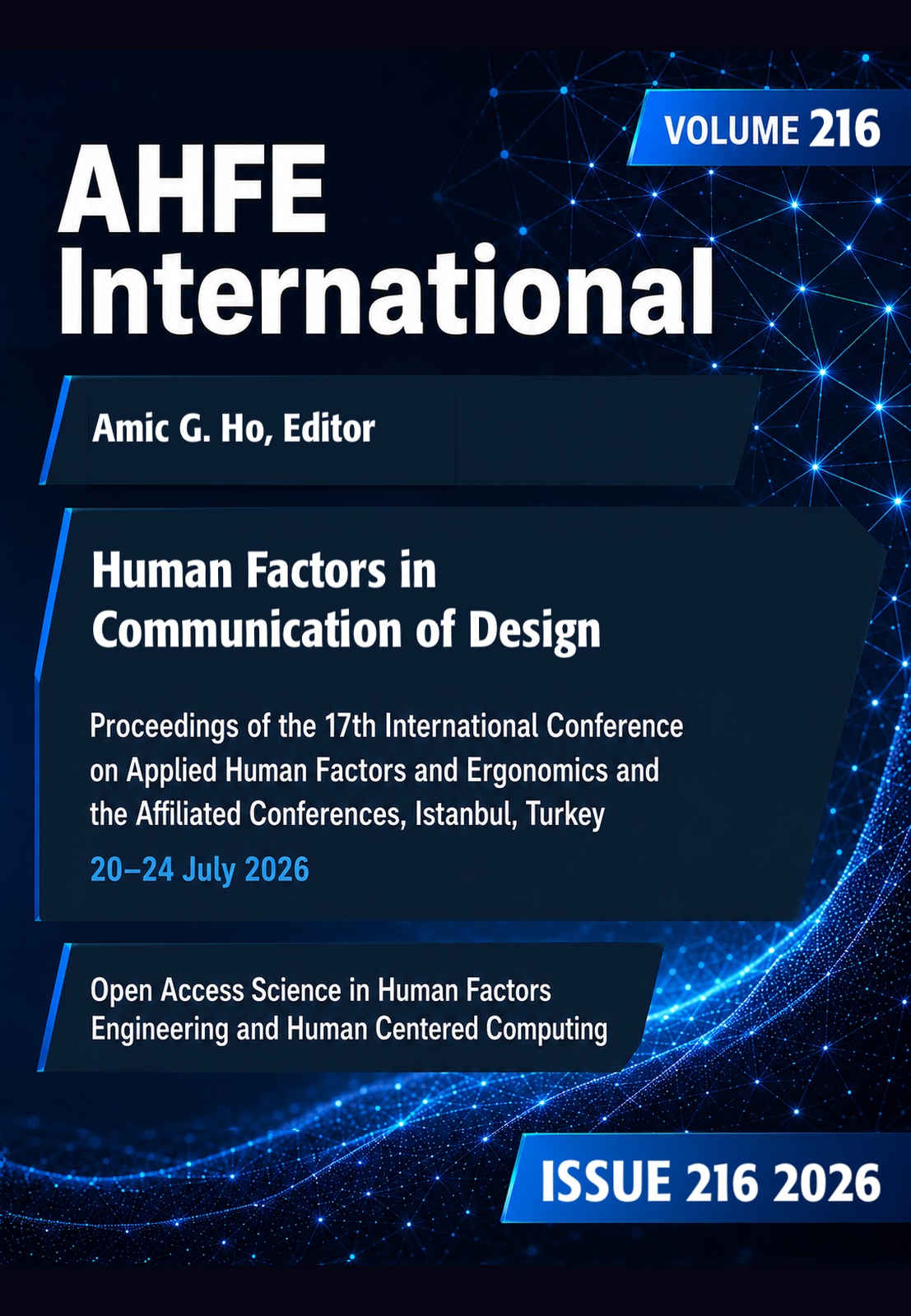
Table of Contents
Enhancing Immersive Machine Operator Training through Cognitive Load Management and Scenario-Based Learning
Immersive technology can be used to create better machine operator training experiences by providing enhanced learning experiences. The objective of this study was to explore the relationship between cognitive load management and scenario-based learning utilising virtual reality (VR), with an emphasis on how these technologies impact Operator Performance and Safety. The authors employed a mixed-methods approach to assess task performance for machine operators. In addition to identifying a 30% error rate decrease and a 25% increase in the time required to complete tasks when cognitive load was properly managed, participants demonstrated higher levels of engagement and confidence as a result of receiving personalised feedback. As such, the results of the study indicate that incorporating cognitive load management into both scenario-based training and virtual reality (VR) training programs will produce significant improvements in training efficacy and promote a safer, more productive workplace. Future studies are necessary to determine if there is long-term retention of skills learned in the context of VR training and whether the applications of VR training are limited to specific industries.
Amic G. Ho, P. W. Chau
Open Access
Article
Conference Proceedings
"Starlight & Listening Fox": Design and Construction of an Inclusive AR Therapeutic IP System for Community-Based Autistic Children
Autism Spectrum Disorder (ASD) is a neurodevelopmental disorder with a high incidence among children; children aged 4 to 10 with mild to moderate symptoms account for more than 70% of the total ASD children, yet the supply of community-based healing products and interactive services for this group is severely insufficient, and immersive intervention based on Augmented Reality (AR) technology and inclusive design has become a preferred solution for the community integration of this group. However, the contradiction between conventional healing models and the community intervention needs of autistic children, which is also the key to poor intervention effects, is concentrated in three imbalances: disconnection of healing models, insufficient community support, and conflicting intervention concepts, which are specifically manifested as the lack of personalized design, the breakdown of linkage mechanisms, and the neglect of emotions and active participation. Based on the core concept of inclusive design, this study proposes "Starlight & Listening Fox": an inclusive AR healing IP system design scheme for community autistic children, and the research content covers extracting three core principles under inclusive design, namely adapting to sensory sensitivity, stimulating active participation, and constructing a closed loop of community support, and building an integrated healing framework of "IP+AR+Inclusive UI", aiming to improve the design of AR healing systems, verify their feasibility and healing effects, provide community autistic children with healing schemes that combine adaptability and interactivity, promote the theoretical and practical development of AR and inclusive design empowering the community rehabilitation of ASD children, and offer experience-oriented practical references for the application of IP+AR technology in the field of children's rehabilitation.
Yingsha Zhang
Open Access
Article
Conference Proceedings
Resolving Form-Meaning Separation: Preference and Acceptance of a Somatosensory FMV Game for Intangible Martial Arts Targeting Z Generation
As one of the first national intangible cultural heritage items in China, Foshan Wushu, with its technical system of "integration of boxing and weapons", philosophical concept of "combination of martial arts and medicine", and diversified martial arts schools, is a typical sample of traditional Chinese physical culture. However, the current one-way communication mode relying on offline performances and kung fu films limits the audience’s cognition to "action spectacles", making it difficult to touch the spiritual core of "entering the Dao through martial arts" and leading to the communication dilemma of the separation between "form" and "meaning". Although new technologies such as VR and AR have been introduced into existing martial arts culture communication, they mostly stay at the superficial reproduction of cultural representations and fail to construct a complete and in-depth cultural cognition. In response to this, this study proposes a solution of integrating motion-sensing interaction into stylized full-motion video (FMV) games, aiming to resolve the "knowing-practice disconnection" inherent in martial arts communication through embodied interaction. Focusing on Generation Z, the study comprehensively adopts desk research, field investigation, in-depth interviews and questionnaire surveys to explore the necessity and feasibility of this integration mode, and focuses on analyzing Generation Z’s preferences and core concerns regarding Foshan Wushu motion-sensing FMV games. The results show that this integration mode can effectively realize the unity of cultural "form" and "meaning", providing empirical evidence and new theoretical perspectives for exploring the application of serious games in the digital protection of intangible cultural heritage.
Jinhang Liu, Tianchen Dai, Xin Xie
Open Access
Article
Conference Proceedings
Activation of the Grand Canal Cultural Heritage for Generation Z: A Design Research Based on IP Narrative and Gamified AR
As a living World Cultural Heritage site still in active use, the Grand Canal serves as a vital carrier of the Chinese nation's historical lineage and collective memory. Its preservation and revitalization are crucial for sustaining cultural continuity. This research focuses on the digital revitalization and dissemination of the Grand Canal's cultural heritage. However, its current digital communication faces significant intergenerational challenges: mainstream approaches, characterized by static and one-directional delivery, struggle to establish deep emotional connections and cultural resonance with Generation Z, who are digital natives. To address this, grounded in gamification design theory, this study proposes an innovative framework of "IP-Narrative-Driven, Gamified-Task-Carried, AR-Spatial-Integration." This framework employs the original IP character "Spirit of the Canal" as the narrative core and emotional guide. A lightweight Augmented Reality (AR) application prototype was developed via the WeChat Mini Program platform. Implemented in the Gongchen Bridge area, it utilizes a "Discovery-Puzzle-Solving-Reconstruction" gamified task flow to create immersive narrative scenes that blend virtual and physical realities. The design aims to systematically enhance Generation Z's cognitive understanding, emotional engagement, and willingness for autonomous dissemination regarding Canal culture. Through framework construction and prototype implementation, this study provides an actionable design approach for the youth-oriented and intelligent dissemination of linear cultural heritage.
Xiang Wu
Open Access
Article
Conference Proceedings
Embodied Cognition Theory-Driven AR Board Game Design: Innovative Practice of the "Five Emperors" Cultural IP in Fujian Museum
As a representative intangible cultural heritage of folk custom in Fujian, the Fuzhou Wulinggong Culture carries profound regional cultural memory, the core of simple folk beliefs, and the traditional spirit of pursuing goodness and justice. Its value in cultural inheritance, social identity, and cultural tourism development is inestimable. Aiming at the current problems such as weak IP development of existing products, low cultural dissemination, and serious homogeneity of cultural and creative products, this study innovatively integrates IP image development, AR board game design, and UI interface design into the protection and inheritance of Fuzhou Wulinggong Culture. It constructs an interactive architecture of "physical cards + AR" to realize the virtual character interaction function. Based on the theory of embodied cognition, this study reactivates the folk charm of Wulinggong Culture through modern visual language and immersive interactive experience carriers, enhances its social recognition and appeal to young groups, and further realizes the creative transformation and innovative development of this regional intangible cultural heritage in the new era. It provides a new direction for the integration of cultural museums and AR technology and the dissemination of cultural and creative IPs.
Cheng Zheng, Yuan Gao, Yixin Chen
Open Access
Article
Conference Proceedings
A Mixed Reality Intervention Framework for Learning Ceramic Throwing Skills: Task Analysis, Human Factors Design Logic, and KANO-AHP Functional Priority.
Ceramic throwing is an embodied skill that demands high precision and is constrained by strict timing sequences. Novice learners commonly exhibit systematic biases in three key areas: judging the clay's state, coordinating force application with both hands, and controlling geometric shapes, leading to irreversible failures such as off-centering, uncontrolled wall thickness, and collapsed pieces. This paper focuses on ceramic skill learning as the core research subject, advancing the study in three stages: First, we systematically decompose the throwing process, clarifying key subtasks and quantifiable operational indicators. Second, from a human factors engineering perspective, we propose a design logic for MR intervention, centered around minimal visual obstruction, phased information density, and interpretable error correction feedback, forming an initial functional item pool (R1–R8). Finally, based on a small-scale user study (n=16), we employ the KANO model to identify demand types and calculate the satisfaction/dissatisfaction coefficient (CS+/CS−). Weights are determined using the Analytic Hierarchy Process (AHP) under four criteria: learning efficiency, operational quality, cognitive load, and safety (CR=0.017). By merging these two sets of results, we produce a prioritized function table with specific numerical values. The priority ranking is as follows: R1>R3>R6>R4≈R2>R5>R8>R7, which is used to define the MVP development scope for the MR prototype.
Zhekai Cai
Open Access
Article
Conference Proceedings
The Book as a Pedagogical Laboratory: Experimental Editorial Practices in a Studio-Based Design Course
This paper presents the pedagogical model of the project “The Book Beyond the Book”, developed within a studio-based master’s course in editorial design. The project invites students to reconsider what a book can be in today’s post-digital context, not through theoretical analysis but through practical, material and conceptual experimentation. Each student defines a theme of personal relevance and develops an authorial editorial intention that guides the creation of an experimental book-object.The course is structured around a sequence of interconnected stages: topic selection; formulation of an editorial concept; low- and medium-fidelity prototyping; and systematic experimentation with typographic, spatial and structural strategies. Throughout the process, students refine their work through guided studio critiques, progressively recognising how decisions concerning structure, sequence, rhythm and material choices influence meaning and shape the reader’s experience.The pedagogical model builds on perspectives that treat the book as a visual-material system (Drucker) and on approaches to design education that understand design as a specific mode of knowledge mediated by material and visual processes (Cross). Over the duration of the course, the project has supported the development of greater conceptual clarity, material awareness and authorial autonomy, enabling students to articulate coherent editorial intentions and translate them into consistent formal strategies.By framing book-making as a process of exploratory design practice, the project contributes to contemporary design education by fostering critical engagement, reflective skills and an expanded understanding of the book as a dynamic space for communication and authorship.
Sofia Rodrigues
Open Access
Article
Conference Proceedings
Digital Interaction Design for Mianzhu New Year Painting: Enhancing Cultural Heritage Engagement through Mobile Applications
This study develops and evaluates a digital interaction design approach for enhancing engagement with Mianzhu New Year Painting, an intangible cultural heritage of China. Adopting a research-through-design approach, we created an interactive framework through participatory workshops involving cultural practitioners and target users. The application integrates gesture-based interactions aligned with traditional craft techniques, along with structured cultural content inspired by symbolic motifs. A mixed-methods evaluation with 300 participants assessed usability, knowledge retention, and emotional engagement. Results indicate that the interactive interface significantly improved users' understanding of craft techniques and strengthened their emotional connection to the heritage compared to conventional display methods. The prototype demonstrates how mobile interaction design can create immersive, culturally-grounded digital experiences. This study highlights the potential of digital interaction design as an effective strategy for revitalizing cultural heritage, offering transferable design principles for similar contexts.
Yu Hu, Que Yuan, Xinyi Wang
Open Access
Article
Conference Proceedings
The Impact of Visual Consistency in City Official Website Interface on City Brand: A Case Analysis of UNESCO Creative Cities of Design
In the context of intensified global competition, distinctive city branding has become a core strategy for urban development. As cities digitalize, official websites serve as central portals for cross-border communication and unified brand presentation. However, many city websites exhibit inconsistent visual identity, stylistic discontinuities, and visual hybridity, undermining credibility, recognizability, and communication efficiency. This study addresses the need to examine the impact of visual consistency in website interface design on city brand perception and to identify strategies for optimizing digital brand communication. The research has three objectives: ①classify City of Design official websites and sub-sites based on visual consistency and conduct in-depth analysis; ②empirically examine the impact of interface visual consistency on users’ perceptions of city brand image; and ③propose interface optimization strategies for digital branding. To achieve these aims, this study adopts qualitative case analysis as the primary methodological strategy, supported by theoretical and empirical evidence. Empirical research selects “City of Design” official websites within UCCN and categorizes them into high, medium, and low visual consistency groups. Representative cases from each group are then used for user studies employing mixed methods, including standardized questionnaires and semi-structured interviews. Based on Keller’s Customer-Based Brand Equity model (CBBE, 1993), indicators of brand cognition, preference, and behavioral intention are constructed. Findings demonstrate that visual consistency critically shapes users’ perceptions of city brand identity, enhancing trust, cultural recognition, and engagement. The study extends VIS research from the corporate domain to digital city branding, proposes a framework for evaluating visual consistency in official city websites, and provides strategic guidance for Cities of Design and other creative cities in digital brand construction.
Yan Liu, Han Han
Open Access
Article
Conference Proceedings
The Innovative Culture Design of Weifang Traditional Kite
Weifang traditional kite patterns face the core market dilemma of high cultural recognition but low consumption conversion. This study addresses the practical issue that their visual styles are outdated and fail to attract contemporary consumers, despite their profound cultural connotations and significant value for inheritance and transformation. It aims to bridge the gap between traditional pattern language and modern aesthetic applications through modern design transformation. Using the theoretical frameworks of design semiotics and color psychology, along with the case study method, this research systematically collected, deconstructed, and interpreted the patterns of typical Weifang kite cases. This process involved extracting and recombining motifs and contemporaneously translating the traditional color system. Based on this, new pattern and color series conforming to the modern visual context were constructed. Design principles and methods for cultural and creative products based on Weifang kite culture were proposed. Accordingly, cultural and creative products, ultimately aiming to promote the revitalization of the Weifang cultural tourism brand.
Xinhui Zhang, Lei Zhong
Open Access
Article
Conference Proceedings
Spreading Jiangnan Tea Charm via the Grand Canal: AR Interaction and IP Design for Yangzhou Famous Tea
Tea culture is an important symbol of Chinese traditional culture. In the context of the deepening integration of cultural creativity and cultural tourism, tea sets not only carry cultural memories but also become an important medium for activating intangible cultural heritage resources and promoting cultural consumption and communication experience. ( Qiuli Qin,2025) Yangzhou’s famous tea culture is a significant local Intangible Cultural Heritage (ICH) and regional cultural symbol. However, when communicating to the 18-35 age group and non-local tourists, it faces digital communication dilemmas such as lack of experientiality, single narrative, and insufficient cultural recognition. Based on the Cultural Communication Theory, this study constructs a digital cultural communication system integrating AR interaction technology and IP image design. The system aims to vitalize Yangzhou's famous tea culture through multi-scenario and immersive experience design, enhance its communication power and influence, thereby providing methodological references and practical cases for the digital innovative communication of similar traditional cultures.
Chang Guo, Xinyun Li, Baofa Wang
Open Access
Article
Conference Proceedings
Wearable Smart Accessory Design Based on Emotional Design Theory
This paper looks at how emotional wearable smart accessories can meet the emotional needs of digital natives who struggle with phone addiction and attention problems (Sas, 2023). Current focus tools mainly use timers and punishments. They treat focus as simply “on” or “off,” and they ignore users’ emotions. To address this problem, we used the Kano model (Yang and Liu, 2026) and the Three‑Level Theory of Emotional Design (Zhou et al., 2025) to understand what users really need. We designed an animal‑shaped wearable pendant. Instead of being just a control tool, it becomes a companion that helps users focus. The Kano model helped us identify what users want most from emotional products. Based on the Three‑Level Theory, we created a phone strap with three features: a pressing ritual, emotional feedback through expressions, and a sense of growing companionship (Zhou et al., 2025). The animal design creates emotional connection. The pressing action helps users focus and reduces anxiety from heavy workloads (Chianella, 2020). This research shows how emotional wearables can turn focus tools into emotional partners. It offers new ideas for designing wearable devices and suggests future use in children’s attention training and special education.
Yutong Xia, Tianzi Sheng
Open Access
Article
Conference Proceedings
Designing Personalized and Situated Conversational AI in Urban Public Space
Conversational AI has largely evolved within private, device centered environments that assume stable attention and extended engagement. When such systems enter shared urban space, these assumptions break down. This paper analyzes a real world intervention at COEX, now GangnamEyes, in Seoul, where a digital character named Lee Sol appears on a large media facade and invites passersby to initiate a mobile conversation through a QR code. The facade establishes a visible public AI presence, while each visitor privately engages in a short, five turn session on their smartphone. Presence is shared; interaction is individualized and time constrained. The project introduces a hybrid interaction model in which AI visibility and AI dialogue are spatially decoupled. Mobility, environmental noise, economic limits, and institutional goals shaped a constrained conversational architecture that favored tap based progression and minimal situational personalization over open ended dialogue. While this structure supported legibility and flow in a high density setting, it also exposed limitations in durational continuity and agent identity. The paper argues that contextual framing must guide conversational AI in shared environments. Meaningful spatial presence depends on clearly defining an agent’s scope and temporal role rather than expanding conversational capability alone.
Taery Kim, Kyuha Shim
Open Access
Article
Conference Proceedings
Microtransit Use in Rural Communities: Exploring Persuasive Messaging to Promote Prosocial Behavior
Microtransit is a rapidly growing transportation option being used by rural communities that lack traditional shared public transportation (e.g., buses, etc.). It offers a shared, technology-enabled solution with flexible, on-demand access to transit booked through a smartphone application at a low cost. In 2020, the City of Wilson, North Carolina implemented the RIDE microtransit system. As popularity and service demands grew higher, unserved trip requests increased. Treating the RIDE system as a computational sociotechnical system, this work seeks to leverage user-technology interaction to facilitate adaptive resource allocation thereby promoting system efficiency. Ten focus groups were conducted with 74 community-dwelling RIDE users to assess RIDE usage and user preferences. To explore how messaging might influence the likelihood of prosocial behavior, participants were exposed to persuasive messaging designed to request voluntary changes to their travel plans (i.e., shifting pickup time or walking further to the pickup point) to assist other, more vulnerable users including elderly and disabled individuals. Over two iterations, focus group participants evaluated 32 persuasive message prototypes designed with combinations of persuasive principles popularized by Cialdini (2007) such as social proof, liking/similarity, commitment/consistency, and reciprocity. Results indicated that messages using the principle or reciprocity consistently resulted in a higher self-reported likelihood of altering travel plans. Likewise, messages that benefited vulnerable users consistently resulted in higher likelihood of altering travel plans. Discussion focuses on next steps in the research process and elaborates on how such human factors-related information will be useful during system algorithm development.
Christopher Mayhorn, Douglas T. Jonides, Akhira Watson, Eleni Bardaka, Munindar P. Singh
Open Access
Article
Conference Proceedings
When Creativity Encounters Algorithms: Personality Traits as Predictors of Design Students’ Adoption and Dependence on AI-Assisted Design
With the rapid development of generative AI, AI-assisted design tools are increasingly integrated into design education, yet students show marked differences in acceptance, continuance intention, and dependence. Given the creative nature of design learners, personality traits may strongly shape their responses to AI. This study examines how the Big Five influence attitudes toward AI-assisted design and how these attitudes drive continuance intention and AI dependence. Using PLS-SEM with data from 345 design majors, the model “Personality Traits → Attitude → Continuance Intention → AI Dependence” was tested. Conscientiousness positively predicts attitude, while extraversion, neuroticism, and openness negatively predict it; agreeableness shows no effect. These results indicate differing sensitivities to efficiency, uncertainty, and creative constraints in AI-generated outputs. Attitude significantly predicts continuance intention and directly and indirectly contributes to AI dependence. Overall, the study reveals personality’s critical role in AI adoption and provides insights for developing personalized, human–AI collaborative design education.
Yuan Yao, Kunjie Zhou, Yaming Liu, Yuxin Yao
Open Access
Article
Conference Proceedings
The Inheritance and Innovation of Blue Calico Culture Driven by AIGC: Exploring the Generative AI Design Framework and Craft Visualization.
Chinese Blue Calico is a representative form of traditional Chinese handcrafted textile printing and dyeing and has been recognized as an important item of intangible cultural heritage. It is particularly renowned in regions such as Nantong in Jiangsu Province and Tongxiang in Zhejiang Province. The craft employs resist-printing techniques and natural crackle effects to produce exquisite patterns imbued with auspicious cultural meanings, exhibiting distinctive aesthetic and cultural value. However, the design of calico patterns and the creation of three-dimensional artifacts constitute a technically complex process with high aesthetic demands. This process typically requires long-term training and a profound understanding of traditional craftsmanship, which has, to some extent, limited the broader dissemination and sustainable transmission of Blue Calico culture. To address these challenges, this study proposes an AI-assisted approach that leverages AIGC technologies to facilitate the dissemination of Blue Calico culture, provide creative support for cultural inheritors, and enable the visualization of traditional craftsmanship. First, we conduct a comprehensive investigation into the role of artificial intelligence in the Blue Calico craft, identifying core techniques, pattern typologies, and cultural connotations to explore potential opportunities for AI integration. Subsequently, by optimizing cultural annotations and training parameters, we develop an AI-driven framework termed “AI Calico.”
Cunxin tao, Ying Cao, Peiyao Cheng
Open Access
Article
Conference Proceedings
Climate Science Popularization Packaging Experience Design Based on Transmedia Narrative Theory
Global warming has become a severe ecological challenge for humanity at present. However, climate science popularization for children is generally plagued by such problems as abstract content, single form and the disconnection between knowledge and practice. To address these pain points, this study, based on the transmedia narrative theory, proposes a climate science popularization packaging experience design integrating physical packaging with digital interaction. The effectiveness of the system is verified through user testing, and a trinity science popularization system featuring "physical packaging + digital interaction + practical transformation" is ultimately constructed. Taking a lamp-type degradable and reusable packaging as the physical carrier, the design is combined with an AR pet raising application designed based on the images of polar endangered animals, integrating climate knowledge, emotional connection and behavioral incentives into a whole. Through three core modules including knowledge infiltration, social linkage and practical transformation, children are guided to transform from passive recipients into active explorers and practitioners, which provides an innovative path for improving teenagers' climate literacy and behavioral willingness through integrated design.
Xinyuan Huang, Jingfang Wang
Open Access
Article
Conference Proceedings
Multimedia Design from the Perspective of Embodied Interactive Narratives
The integration of narrative design and multimedia design has become a major trajectory in recent developments within the field of digital art and design, marking a shift from technology-driven production toward experience-oriented creation, and from visual centrality toward contextual and situational participation. This integration not only extends the typological evolution of exhibition-based works, but also serves as a critical path through which contemporary creators articulate concepts, generate affective resonance, and construct mechanisms for audience engagement. Especially under a cultural condition that increasingly values interactivity and immersion, the dynamic coupling between narrative and multimedia design has emerged as a core issue across disciplines such as digital art, interactive design, and exhibition curating.Since the 2020s, the rise of AI-generated content (AIGC) has exerted a profound influence on content production processes, modes of expression, and even the authorship paradigm. On one hand, AIGC has significantly enhanced the efficiency of content generation, leading to an unprecedented explosion in the quantity and diversity of virtual media modalities. On the other, audiences now expect more sophisticated narrative engagement within immersive cultural environments. Faced with the dual pressures of content oversaturation and experiential fatigue, multimedia design practices reliant on a single-mode virtual narrative have begun to reveal their limitations in both effectiveness and participatory appeal, falling short of audience expectations for embodied, site-specific, and resonant forms of expression.Against this backdrop, Chapter 1 of this study begins with the concept of embodied interaction, revisiting two decades of theoretical development around key topics such as interaction design, human–technology relations, and material mediation. This forms the basis for an archaeology of knowledge focused on interactive narrative mechanisms. Through a review of landmark literature and representative works, the study defines embodied interactive narrative as a design strategy in which narrative meaning emerges through the affordances of embodied interaction, or through real-world objects assuming partial narrative functions. In such works, the narrative no longer resides solely in text or image, but in the systemic coupling of body–space–object relations, generating what we term a participatory narrative grammar of situation.Chapter 2 presents a multi-layered analysis of three recent, representative embodied interactive works from China, selected for their narrative construction and interactional mechanics. These works not only integrate site-specific spatial contexts and sociocultural settings, but also draw upon traditional Chinese temporal frameworks, including seasonal rhythms and the solar terms (节气). This enables the construction of hybrid narrative configurations across spatial, temporal, and behavioral layers. In these scenarios, audiences are no longer passive receivers of meaning; instead, they become active participants and co-constructors of narrative through embodied movement, tactile feedback, and real-time decision-making. This shift from author-centered to audience-co-constructed narration enhances both the clarity of conceptual expression and the depth of emotional transmission.Building upon these insights, Chapter 3 proposes a triadic narrative framework—Space–Time–Action—as a core theoretical model for embodied interactive design. Within this model, the temporal dimension is articulated as non-linear and collage-based, allowing audiences to reconstruct narrative perception through disrupted sequence and fragmented plots. The spatial dimension takes the form of juxtaposed and experiential layouts, enabling multi-directional narrative unfolding within physical environments. The actional dimension maps audience behaviors onto narrative progression: through interactive gestures and responses, latent narrative nodes are activated, and behavior itself becomes a structural component of storytelling—disrupting the traditional unidirectional logic of “work–spectator” relations.In conclusion, this study aims to offer a referential theoretical and methodological framework for contemporary multimedia creators exploring embodied interactive narratives. It responds to the structural transformations of content creation under the influence of AIGC, while also opening up new narrative pathways grounded in locality, materiality, and interactivity. Such approaches not only deepen audience engagement and on-site immersion, but also signal a potential future direction for the development of narrative-centered multimedia works.
Yaoying Peng
Open Access
Article
Conference Proceedings
Fragmented Verbal Dysfunction: Interactive Communication Design for Language Awareness in Digital Media
Social media and short-video platforms have reshaped everyday communication through fast, fragmented, and highly visual information flows. In daily online interaction, many young users increasingly rely on internet slang, emojis, abbreviations, and memes to complete expression. These forms are efficient and emotionally direct, but they may also reduce attention to sentence structure, semantic richness, and reflective language organization. This paper takes Cognitive Load Theory as the main theoretical entry point. It understands "text aphasia" not as a medical diagnosis, but as a cultural metaphor for weakened textual expression caused by continuous exposure to high-frequency digital information. Cognitive Load Theory suggests that limited working-memory resources can be overloaded by unnecessary or excessive information processing. Related media studies also show that mediated message processing is constrained by limited cognitive capacity, while recent short-video research links information fragmentation, scroll immersion, attention difficulty, working-memory disruption, cognitive fatigue, and executive-control decline with contemporary platform use.This paper presents Fragmented Verbal Dysfunction, an interactive communication design project for the AHFE track Human Factors in Communication of Design. The project aims to make the abstract decline of textual expression visible, understandable, and personally relevant. Its design system includes conceptual posters, medical-record-inspired visual interfaces, deconstructive typography, dynamic mosaic effects, public-space applications, peripheral objects, a QR-code entrance, and an H5 memory-test game. These components form a communication pathway: users first encounter a visual warning in public or printed media, then enter a mobile interaction, and finally receive a diagnosis-like reflective experience about their own language habits.The design method combines visual metaphor, deconstructive typography, and gamified interaction. Fragmented typography and pixel distortion are used to simulate the collapse of semantic order under information overload. Medical images of the brain, mouth, and heart are used as embodied metaphors that connect language expression with cognition, speech, and emotion. The H5 game adopts a simple elimination mechanism inspired by gamification design, inviting users to identify, select, and reconstruct symbolic information. In this process, the audience shifts from passive viewing to active participation in the "diagnosis" and recovery of language awareness.A pilot user evaluation was organized with university students who frequently use social media and short-video applications. The evaluation focused on five aspects: visual comprehension, emotional impact, interaction engagement, memory retention, and reflection on personal communication habits. Preliminary feedback indicates that visual disturbance combined with game-based interaction can attract attention more effectively than static posters alone. Participants were more likely to recognize their dependence on simplified digital expressions after using the interactive system. This project therefore connects cognitive load, visual metaphor, and interactive communication design, showing how communication design can function not only as information delivery, but also as a tool for cognitive awareness in fragmented digital culture.
Zhibin Zong
Open Access
Article
Conference Proceedings
Reframing Immigrant Narratives through AI-Assisted Co-Creation and Immersive Experience: A Case Study of Ideal Home
This study examines immigrant storytelling as an experiential and participatory form of communication. We created Ideal Home, an AI-assisted immersive narrative experience that combines large language model–supported narrative co-creation with virtual reality. To understand audience experiences, we conducted in-depth interviews with participants and domain experts to examine which design factors shaped interpretation, emotional engagement, and sense-making of immigrant narratives. Our findings highlight four experiential design dimensions: multi-perspectival narratives, non-linear narrative structure, metaphorical spatial aesthetics, and intentionally constrained user agency. We use these findings to discuss how these dimensions can inform the design of narrative experiences that support cross-cultural understanding and meaningful emotional connection.
Xiaolei Guo, Ruiqi Zhang, Weitong Sun, Jingrui An
Open Access
Article
Conference Proceedings
Redesigning Urban Flow: An Emotion Intervention for Colour Walk
This research examines the role of the "Colour Walk" as an emotionally designed walkway that can improve people's emotional perceptions of urban flow and increase their appreciation for public spaces. In doing so, this research challenges the conventional urban pedestrian space for prioritising efficiency at the expense of emotional experience. By using sensory and affective design principles and colour psychology, the researcher will investigate the degree to which different colour sequences, ground markings, and other visual cues can elicit emotions; create safe environments; and encourage restorative experiences. The research uses a case study methodology to examine participant's pre-exposure and post-exposure emotional responses to the Colour Walk and what they found memorable about their experiences in terms of feelings of calmness, joy, safety, and curiosity. The research objectives are to develop design principles for emotionally driven colour interventions in urban wayfinding; connect colour schemes to spatial arrangements, and provide a methodological framework for enhancing pedestrian experiences through visual communications with the built urban environment. Ultimately, this research will endeavour to merge sensory and emotional design into the process of urban place-making by illustrating how colour influences emotional engagement in urban public spaces.
Amic G. Ho
Open Access
Article
Conference Proceedings
From Pixel to Mesh: Accelerating Game Asset Creation via a Semantically-Guided 2D-to-3D Generative Pipeline
In independent game development, creating high-quality 3D assets remains a critical bottleneck, as traditional workflows require specialized skills that hinder non-expert designers. While Generative AI has democratized 2D concept art, translating these visions into game-ready 3D assets is technically demanding. To address this, we propose an automated pipeline that leverages semantic and geometric feature extraction to synthesize 3D meshes and PBR materials from AI-generated 2D images. Our system orchestrates a workflow bridging text-to-image diffusion models with advanced computer vision modules. It employs monocular depth estimation and intrinsic decomposition to interpret geometric structures and isolate material properties (albedo, roughness, metallic) from multi-view consistent concepts. These features are algorithmically processed to produce finalized .glb assets. A comparative user study with indie developers demonstrates that this pipeline reduces asset production time by approximately 80% compared to traditional modeling tools. By shifting the user’s role from manual vertex manipulation to high-level semantic curation, this research validates a novel workflow that empowers designers to rapidly populate immersive worlds, streamlining the future of interactive media design.
Jie Hu, Jinyu Li, Zixia Wang, Zhixian Li, Ka-Chun Chan, Xinpo Ma, Zhaoli Jiang, Yingfang Zhang
Open Access
Article
Conference Proceedings
Innovative Design of Wuxi Wedding Embroidery and the Classic Chinese Animation: The Golden Conch Based on AIGC
The preservation and innovation of intangible cultural heritage present significant challenges, while AI technology offers new opportunities for its protection and inheritance. Nevertheless, when AI technology is applied to the integrated design of intangible cultural heritage and classic animation IPs, issues such as misinterpretation of cultural symbols, distortion of traditional patterns, and separation from the original context, referred to as "de-contextualization" problems, are prone to occur. This makes it arduous to achieve the precise integration of the characteristics of intangible cultural heritage and classic art styles. This paper delves into the application of AIGC in the integration of Wuxi Wedding Embroidery patterns and the domestic animation IP The Golden Conch. By establishing a multimodal dataset, conducting LoRA model training, and leveraging ComfyUI-assisted generation, an AI-assisted design closed-loop workflow is developed. This workflow encompasses "extraction of intangible cultural heritage cultural genes – construction of a multimodal fusion gene library – cross-media translation and encoding of cultural symbols – generation of the AIGC workflow – implementation of design results and value extension". This research can offer practical references for the contemporary activation and digital dissemination of intangible cultural heritage patterns, as well as provide ideas and paradigms for the innovative design of classic domestic animation IPs.
Qige Xu
Open Access
Article
Conference Proceedings
Human intelligence in the era of artificial intelligence: towards scientific spirituality and spiritual science
This paper revisits the epistemological assumptions that underpin contemporary scientific methodology. As artificial intelligence (AI) increasingly automates domains of rational cognition, the question of what constitutes human intelligence has become both urgent and consequential. Although current AI research excels in modelling rationality, optimisation, and pattern recognition, it remains limited in addressing embodied intuition, tacit knowledge, and the spiritual dimensions of lived experience. This paper therefore asks what scientific understandings of the world may have overlooked and presents a multi-year interpretivist enquiry into the nature of human intelligence. Drawing on field encounters with practitioners operating beyond conventional scientific frameworks – including a martial artist, macrobiotic practitioners grounded in East Asian medicine, an energy-based bodywork therapist, and a shaman – the paper explores forms of intelligence that may extend beyond formal cognition.
Yuuki Shigemoto
Open Access
Article
Conference Proceedings
Design and Translation of Urban Bus Shelter Based on Xinjiang Corps Reclamation Culture
This paper aims to enrich the design methodology of urban bus shelter through synesthetic transformation, enhance passengers’ cultural experiences from a multisensory perspective, and broaden the research pathways for cultural enrichment in Xinjiang. Specifically, this paper focuses on the organic integration of Xinjiang’s corps reclamation culture with the design of bus shelter. Starting from the passenger’s decoding process and relying on a synesthetic transformation cognitive model, the study extracts intuitive imagery from Xinjiang’s corps reclamation culture, derives intrinsic design elements, and transforms them into a design language for encoding. Finally, the method is validated and evaluated through a questionnaire survey. The results indicate that this method facilitates multidimensional sensory interaction with users and enhances cultural perception, thereby providing valuable insights for advancing the strategy.of “Cultural Enrichment in Xinjiang”.
Zhanzhong Zhu, Jie Zhang, Weilin Cai, Liping Liu
Open Access
Article
Conference Proceedings
When Light Embraces Porcelain: How Correlated Color Temperature and Emotion Influence the Visual Perception of Porcelain
This study investigates the interaction of different correlated color temperatures (CCT, 3000 K – 5500 K) and emotions (positive, neutral, negative) on the visual perception of porcelain materials. A 3×6 mixed experimental design was adopted, recruiting 36 participants to conduct subjective evaluations of porcelains from both aesthetic dimensions (sense of order, beauty, exquisiteness, neatness) and physical dimensions (transparency, hardness, fragility, naturalness). The results showed that CCT had a significant main effect on the visual perception of porcelains, with the optimal aesthetic scores observed at mid-to-high color temperatures of 4500 K – 5000 K. Emotion had a slight moderating effect on beauty and exquisiteness. The interaction effect between CCT and emotion significantly influenced the aesthetic dimensions of sense of order and neatness, as well as the physical dimensions of hardness and fragility. The research indicates that CCT is the dominant factor in the aesthetic perception of porcelains, with emotion playing an auxiliary moderating role. It is suggested that museums prioritize mid-to-high color temperature lighting and foster a neutral or positive emotional atmosphere to optimize the visitor experience.
Shiyue Hu, Han Shu, Yifan Lin, Zhenhong Huang, Xiaozheng Zhang, Jianliu Zhuang, Miaohui Wang
Open Access
Article
Conference Proceedings
Design Strategies for Mobile Games on ICH Education Based on Artificial Intelligence: A Case Study of Huangmei Cross-stitch Culture
Under the influence of globalisation and digitalisation, intangible cultural heritage (ICH) faces an inheritance crisis. This research focused on Huangmei cross-stitch culture in Hubei, China, exploring innovative applications of AI technology in designing popular science games about ICH. The study used literature review, questionnaires, and design practices. Based on the ARCS motivation model and the four-part method of game elements, a ‘Motivation-Experience’ dual-driven design model was proposed. An edutainment Cross-stitch Dream APP was developed based on this new model. This research demonstrated the dual value of AI in the digitalisation of ICH: improving interaction efficiency technically and engaging the recognition of young people culturally. This design addresses the issues of weak interactivity and high learning barriers in traditional ways of spreading ICH, opening a new replicable path for digital inheritance.
Luyao Liu, Zhiyu Zhao
Open Access
Article
Conference Proceedings
Digital Cultural and Creative Customization of Intangible Cultural Heritage under Human-AI Collaboration: A Case Study of Yunnan Tile-Cat
While Artificial Intelligence Generated Content (AIGC) provides new pathways for the digital innovation of intangible cultural heritage (ICH), current applications often lack a critical methodological framework and view users as passive consumers. To address this gap, this study centers on a key research question: compared with the traditional model where users only passively receive or give feedback on ICH cultural and creative products, how can the human-AI co-creation model empower ordinary users without professional design skills to take the initiative in creating and reinterpreting ICH? The paper focuses on the Yunnan Tile-Cat (Wamao), a unique regional architectural ornament and an endangered intangible cultural heritage, and builds a simple working demo to show how the idea works. Through a formative evaluation, the study examines a dual collaborative workflow. The AI + designer phase speeds up cultural data integration and visual conceptualization. Subsequently, the AI + user mechanism enables public participation through real-time 2D to 3D modeling and AR interaction. This collaborative approach productively reduces creative barriers and improves cultural identity. The findings add to design knowledge by showing that, while AI democratizes creative participation, human designers must actively intervene to overcome AI's semiotic limitations in culturally sensitive settings.
Zhiyu Zhao, Yu Gu
Open Access
Article
Conference Proceedings
A Study on the Impact of a Generative AI-Assisted Artifact Restoration Experience System on the Public's Sense of Agency, Trust, and Information Verification Behaviors
Current museum artifact displays predominantly adopt a static, authoritative, unilinear approach, positioning audiences in a state of passive reception, lacking a sense of participation and agency. Artifacts themselves often suffer from missing information and academic disputes due to historical reasons. The development of Generative Artificial Intelligence (Generative AI) offers new possibilities for the virtual restoration and dynamic presentation of cultural heritage. This study proposes and tests a human-computer collaborative interactive artifact restoration experience system (Manovich & Arielli, 2024), aiming to transform the audience's "static visitation" into "active learning." Through a comparative experiment, the study examines the effects of traditional single-result presentation versus multi-result presentation assisted by Generative AI on the audience's sense of agency, cognitive load, information verification behavior, and trust. Preliminary results indicate that while the multiple possibilities generated by AI increase the audience's cognitive load, they significantly enhance their active verification behavior and sense of participation, while reducing blind trust in a single authoritative result. This study provides empirical evidence for understanding the cognitive communication pathways of cultural heritage in the era of Generative AI and offers a practical framework of "collaborative re-creation" for museum interaction design.
Sihan Zhao, Xunyi Zhang
Open Access
Article
Conference Proceedings